

ADVERTISEMENT

Small business disaster loan program is out of money until Congress approves new funds

Published Oct 16, 2024 02:00 am

NEW YORK (AP) — The Small Business Administration has run out of money for the disaster assistance loans it offers small businesses, homeowners and renters, delaying much needed relief for people applying for aid in the wake of the destruction caused by Hurricanes Helene and Milton.
IMG_6283.jpeg
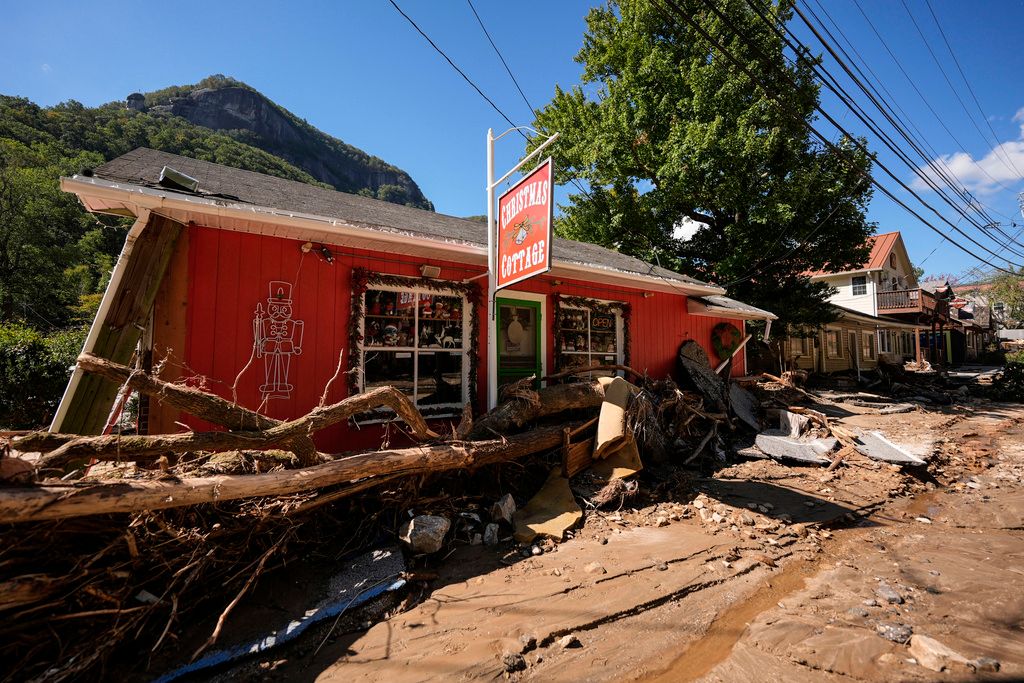
Businesses are seen in a debris field in the aftermath of Hurricane Helene, Wednesday, Oct. 2, 2024, in Chimney Rock Village, N.C. (AP Photo/Mike Stewart)

The SBA offers Economic Injury Disaster Loans to businesses and people affected by disasters. The SBA warned earlier this month that it could run out of funding, given the anticipated surge in claims from Hurricane Helene, without additional funding from Congress.

There are other disaster relief programs available, including assistance from the Federal Emergency Management Agency, or FEMA. The FEMA aid isn't affected by the SBA shortfall.

Helene was a Category 4 storm that first struck Florida’s Gulf Coast on September 26, dumped trillions of gallons of rain and left a trail of destruction for hundreds of miles across several states. Hurricane Milton swept across Florida two weeks later.

So far, the SBA has received around 37,000 applications for relief from those impacted by Hurricane Helene and made more than 700 loan offers totaling about $48 million. It has received 12,000 applications from those impacted by Hurricane Milton.

The SBA is pausing new loan offers until it gets more funding, which means loans that have not already been offered will be delayed by at least a month. SBA Administrator Isabel Casillas Guzman said people should keep applying for the loans, however.

“We know that swift financial relief can help communities recover quickly to stabilize local economies.” Guzman said in a statement. She added that the SBA will continue to process applications so assistance can be quickly disbursed once funds are replenished.

The SBA said it could also be able to make a small number of new loan offers during this time, if it gets more funds from loan cancellations or similar actions.

House Speaker Mike Johnson assured there would be strong support to provide necessary funds – when Congress returns after the November election.

“There’s no question these devastating back-to-back storms have stressed the SBA funding program,” Johnson, a Republican, said in a statement. “But the Biden-Harris Administration has the necessary disaster funding right now to address the immediate needs of American people in these hurricane affected areas.”

The speaker has declined to recall lawmakers back to Washington to vote on aid in the aftermath of deadly hurricanes and declined to do so now. He said Congress is tracking this situation closely.

“When Members return in just a few short weeks, the Administration should have an accurate assessment of the actual dollar amount needed and there will be strong bipartisan support to provide the necessary funding,” he said.

The SBA offers two different types of disaster loans. Business physical disaster loans are for repairing or replacing disaster-damaged property, including real estate, inventories, supplies, machinery and equipment. Economic injury disaster loans are working capital loans to help small businesses, small agricultural cooperatives, small businesses engaged in aquaculture, and most private, non-profit organizations meet financial obligations that cannot be met as a direct result of a disaster.

Businesses can access loans up to $2 million. Interest rates are as low as 4% for businesses and 3.25% for nonprofit organizations.

The SBA also offers disaster loans up to $500,000 to homeowners to repair or replace disaster-damaged or destroyed real estate. Homeowners and renters are eligible for up to $100,000 to repair or replace disaster-damaged or destroyed personal property.

FEMA's disaster relief fund is a pot of money the agency uses to respond to disasters. The money pays for things like refunding state and local officials for debris removal and rebuilding public infrastructure damaged by disasters. FEMA also gives disaster survivors money for things like rent while their homes are uninhabitable or for emergency needs like diapers.

FEMA Administrator Deanne Criswell has repeatedly said that the disaster relief fund has enough money to respond to Helene and Milton. But Criswell has said that the agency eventually will need supplemental funding from Congress. If that doesn’t happen, the agency would go into what’s called “immediate needs funding.” That means the agency stops paying out for previous disasters and conserves its money for life-saving missions during any new ones.

Related Tags

world news
ADVERTISEMENT
.most-popular .layout-ratio{ padding-bottom: 79.13%; } @media (min-width: 768px) and (max-width: 1024px) { .widget-title { font-size: 15px !important; } }

{{ articles_filter_1561_widget.title }}

.most-popular .layout-ratio{ padding-bottom: 79.13%; } @media (min-width: 768px) and (max-width: 1024px) { .widget-title { font-size: 15px !important; } }

{{ articles_filter_1562_widget.title }}

.most-popular .layout-ratio{ padding-bottom: 79.13%; } @media (min-width: 768px) and (max-width: 1024px) { .widget-title { font-size: 15px !important; } }

{{ articles_filter_1563_widget.title }}

{{ articles_filter_1564_widget.title }}

.mb-article-details { position: relative; } .mb-article-details .article-body-preview, .mb-article-details .article-body-summary{ font-size: 17px; line-height: 30px; font-family: "Libre Caslon Text", serif; color: #000; } .mb-article-details .article-body-preview iframe , .mb-article-details .article-body-summary iframe{ width: 100%; margin: auto; } .read-more-background { background: linear-gradient(180deg, color(display-p3 1.000 1.000 1.000 / 0) 13.75%, color(display-p3 1.000 1.000 1.000 / 0.8) 30.79%, color(display-p3 1.000 1.000 1.000) 72.5%); position: absolute; height: 200px; width: 100%; bottom: 0; display: flex; justify-content: center; align-items: center; padding: 0; } .read-more-background a{ color: #000; } .read-more-btn { padding: 17px 45px; font-family: Inter; font-weight: 700; font-size: 18px; line-height: 16px; text-align: center; vertical-align: middle; border: 1px solid black; background-color: white; } .hidden { display: none; }
function initializeAllSwipers() { // Get all hidden inputs with cms_article_id document.querySelectorAll('[id^="cms_article_id_"]').forEach(function (input) { const cmsArticleId = input.value; const articleSelector = '#article-' + cmsArticleId + ' .body_images'; const swiperElement = document.querySelector(articleSelector); if (swiperElement && !swiperElement.classList.contains('swiper-initialized')) { new Swiper(articleSelector, { loop: true, pagination: false, navigation: { nextEl: '#article-' + cmsArticleId + ' .swiper-button-next', prevEl: '#article-' + cmsArticleId + ' .swiper-button-prev', }, }); } }); } setTimeout(initializeAllSwipers, 3000); const intersectionObserver = new IntersectionObserver( (entries) => { entries.forEach((entry) => { if (entry.isIntersecting) { const newUrl = entry.target.getAttribute("data-url"); if (newUrl) { history.pushState(null, null, newUrl); let article = entry.target; // Extract metadata const author = article.querySelector('.author-section').textContent.replace('By', '').trim(); const section = article.querySelector('.section-info ').textContent.replace(' ', ' '); const title = article.querySelector('.article-title h1').textContent; // Parse URL for Chartbeat path format const parsedUrl = new URL(newUrl, window.location.origin); const cleanUrl = parsedUrl.host + parsedUrl.pathname; // Update Chartbeat configuration if (typeof window._sf_async_config !== 'undefined') { window._sf_async_config.path = cleanUrl; window._sf_async_config.sections = section; window._sf_async_config.authors = author; } // Track virtual page view with Chartbeat if (typeof pSUPERFLY !== 'undefined' && typeof pSUPERFLY.virtualPage === 'function') { try { pSUPERFLY.virtualPage({ path: cleanUrl, title: title, sections: section, authors: author }); } catch (error) { console.error('ping error', error); } } // Optional: Update document title if (title && title !== document.title) { document.title = title; } } } }); }, { threshold: 0.1 } ); function showArticleBody(button) { const article = button.closest("article"); const summary = article.querySelector(".article-body-summary"); const body = article.querySelector(".article-body-preview"); const readMoreSection = article.querySelector(".read-more-background"); // Hide summary and read-more section summary.style.display = "none"; readMoreSection.style.display = "none"; // Show the full article body body.classList.remove("hidden"); } document.addEventListener("DOMContentLoaded", () => { let loadCount = 0; // Track how many times articles are loaded const offset = [1, 2, 3, 4, 5, 6, 7, 8, 9, 10]; // Offset values const currentUrl = window.location.pathname.substring(1); let isLoading = false; // Prevent multiple calls if (!currentUrl) { console.log("Current URL is invalid."); return; } const sentinel = document.getElementById("load-more-sentinel"); if (!sentinel) { console.log("Sentinel element not found."); return; } function isSentinelVisible() { const rect = sentinel.getBoundingClientRect(); return ( rect.top < window.innerHeight && rect.bottom >= 0 ); } function onScroll() { if (isLoading) return; if (isSentinelVisible()) { if (loadCount >= offset.length) { console.log("Maximum load attempts reached."); window.removeEventListener("scroll", onScroll); return; } isLoading = true; const currentOffset = offset[loadCount]; window.loadMoreItems().then(() => { let article = document.querySelector('#widget_1690 > div:nth-last-of-type(2) article'); intersectionObserver.observe(article) loadCount++; }).catch(error => { console.error("Error loading more items:", error); }).finally(() => { isLoading = false; }); } } window.addEventListener("scroll", onScroll); });

Sign up by email to receive news.