







Marcos: PH still harassed, intimidated in South China Sea


At A Glance
- Marcos said it was "regrettable" that the overall situation in the South China Sea remains tense and unchanged.
President Marcos has called on members of the Association of the Southeast Asian Nations (ASEAN) to expedite the negotiations of the ASEAN-China Code of Conduct (COC) as he lamented how Filipinos are still being harassed and intimidated by Chinese forces in the South China Sea.
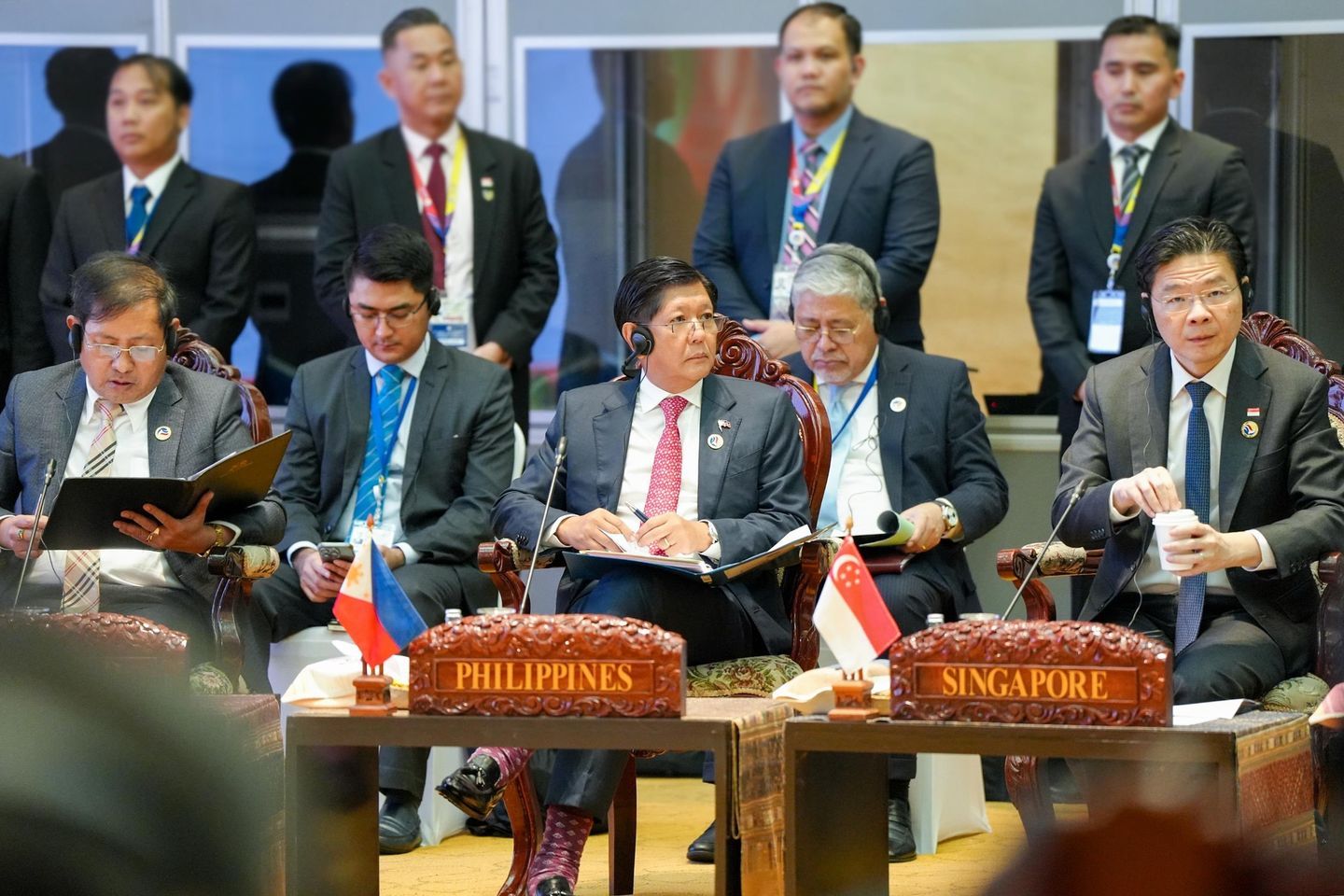
Marcos said this during the 27th ASEAN-China Summit in Laos on Thursday, Oct 10.
In his remarks, Marcos said it was “regrettable” that the overall situation in the South China Sea remains tense and unchanged.
“We continue to be subjected to harassment and intimidation,” he said.
“Parties must be earnestly open to seriously managing the differences and to reduce tensions,” he added.
Marcos, in his intervention, recalled how Philippine vessels in August endured aggression and harassment from the China Coast Guard in the Escoda Shoal during a routine maritime patrol, and on three separate occasions, it blasted horns, used water cannons, and rammed maritime vessels.
He likewise shared an incident where civilian fisheries vessels and aircraft were targeted by lasers and subjected to intimidation by the People’s Liberation Army (PLA) missile ships of China.
According to Marcos, China’s aggression and intimidation demonstrate the “continued disregard of international law and standards,” particularly UNCLOS and the 1972 Convention on the International Regulations for Preventing Collisions at Sea (COLREGS).
“Such behavior is not unnoticed by our respective publics and the international community as well. That they will require a concerted and urgent effort to adopt measures to prevent their recurrence,” he said.
With this, President Marcos called on the ASEAN member states to fast-track the ASEAN-China COC to advance meaningful progress amid China’s continued aggression and harassment in Philippine waters.
“In our view, there should be more urgency in the pace of the negotiations of the ASEAN-China Code of Conduct,” he said.
He emphasized that “core elements of the COC, such as the milestone issues of geographic scope, the relationship between the COC and DOC, and its legal nature to this day remain outstanding.”
The President also stood firm that “the definition of a concept as basic as ‘self-restraint’ does not yet enjoy consensus.”
“It is time that we tackle these milestone issues directly so we can make substantive progress moving forward,” Marcos said.
Despite China’s intimidation, President Marcos reaffirmed the Philippines’ unwavering commitment to deepening and extending ASEAN-China relations “in a comprehensive manner, thereby contributing further to the region’s long-term peace, development and cooperation.”
Meanwhile, during the 27th ASEAN-Japan Summit, President Marcos welcomed Japan’s commitment to the common vision of the two parties being "a world built on shared principles and values, the rule of law and good governance, and respect for and protection of human rights and fundamental freedoms."
According to the President, ASEAN-Japan relations continue to fortify a rules-based Indo-Pacific region that is free and open through shared fundamental principles in fostering peace, stability, and prosperity.
However, he lamented how the region is facing increasing problems, citing unilateral actions in the East South China Seas as a risk to peace and stability.