

ADVERTISEMENT

Samoa warns of 'highly probable' oil spill from New Zealand navy ship that sank and caught fire

Published Oct 6, 2024 11:20 pm

WELLINGTON, New Zealand (AP) — An oil spill is “highly probable” from a grounded New Zealand navy ship which sank and caught fire off the coast of Samoa, the Pacific island nation's acting prime minister said late Sunday.
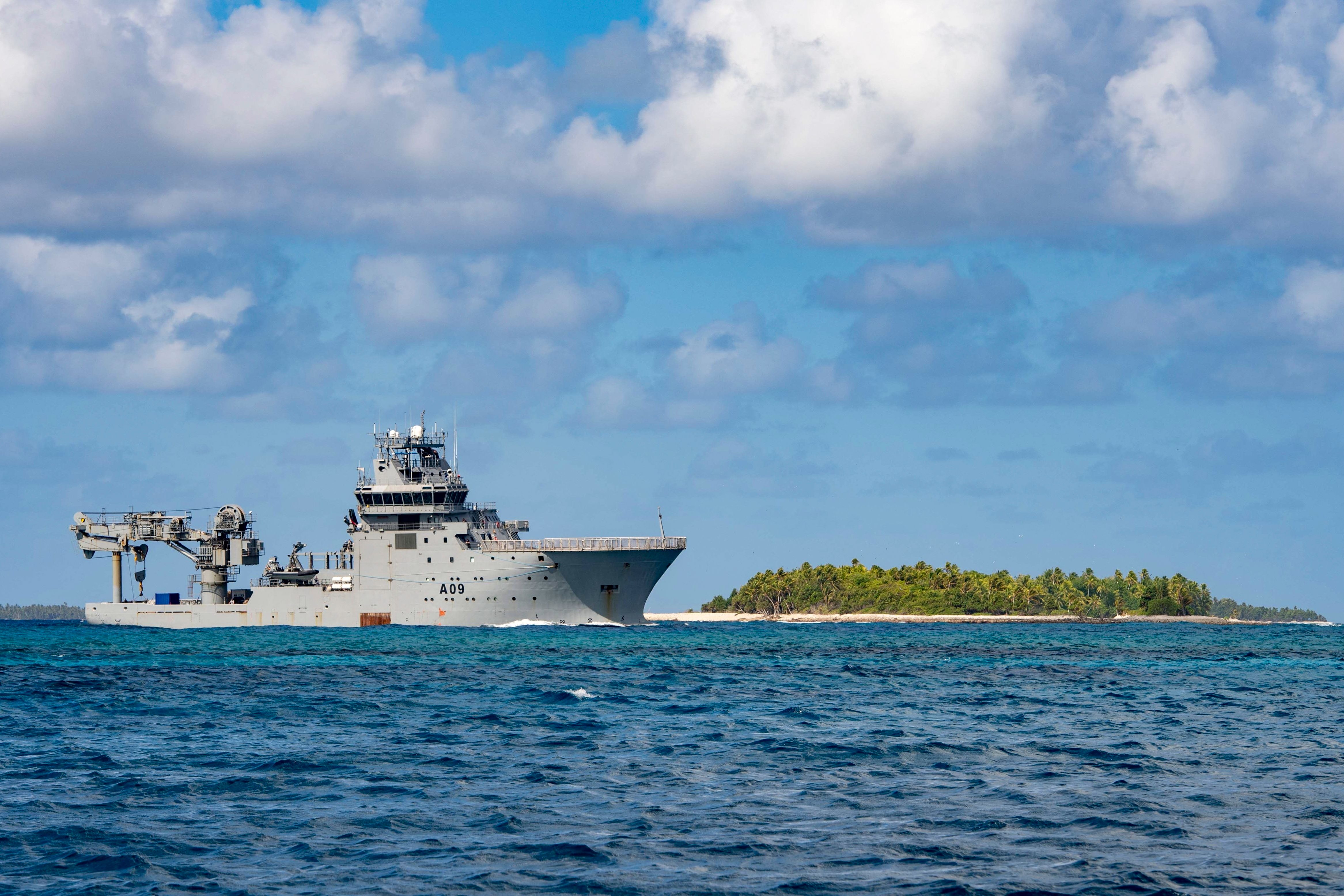
AP24280016648395.jpg

In this image released by New Zealand Defence Force (NZDF), HMNZS Manawanui arrives in Funafuti Lagoon, Tuvalu, on Sept. 7, 2022. (PO Christopher Weissenborn/NZDF via AP)


Officials in Samoa are conducting an environmental impact assessment in the area where the ship sank on Sunday morning, acting Prime Minister Tuala Tevaga Iosefo Ponifasio said in a statement.

All 75 people on board the HMNZS Manawanui were taken to safety on life rafts in “challenging conditions” and darkness, New Zealand’s Chief of Navy Rear Admiral Garin Golding told reporters. The vessel was about a mile from shore when it grounded on a reef and began taking on water, but it took the first survivors five hours to reach land, he said.

New Zealand will hold a court of inquiry into the loss of the ship, which was one of nine in its navy. The cause of the disaster is not known.

The specialist dive and hydrographic vessel had been in service since 2019. It was surveying a reef off the coast of Upolu, Samoa’s most populous island, when it ran aground on the reef.

Photos and videos taken from the shore appeared to show the ship listing before disappearing completely below the waves, with a large plume of smoke rising where it sank. Defense Minister Judith Collins said she did not expect the vessel could be salvaged.

“This is a ship that unfortunately is pretty much gone,” she told reporters.

Those on board included civilian scientists and foreign military personnel, Golding said. Authorities in Samoa said some were treated for minor injuries.

There was “a lot of fuel” on the ship and efforts had turned to assessing the potential environmental impact, Collins told Radio New Zealand Monday. New Zealand “would obviously have to front up” if there was a spill, she added.

The state of New Zealand’s ageing military hardware has prompted warnings from the defense agency, which in a March report described the navy as “extremely fragile,” with ships idle due to problems retaining the staff needed to service and maintain them.

Golding said the HMNZS Manawanui underwent its usual maintenance before the deployment. The ship’s captain was an experienced commander who had worked on the vessel for two years, he said.

Related Tags

WORLDNEWS
ADVERTISEMENT
.most-popular .layout-ratio{ padding-bottom: 79.13%; } @media (min-width: 768px) and (max-width: 1024px) { .widget-title { font-size: 15px !important; } }

{{ articles_filter_1561_widget.title }}

.most-popular .layout-ratio{ padding-bottom: 79.13%; } @media (min-width: 768px) and (max-width: 1024px) { .widget-title { font-size: 15px !important; } }

{{ articles_filter_1562_widget.title }}

.most-popular .layout-ratio{ padding-bottom: 79.13%; } @media (min-width: 768px) and (max-width: 1024px) { .widget-title { font-size: 15px !important; } }

{{ articles_filter_1563_widget.title }}

{{ articles_filter_1564_widget.title }}

.mb-article-details { position: relative; } .mb-article-details .article-body-preview, .mb-article-details .article-body-summary{ font-size: 17px; line-height: 30px; font-family: "Libre Caslon Text", serif; color: #000; } .mb-article-details .article-body-preview iframe , .mb-article-details .article-body-summary iframe{ width: 100%; margin: auto; } .read-more-background { background: linear-gradient(180deg, color(display-p3 1.000 1.000 1.000 / 0) 13.75%, color(display-p3 1.000 1.000 1.000 / 0.8) 30.79%, color(display-p3 1.000 1.000 1.000) 72.5%); position: absolute; height: 200px; width: 100%; bottom: 0; display: flex; justify-content: center; align-items: center; padding: 0; } .read-more-background a{ color: #000; } .read-more-btn { padding: 17px 45px; font-family: Inter; font-weight: 700; font-size: 18px; line-height: 16px; text-align: center; vertical-align: middle; border: 1px solid black; background-color: white; } .hidden { display: none; }
function initializeAllSwipers() { // Get all hidden inputs with cms_article_id document.querySelectorAll('[id^="cms_article_id_"]').forEach(function (input) { const cmsArticleId = input.value; const articleSelector = '#article-' + cmsArticleId + ' .body_images'; const swiperElement = document.querySelector(articleSelector); if (swiperElement && !swiperElement.classList.contains('swiper-initialized')) { new Swiper(articleSelector, { loop: true, pagination: false, navigation: { nextEl: '#article-' + cmsArticleId + ' .swiper-button-next', prevEl: '#article-' + cmsArticleId + ' .swiper-button-prev', }, }); } }); } setTimeout(initializeAllSwipers, 3000); const intersectionObserver = new IntersectionObserver( (entries) => { entries.forEach((entry) => { if (entry.isIntersecting) { const newUrl = entry.target.getAttribute("data-url"); if (newUrl) { history.pushState(null, null, newUrl); let article = entry.target; // Extract metadata const author = article.querySelector('.author-section').textContent.replace('By', '').trim(); const section = article.querySelector('.section-info ').textContent.replace(' ', ' '); const title = article.querySelector('.article-title h1').textContent; // Parse URL for Chartbeat path format const parsedUrl = new URL(newUrl, window.location.origin); const cleanUrl = parsedUrl.host + parsedUrl.pathname; // Update Chartbeat configuration if (typeof window._sf_async_config !== 'undefined') { window._sf_async_config.path = cleanUrl; window._sf_async_config.sections = section; window._sf_async_config.authors = author; } // Track virtual page view with Chartbeat if (typeof pSUPERFLY !== 'undefined' && typeof pSUPERFLY.virtualPage === 'function') { try { pSUPERFLY.virtualPage({ path: cleanUrl, title: title, sections: section, authors: author }); } catch (error) { console.error('ping error', error); } } // Optional: Update document title if (title && title !== document.title) { document.title = title; } } } }); }, { threshold: 0.1 } ); function showArticleBody(button) { const article = button.closest("article"); const summary = article.querySelector(".article-body-summary"); const body = article.querySelector(".article-body-preview"); const readMoreSection = article.querySelector(".read-more-background"); // Hide summary and read-more section summary.style.display = "none"; readMoreSection.style.display = "none"; // Show the full article body body.classList.remove("hidden"); } document.addEventListener("DOMContentLoaded", () => { let loadCount = 0; // Track how many times articles are loaded const offset = [1, 2, 3, 4, 5, 6, 7, 8, 9, 10]; // Offset values const currentUrl = window.location.pathname.substring(1); let isLoading = false; // Prevent multiple calls if (!currentUrl) { console.log("Current URL is invalid."); return; } const sentinel = document.getElementById("load-more-sentinel"); if (!sentinel) { console.log("Sentinel element not found."); return; } function isSentinelVisible() { const rect = sentinel.getBoundingClientRect(); return ( rect.top < window.innerHeight && rect.bottom >= 0 ); } function onScroll() { if (isLoading) return; if (isSentinelVisible()) { if (loadCount >= offset.length) { console.log("Maximum load attempts reached."); window.removeEventListener("scroll", onScroll); return; } isLoading = true; const currentOffset = offset[loadCount]; window.loadMoreItems().then(() => { let article = document.querySelector('#widget_1690 > div:nth-last-of-type(2) article'); intersectionObserver.observe(article) loadCount++; }).catch(error => { console.error("Error loading more items:", error); }).finally(() => { isLoading = false; }); } } window.addEventListener("scroll", onScroll); });

Sign up by email to receive news.