

ADVERTISEMENT

Nadal pulls out of Australian Open with muscle tear

Published Jan 8, 2024 02:27 am

At A Glance

  • Spanish superstar Rafael Nadal on Sunday, Jan. 7, pulled out of the Australian Open with a "micro tear on a muscle" barely a week after making his comeback from a year-long injury absence, but said he remained positive.
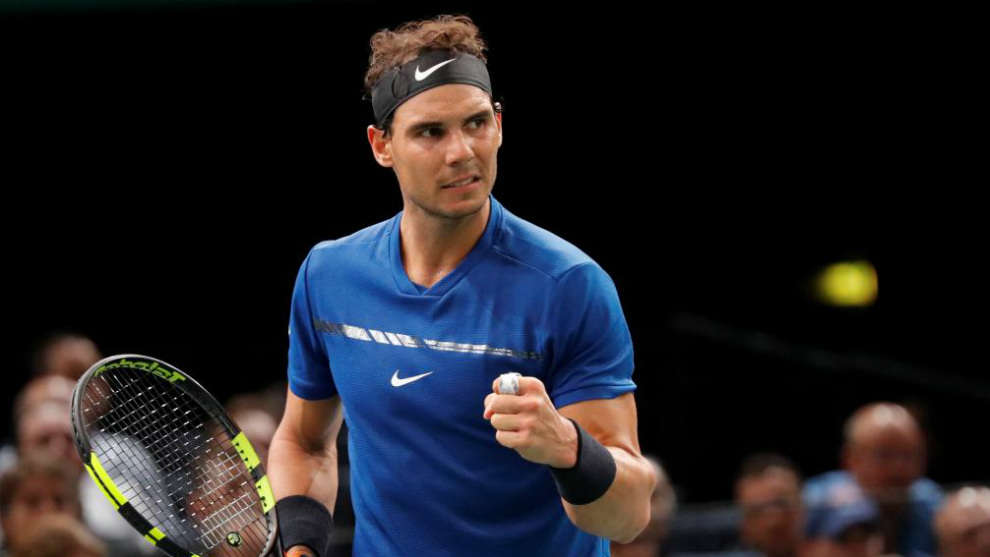
MELBOURNE (AFP) -- Spanish superstar Rafael Nadal on Sunday, Jan. 7, pulled out of the Australian Open with a "micro tear on a muscle" barely a week after making his comeback from a year-long injury absence, but said he remained positive.

rafael nadal.jpg
Spain's Rafael Nadal (AFP)

The 37-year-old had been out of the game since injuring his hip at the 2023 Australian Open, undergoing surgery before making his return at the Brisbane International.

He won his opening two matches in straight sets and looked in good touch, but needed a medical timeout towards the end of his quarterfinal loss to Australia's Jordan Thompson after feeling pain in his upper left thigh.

"During my last match in Brisbane I had a small problem on a muscle that as you know made me worried," he said on X, formerly known as Twitter.

"Once I got to Melbourne I have had the chance to make an MRI and I have micro tear on a muscle, not in the same part where I had the injury and that's good news.

"Right now I am not ready to compete at the maximum level of five-set matches. I'm flying back to Spain to see my doctor, get some treatment and rest."

His absence from the Australian Open could mean he has played at Melbourne Park for the last time, having said there was a "high percentage" that 2024 would be his farewell to the tour.

He said in Brisbane that his health would be the deciding factor in any decision about continuing to play after this season.

"We will miss you in Melbourne, Rafa," the Australian Open said on its official X feed. "Sending all our love and best wishes for a speedy recovery. See you on the court soon."

Long-time rival and world number one Novak Djokovic also has an injury cloud hanging over him ahead of the opening Grand Slam of the season.

The Serbian needed treatment on a troublesome right wrist during the United Cup last week, but said: "I think I have enough time to get myself in the right shape for the Australian Open."


'Sad news for me'


Injuries have been a recurring theme of Nadal's record-breaking career, a painful by-product of his all-action, brutal-hitting style that has led to struggles with serious knee, wrist and foot problems.

The 22-time Grand Slam champion stressed in Brisbane that he did not come into the tournament expecting to win, and hinted that the Australian Open might come too soon.

"I have worked very hard during the year for this comeback and as I always mentioned my goal is to be at my best level in three months," he said.

"Within the sad news for me for not being able to play in front of the amazing Melbourne crowds, this is not very bad news and we all remain positive with the evolution for the season.

"I really wanted to play here in Australia and I have had the chance to play a few matches that made me very happy and positive. Thanks all for the support and see you soon."

During his career, Nadal dominated the French Open, where he won 14 of his majors, his first arriving just days after his 19th birthday in 2005, his last in 2022 making him the event's oldest champion.

He is a four-time champion at the US Open, won Wimbledon in 2008 and 2010, and is a two-time winner at the Australian Open -- with 13 years spanning his first triumph at Melbourne Park in 2009 and his second in 2022.

The injury absence saw Nadal's ranking slip to 672 while rival Novak Djokovic has passed him in the Grand Slam title count with 24.

Related Tags

Rafael Nadal AUSTRALIAN OPEN
ADVERTISEMENT
.most-popular .layout-ratio{ padding-bottom: 79.13%; } @media (min-width: 768px) and (max-width: 1024px) { .widget-title { font-size: 15px !important; } }

{{ articles_filter_1561_widget.title }}

.most-popular .layout-ratio{ padding-bottom: 79.13%; } @media (min-width: 768px) and (max-width: 1024px) { .widget-title { font-size: 15px !important; } }

{{ articles_filter_1562_widget.title }}

.most-popular .layout-ratio{ padding-bottom: 79.13%; } @media (min-width: 768px) and (max-width: 1024px) { .widget-title { font-size: 15px !important; } }

{{ articles_filter_1563_widget.title }}

{{ articles_filter_1564_widget.title }}

.mb-article-details { position: relative; } .mb-article-details .article-body-preview, .mb-article-details .article-body-summary{ font-size: 17px; line-height: 30px; font-family: "Libre Caslon Text", serif; color: #000; } .mb-article-details .article-body-preview iframe , .mb-article-details .article-body-summary iframe{ width: 100%; margin: auto; } .read-more-background { background: linear-gradient(180deg, color(display-p3 1.000 1.000 1.000 / 0) 13.75%, color(display-p3 1.000 1.000 1.000 / 0.8) 30.79%, color(display-p3 1.000 1.000 1.000) 72.5%); position: absolute; height: 200px; width: 100%; bottom: 0; display: flex; justify-content: center; align-items: center; padding: 0; } .read-more-background a{ color: #000; } .read-more-btn { padding: 17px 45px; font-family: Inter; font-weight: 700; font-size: 18px; line-height: 16px; text-align: center; vertical-align: middle; border: 1px solid black; background-color: white; } .hidden { display: none; }
function initializeAllSwipers() { // Get all hidden inputs with cms_article_id document.querySelectorAll('[id^="cms_article_id_"]').forEach(function (input) { const cmsArticleId = input.value; const articleSelector = '#article-' + cmsArticleId + ' .body_images'; const swiperElement = document.querySelector(articleSelector); if (swiperElement && !swiperElement.classList.contains('swiper-initialized')) { new Swiper(articleSelector, { loop: true, pagination: false, navigation: { nextEl: '#article-' + cmsArticleId + ' .swiper-button-next', prevEl: '#article-' + cmsArticleId + ' .swiper-button-prev', }, }); } }); } setTimeout(initializeAllSwipers, 3000); const intersectionObserver = new IntersectionObserver( (entries) => { entries.forEach((entry) => { if (entry.isIntersecting) { const newUrl = entry.target.getAttribute("data-url"); if (newUrl) { history.pushState(null, null, newUrl); let article = entry.target; // Extract metadata const author = article.querySelector('.author-section').textContent.replace('By', '').trim(); const section = article.querySelector('.section-info ').textContent.replace(' ', ' '); const title = article.querySelector('.article-title h1').textContent; // Parse URL for Chartbeat path format const parsedUrl = new URL(newUrl, window.location.origin); const cleanUrl = parsedUrl.host + parsedUrl.pathname; // Update Chartbeat configuration if (typeof window._sf_async_config !== 'undefined') { window._sf_async_config.path = cleanUrl; window._sf_async_config.sections = section; window._sf_async_config.authors = author; } // Track virtual page view with Chartbeat if (typeof pSUPERFLY !== 'undefined' && typeof pSUPERFLY.virtualPage === 'function') { try { pSUPERFLY.virtualPage({ path: cleanUrl, title: title, sections: section, authors: author }); } catch (error) { console.error('ping error', error); } } // Optional: Update document title if (title && title !== document.title) { document.title = title; } } } }); }, { threshold: 0.1 } ); function showArticleBody(button) { const article = button.closest("article"); const summary = article.querySelector(".article-body-summary"); const body = article.querySelector(".article-body-preview"); const readMoreSection = article.querySelector(".read-more-background"); // Hide summary and read-more section summary.style.display = "none"; readMoreSection.style.display = "none"; // Show the full article body body.classList.remove("hidden"); } document.addEventListener("DOMContentLoaded", () => { let loadCount = 0; // Track how many times articles are loaded const offset = [1, 2, 3, 4, 5, 6, 7, 8, 9, 10]; // Offset values const currentUrl = window.location.pathname.substring(1); let isLoading = false; // Prevent multiple calls if (!currentUrl) { console.log("Current URL is invalid."); return; } const sentinel = document.getElementById("load-more-sentinel"); if (!sentinel) { console.log("Sentinel element not found."); return; } function isSentinelVisible() { const rect = sentinel.getBoundingClientRect(); return ( rect.top < window.innerHeight && rect.bottom >= 0 ); } function onScroll() { if (isLoading) return; if (isSentinelVisible()) { if (loadCount >= offset.length) { console.log("Maximum load attempts reached."); window.removeEventListener("scroll", onScroll); return; } isLoading = true; const currentOffset = offset[loadCount]; window.loadMoreItems().then(() => { let article = document.querySelector('#widget_1690 > div:nth-last-of-type(2) article'); intersectionObserver.observe(article) loadCount++; }).catch(error => { console.error("Error loading more items:", error); }).finally(() => { isLoading = false; }); } } window.addEventListener("scroll", onScroll); });

Sign up by email to receive news.