







Salceda: 2024 economy will be good if rice prices are stable


At A Glance
- With rice prices again on the uptrend, keeping the staple grain stable in markets will play a huge role in making 2024 a good year for the economy, according to Albay 2nd district Rep. Joey Salceda.
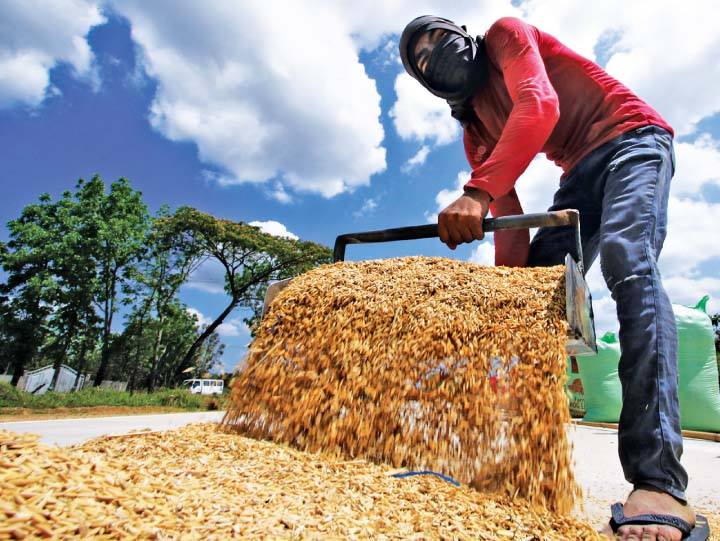 (MANILA BULLETIN)
With rice prices again on the uptrend, keeping the staple grain stable in markets will play a huge role in making 2024 a good year for the economy, according to Albay 2nd district Rep. Joey Salceda.
Salceda said rice accounts for as much as one-fifth of household budgets, making its stability crucial on Filipinos' wages and economic growth.
The economist-solon had this to say even as the Philippine Statistics Authority (PSA) reported that inflation rate further slowed down in December to 3.9 percent from 4.1 percent in November.
Salceda had correctly predicted last month that the annual average inflation rate would settle at 6.0 percent. This is above the Bangko Sentral ng Pilipinas’ (BSP) target range of 2 to 4 percent.
With this, Salceda reiterated that the government must “zero in its efforts on rice” as the commodity accelerated its inflation to 19.6 percent.
“We need to focus on import source diversification and increasing our domestic yield significantly. President Marcos has kept the tariff rates for non-ASEAN rice imports to 35 percent, from the usual 50 percent. This is a positive step,” he said in a statement on Friday, Jan. 5.
“We must engage in solutions both on the domestic and diplomatic fronts,” he added.
One diplomatic solution given by Salceda is to call on multilateral institutions like the Asian Development Bank (ADB) to provide India and other rice-producing countries with financing assistance to bridge their food subsidy needs.
He explained that doing this means “there is less political and economic pressure to keep exports limited”.
Salceda has also suggested conditionally negotiating Myanmar’s rice export ban to exempt the Philippines.
He also said that the government must optimize domestic supply by achieving another bumper year. KThis will include anticipating the impact of El Niño by making drought-resistant rice varieties available to areas where climate conditions are expected to be affected.
Salceda noted that corn inflation is also in the negative.
The Department of Agriculture (DA) has recently launched new native corn varieties and released them to local farmers to help curb the corn price problem and its implications on food security.
“We can be optimistic that corn prices will continue to stabilize while improving local yields, making us less sensitive to fluctuations in the world market,” noted Salceda.