ADVERTISEMENT

NGCP renews call for whole-of-industry approach to stabilize electricity supply

Multiple plant trippings isolate Panay grid

Published Jan 4, 2024 07:21 am

NGCP reinforces smart  grid journey with new  central monitoring system

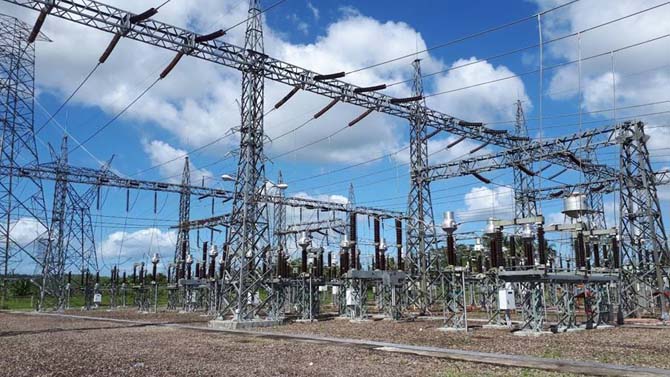
Grid operator NGCP renews its call for a whole-of-industry approach, including better energy resource planning, following the January 2 power outage due to tripping of multiple power plants which isolated Panay island from the rest of the Visayas grid.

“The unscheduled maintenance shutdowns of the largest power plants in Panay island was the primary cause of the power interruption. We emphasize the need for improved planning to ensure sufficient generation per island, with a well-balanced mix of fuels and technology,” NGCP said.

In an earlier statement, NGCP reported that various power plants in Panay Island suffered multiple trippings on January 2, including PEDC Unit 1 and 2 (83 MegaWatts each), and PCPC (135MW), among others. With the tripping of 3 of the largest power generating units and the planned maintenance shutdown of PEDC Unit 3 (150MW), 451MW or 68.75% of the total 656MW in-island generation was lost to the Panay sub-grid.

Maintenance shutdowns and deration of plants outside the Department of Energy's (DOE) approved Grid Operating and Maintenance Program also contributed to the lack of power supply.

As of 9:30 PM of January 2, only four out of 13 power plants are producing 40.3MW or 6.2% of the 83.5MW demand of Panay island. The grid needs about 300MW to stabilize the system.

“We will be restoring loads conservatively, by matching loads to restored generation, to prevent repeated voltage failure. NGCP is ready to transmit power once it is available. The people must understand that we can only transmit power, we do not generate power,” stated the company.

NGCP notes that the factors outlined in its letter to the Iloilo City government dated 11 May 2023 still exist as contributing elements to the power outage on 02 January.

In its letter, NGCP underscores the need to conduct a more robust resource optimization planning by policy makers, to ensure that solutions to power system concerns are approached from all angles, and the most efficient ones prioritized.

Given the configuration of the Panay sub-grid and its dependency on variable energy sources in Negros when it loses internally generated power, NGCP also noted the need to provide sufficient non-variable sources to stabilize the system. The company also included its Cebu-Negros-Panay Stage 3 project (CNP3) as a contributing solution.

NGCP strongly recommends the review of the Philippine Grid Code to cater to renewable energy sources, particularly the effective use of emerging technologies such as energy storage systems, among others.

Related Tags

Power supply National Grid Corp. of the Philippines (NGCP)
ADVERTISEMENT
.most-popular .layout-ratio{ padding-bottom: 79.13%; } @media (min-width: 768px) and (max-width: 1024px) { .widget-title { font-size: 15px !important; } }

{{ articles_filter_1561_widget.title }}

.most-popular .layout-ratio{ padding-bottom: 79.13%; } @media (min-width: 768px) and (max-width: 1024px) { .widget-title { font-size: 15px !important; } }

{{ articles_filter_1562_widget.title }}

.most-popular .layout-ratio{ padding-bottom: 79.13%; } @media (min-width: 768px) and (max-width: 1024px) { .widget-title { font-size: 15px !important; } }

{{ articles_filter_1563_widget.title }}

{{ articles_filter_1564_widget.title }}

.mb-article-details { position: relative; } .mb-article-details .article-body-preview, .mb-article-details .article-body-summary{ font-size: 17px; line-height: 30px; font-family: "Libre Caslon Text", serif; color: #000; } .mb-article-details .article-body-preview iframe , .mb-article-details .article-body-summary iframe{ width: 100%; margin: auto; } .read-more-background { background: linear-gradient(180deg, color(display-p3 1.000 1.000 1.000 / 0) 13.75%, color(display-p3 1.000 1.000 1.000 / 0.8) 30.79%, color(display-p3 1.000 1.000 1.000) 72.5%); position: absolute; height: 200px; width: 100%; bottom: 0; display: flex; justify-content: center; align-items: center; padding: 0; } .read-more-background a{ color: #000; } .read-more-btn { padding: 17px 45px; font-family: Inter; font-weight: 700; font-size: 18px; line-height: 16px; text-align: center; vertical-align: middle; border: 1px solid black; background-color: white; } .hidden { display: none; }
function initializeAllSwipers() { // Get all hidden inputs with cms_article_id document.querySelectorAll('[id^="cms_article_id_"]').forEach(function (input) { const cmsArticleId = input.value; const articleSelector = '#article-' + cmsArticleId + ' .body_images'; const swiperElement = document.querySelector(articleSelector); if (swiperElement && !swiperElement.classList.contains('swiper-initialized')) { new Swiper(articleSelector, { loop: true, pagination: false, navigation: { nextEl: '#article-' + cmsArticleId + ' .swiper-button-next', prevEl: '#article-' + cmsArticleId + ' .swiper-button-prev', }, }); } }); } setTimeout(initializeAllSwipers, 3000); const intersectionObserver = new IntersectionObserver( (entries) => { entries.forEach((entry) => { if (entry.isIntersecting) { const newUrl = entry.target.getAttribute("data-url"); if (newUrl) { history.pushState(null, null, newUrl); let article = entry.target; // Extract metadata const author = article.querySelector('.author-section').textContent.replace('By', '').trim(); const section = article.querySelector('.section-info ').textContent.replace(' ', ' '); const title = article.querySelector('.article-title h1').textContent; // Parse URL for Chartbeat path format const parsedUrl = new URL(newUrl, window.location.origin); const cleanUrl = parsedUrl.host + parsedUrl.pathname; // Update Chartbeat configuration if (typeof window._sf_async_config !== 'undefined') { window._sf_async_config.path = cleanUrl; window._sf_async_config.sections = section; window._sf_async_config.authors = author; } // Track virtual page view with Chartbeat if (typeof pSUPERFLY !== 'undefined' && typeof pSUPERFLY.virtualPage === 'function') { try { pSUPERFLY.virtualPage({ path: cleanUrl, title: title, sections: section, authors: author }); } catch (error) { console.error('ping error', error); } } // Optional: Update document title if (title && title !== document.title) { document.title = title; } } } }); }, { threshold: 0.1 } ); function showArticleBody(button) { const article = button.closest("article"); const summary = article.querySelector(".article-body-summary"); const body = article.querySelector(".article-body-preview"); const readMoreSection = article.querySelector(".read-more-background"); // Hide summary and read-more section summary.style.display = "none"; readMoreSection.style.display = "none"; // Show the full article body body.classList.remove("hidden"); } document.addEventListener("DOMContentLoaded", () => { let loadCount = 0; // Track how many times articles are loaded const offset = [1, 2, 3, 4, 5, 6, 7, 8, 9, 10]; // Offset values const currentUrl = window.location.pathname.substring(1); let isLoading = false; // Prevent multiple calls if (!currentUrl) { console.log("Current URL is invalid."); return; } const sentinel = document.getElementById("load-more-sentinel"); if (!sentinel) { console.log("Sentinel element not found."); return; } function isSentinelVisible() { const rect = sentinel.getBoundingClientRect(); return ( rect.top < window.innerHeight && rect.bottom >= 0 ); } function onScroll() { if (isLoading) return; if (isSentinelVisible()) { if (loadCount >= offset.length) { console.log("Maximum load attempts reached."); window.removeEventListener("scroll", onScroll); return; } isLoading = true; const currentOffset = offset[loadCount]; window.loadMoreItems().then(() => { let article = document.querySelector('#widget_1690 > div:nth-last-of-type(2) article'); intersectionObserver.observe(article) loadCount++; }).catch(error => { console.error("Error loading more items:", error); }).finally(() => { isLoading = false; }); } } window.addEventListener("scroll", onScroll); });

Sign up by email to receive news.