

ADVERTISEMENT

US public health leader believes PH's goal to bring primary healthcare to 28 M Pinoys is achievable

Published Jan 31, 2024 08:44 am

United States Agency for International Development (USAID) Global Health Assistant Administrator Atul Gawande believes that the Philippines' goal to provide primary healthcare to 28 million Filipinos by 2028 is realistic and achievable.
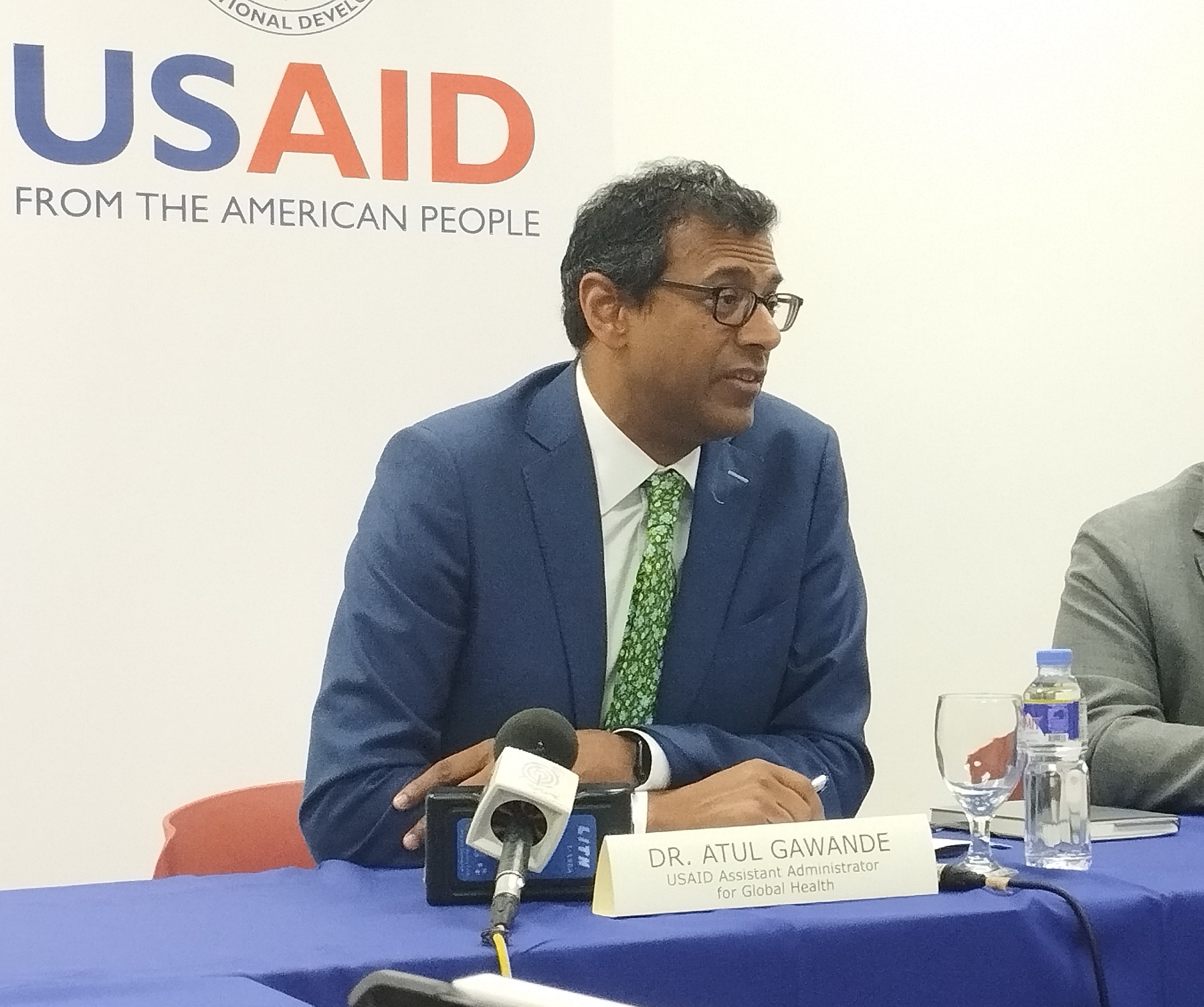
Dr Atul Gawande.jpg
United States Agency for International Development (USAID) Global Health Assistant Administrator Atul Gawande (Betheena Unite)

In a roundtable discussion at the University of the Philippines (UP) College of Medicine on Wednesday, Jan. 31, Gawande cited that in order to achieve the goal, improving the Konsulta program of the Philippine Health Insurance Corporation (PhilHealth) and strengthening rural health units will be critical.

"Very much, yes," Gawande said when asked if the Department of Health's goal is realistic. 

He noted that "providing primary healthcare services in large centers that people can come to in the city centers and provinces" would make it feasible for the country to bring primary healthcare to more Filipino population.

"[T]hat part is highly achievable and financial plans are in development to begin to get to that place and in fact there is more that can be done. The strengthening of the rural health units is going to be critical," he said.

"And those are the spaces where we are partnering on---working to enable the success of that whole primary healthcare plan whether it’s working with PhilHealth like we’re doing to support their ability to improve with the Konsulta program or in some of the highest urban regions we’re working to make the whole program and systems of care to whether it’s training or electronic systems support the ability to make that better," he added.

Gawande also cited that at present there is only "a portion of the Filipino population enrolled in PhilHealth," stressing that there is still more to learn to make it successful at a broader scale.

He underscored that a successful program such as the PhilHealth and its Konsulta initiative would add to the chances of the Philippines to improve in its primary healthcare agenda.

"That’s an example of strong program design that can become the foundation of a much better health and survival for people in the Philippines. But where there is still much work to be done to get to the place where it can survive that purpose," he said.
 
At present, Gawande added, that the USAID is supporting the Konsulta program of PhilHealth in terms of its training or electronic systems.

He also cited that having more centers joining the program would make it successful.

During his lecture at UP, following the roundtable interview with Manila-based reporters, he also floated the recommendation to professionalize the community healthcare workers, who are mostly volunteers and are not compensated. By doing so, he said, it would better the country's healthcare system.

Gawande is in the Philippines until Feb. 1 to reaffirm the partnership between the US government and the Department of Health (DOH) in strengthening the country's health system and addressing health challenges, including the fight against tuberculosis (TB) and HIV.

He also met with Health Secretary Teodoro Herbosa and key government partners to explore ways to strengthen primary health care in line with the Philippines' Universal Health Care goals.

The Philippines is one of seven focus countries for "Primary Impact," USAID's global flagship effort to enhance the delivery of primary health care in partner countries. Through this program, USAID supported the DOH and the Philippine Health Insurance Corporation to roll-out Universal Health Care, protecting families from falling into poverty due to health care costs.

From 2018 to 2023, USAID invested more than P14.6 billion ($260 million) in health programs in the Philippines to address TB and HIV, promote family planning, community-based drug rehabilitation, and mental health, and support the country's Covid-19 response.

Gawande is a renowned surgeon, writer, and public health leader in the US. He served as a member of the Biden transition Covid-19 Advisory Board.


Related Tags

USAID Atul Gawande primary healthcare DOH
ADVERTISEMENT
.most-popular .layout-ratio{ padding-bottom: 79.13%; } @media (min-width: 768px) and (max-width: 1024px) { .widget-title { font-size: 15px !important; } }

{{ articles_filter_1561_widget.title }}

.most-popular .layout-ratio{ padding-bottom: 79.13%; } @media (min-width: 768px) and (max-width: 1024px) { .widget-title { font-size: 15px !important; } }

{{ articles_filter_1562_widget.title }}

.most-popular .layout-ratio{ padding-bottom: 79.13%; } @media (min-width: 768px) and (max-width: 1024px) { .widget-title { font-size: 15px !important; } }

{{ articles_filter_1563_widget.title }}

{{ articles_filter_1564_widget.title }}

.mb-article-details { position: relative; } .mb-article-details .article-body-preview, .mb-article-details .article-body-summary{ font-size: 17px; line-height: 30px; font-family: "Libre Caslon Text", serif; color: #000; } .mb-article-details .article-body-preview iframe , .mb-article-details .article-body-summary iframe{ width: 100%; margin: auto; } .read-more-background { background: linear-gradient(180deg, color(display-p3 1.000 1.000 1.000 / 0) 13.75%, color(display-p3 1.000 1.000 1.000 / 0.8) 30.79%, color(display-p3 1.000 1.000 1.000) 72.5%); position: absolute; height: 200px; width: 100%; bottom: 0; display: flex; justify-content: center; align-items: center; padding: 0; } .read-more-background a{ color: #000; } .read-more-btn { padding: 17px 45px; font-family: Inter; font-weight: 700; font-size: 18px; line-height: 16px; text-align: center; vertical-align: middle; border: 1px solid black; background-color: white; } .hidden { display: none; }
function initializeAllSwipers() { // Get all hidden inputs with cms_article_id document.querySelectorAll('[id^="cms_article_id_"]').forEach(function (input) { const cmsArticleId = input.value; const articleSelector = '#article-' + cmsArticleId + ' .body_images'; const swiperElement = document.querySelector(articleSelector); if (swiperElement && !swiperElement.classList.contains('swiper-initialized')) { new Swiper(articleSelector, { loop: true, pagination: false, navigation: { nextEl: '#article-' + cmsArticleId + ' .swiper-button-next', prevEl: '#article-' + cmsArticleId + ' .swiper-button-prev', }, }); } }); } setTimeout(initializeAllSwipers, 3000); const intersectionObserver = new IntersectionObserver( (entries) => { entries.forEach((entry) => { if (entry.isIntersecting) { const newUrl = entry.target.getAttribute("data-url"); if (newUrl) { history.pushState(null, null, newUrl); let article = entry.target; // Extract metadata const author = article.querySelector('.author-section').textContent.replace('By', '').trim(); const section = article.querySelector('.section-info ').textContent.replace(' ', ' '); const title = article.querySelector('.article-title h1').textContent; // Parse URL for Chartbeat path format const parsedUrl = new URL(newUrl, window.location.origin); const cleanUrl = parsedUrl.host + parsedUrl.pathname; // Update Chartbeat configuration if (typeof window._sf_async_config !== 'undefined') { window._sf_async_config.path = cleanUrl; window._sf_async_config.sections = section; window._sf_async_config.authors = author; } // Track virtual page view with Chartbeat if (typeof pSUPERFLY !== 'undefined' && typeof pSUPERFLY.virtualPage === 'function') { try { pSUPERFLY.virtualPage({ path: cleanUrl, title: title, sections: section, authors: author }); } catch (error) { console.error('ping error', error); } } // Optional: Update document title if (title && title !== document.title) { document.title = title; } } } }); }, { threshold: 0.1 } ); function showArticleBody(button) { const article = button.closest("article"); const summary = article.querySelector(".article-body-summary"); const body = article.querySelector(".article-body-preview"); const readMoreSection = article.querySelector(".read-more-background"); // Hide summary and read-more section summary.style.display = "none"; readMoreSection.style.display = "none"; // Show the full article body body.classList.remove("hidden"); } document.addEventListener("DOMContentLoaded", () => { let loadCount = 0; // Track how many times articles are loaded const offset = [1, 2, 3, 4, 5, 6, 7, 8, 9, 10]; // Offset values const currentUrl = window.location.pathname.substring(1); let isLoading = false; // Prevent multiple calls if (!currentUrl) { console.log("Current URL is invalid."); return; } const sentinel = document.getElementById("load-more-sentinel"); if (!sentinel) { console.log("Sentinel element not found."); return; } function isSentinelVisible() { const rect = sentinel.getBoundingClientRect(); return ( rect.top < window.innerHeight && rect.bottom >= 0 ); } function onScroll() { if (isLoading) return; if (isSentinelVisible()) { if (loadCount >= offset.length) { console.log("Maximum load attempts reached."); window.removeEventListener("scroll", onScroll); return; } isLoading = true; const currentOffset = offset[loadCount]; window.loadMoreItems().then(() => { let article = document.querySelector('#widget_1690 > div:nth-last-of-type(2) article'); intersectionObserver.observe(article) loadCount++; }).catch(error => { console.error("Error loading more items:", error); }).finally(() => { isLoading = false; }); } } window.addEventListener("scroll", onScroll); });

Sign up by email to receive news.