

ADVERTISEMENT

NKorea's Kim oversaw test of cruise missiles launched from submarine: state media

Published Jan 28, 2024 11:50 pm

SEOUL, South Korea—North Korean leader Kim Jong Un oversaw the test launch of a new strategic cruise missile from a submarine, state media said Monday, the latest tension-raising move by the nuclear-armed state.
AFP__20240128__34H23ZG__v1__Preview__SkoreaNkoreaMissileDefence.jpg
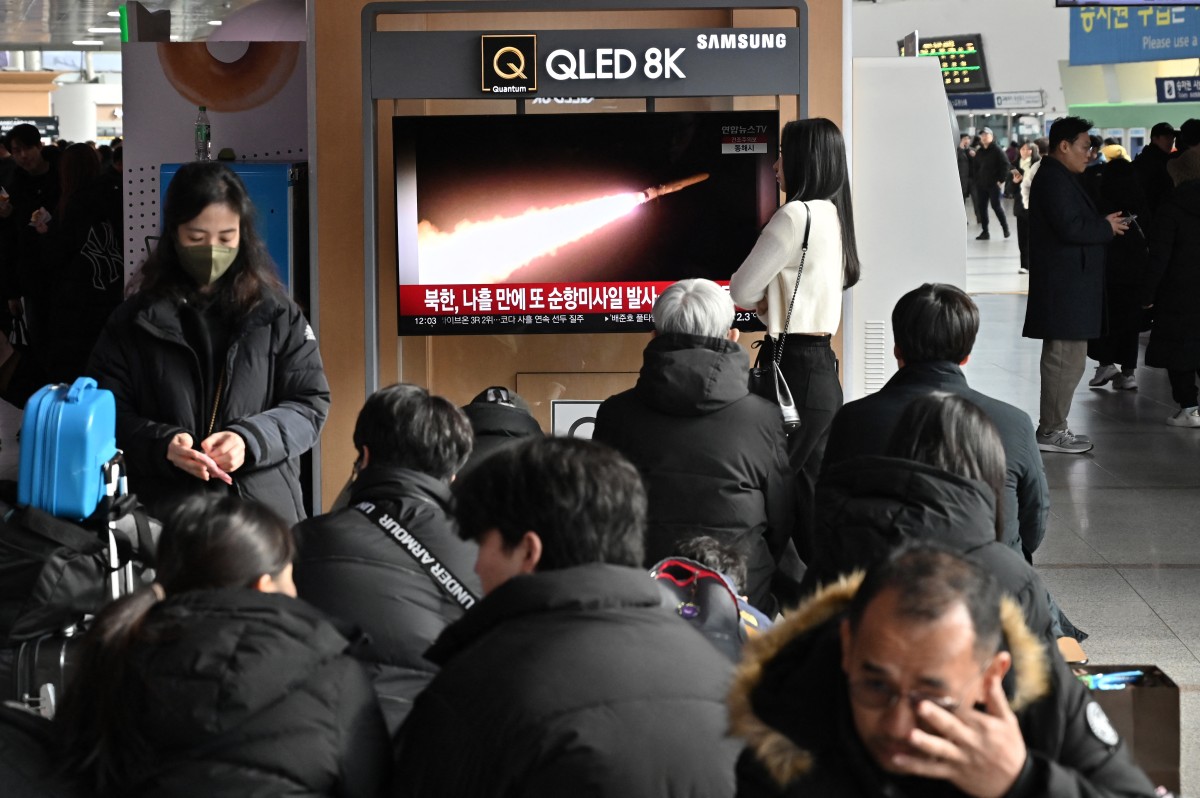
People watch a television screen showing a news broadcast with file footage of a North Korean missile test, at a railway station in Seoul on January 28, 2024. North Korea fired several cruise missiles on January 28, Seoul's military said, the latest in a series of tension-raising moves by the nuclear-armed state. (Photo by Jung Yeon-je / AFP)

The two Pulhwasal-3-31 missiles "flew in the sky above the East Sea ... to hit the island target" on Sunday, state-run news agency KCNA reported, adding that Kim Jong Un had "guided" the launch.

It said the missiles were in the air for 7,421 seconds and 7,445 seconds, but did not say how far they flew or whether they had been launched from above or below the water.

The Pulhwasal-3-31 is a new generation of strategic cruise missile that Pyongyang said it had only tested for the first time on Wednesday, firing multiple missiles toward the Yellow Sea.

North Korea's exact sea-based launch capabilities remain unclear.

Previous tests were carried out from older vessels, including from a submerged platform, rather than an actual submarine.

In March last year North Korea launched two cruise missiles that flew 1,500 kilometres (930 miles), according to Pyongyang, putting all of South Korea and much of Japan within range.

But analysts said it appeared they had been launched from above water level, thereby removing the stealth benefit of the weapon.

North Korea also has a submarine-launched ballistic missile (SLBM) called the Pukguksong-3, with an estimated range of 1,900 kilometres. It announced a successful test of a new version of that missile in October 2021.

SLBMs can be launched from under the ocean, making them extremely mobile and hard to detect.

Proven SLBM capability would take North Korea's arsenal to a new level, allowing deployment far beyond the Korean peninsula and a second-strike capability in the event of an attack.

North Korea has also conducted what it called simulations with its "first tactical nuclear attack submarine".

- 'Great satisfaction' -

Sunday's test from the submarine "had no impact on the security of a neighboring country and has nothing to do with the regional situation," the KCNA report continued, adding that Kim had "expressed great satisfaction" with the launch.

South Korea's military said Sunday that it had detected cruise missiles fired near waters around the North's Sinpo area.

Pyongyang has accelerated weapons testing in the new year, including tests of what it called an "underwater nuclear weapon system" and a solid-fuelled hypersonic ballistic missile.

Unlike their ballistic counterparts, the testing of cruise missiles is not banned under current UN sanctions against Pyongyang.

Cruise missiles tend to be jet-propelled and fly at a lower altitude than more sophisticated ballistic missiles, making them harder to detect and intercept.

Recent months have seen a sharp deterioration in ties between the two Koreas, with both sides jettisoning key tension-reducing agreements, ramping up frontier security, and conducting live-fire drills along the border.

Related Tags

WORLDNEWS
ADVERTISEMENT
.most-popular .layout-ratio{ padding-bottom: 79.13%; } @media (min-width: 768px) and (max-width: 1024px) { .widget-title { font-size: 15px !important; } }

{{ articles_filter_1561_widget.title }}

.most-popular .layout-ratio{ padding-bottom: 79.13%; } @media (min-width: 768px) and (max-width: 1024px) { .widget-title { font-size: 15px !important; } }

{{ articles_filter_1562_widget.title }}

.most-popular .layout-ratio{ padding-bottom: 79.13%; } @media (min-width: 768px) and (max-width: 1024px) { .widget-title { font-size: 15px !important; } }

{{ articles_filter_1563_widget.title }}

{{ articles_filter_1564_widget.title }}

.mb-article-details { position: relative; } .mb-article-details .article-body-preview, .mb-article-details .article-body-summary{ font-size: 17px; line-height: 30px; font-family: "Libre Caslon Text", serif; color: #000; } .mb-article-details .article-body-preview iframe , .mb-article-details .article-body-summary iframe{ width: 100%; margin: auto; } .read-more-background { background: linear-gradient(180deg, color(display-p3 1.000 1.000 1.000 / 0) 13.75%, color(display-p3 1.000 1.000 1.000 / 0.8) 30.79%, color(display-p3 1.000 1.000 1.000) 72.5%); position: absolute; height: 200px; width: 100%; bottom: 0; display: flex; justify-content: center; align-items: center; padding: 0; } .read-more-background a{ color: #000; } .read-more-btn { padding: 17px 45px; font-family: Inter; font-weight: 700; font-size: 18px; line-height: 16px; text-align: center; vertical-align: middle; border: 1px solid black; background-color: white; } .hidden { display: none; }
function initializeAllSwipers() { // Get all hidden inputs with cms_article_id document.querySelectorAll('[id^="cms_article_id_"]').forEach(function (input) { const cmsArticleId = input.value; const articleSelector = '#article-' + cmsArticleId + ' .body_images'; const swiperElement = document.querySelector(articleSelector); if (swiperElement && !swiperElement.classList.contains('swiper-initialized')) { new Swiper(articleSelector, { loop: true, pagination: false, navigation: { nextEl: '#article-' + cmsArticleId + ' .swiper-button-next', prevEl: '#article-' + cmsArticleId + ' .swiper-button-prev', }, }); } }); } setTimeout(initializeAllSwipers, 3000); const intersectionObserver = new IntersectionObserver( (entries) => { entries.forEach((entry) => { if (entry.isIntersecting) { const newUrl = entry.target.getAttribute("data-url"); if (newUrl) { history.pushState(null, null, newUrl); let article = entry.target; // Extract metadata const author = article.querySelector('.author-section').textContent.replace('By', '').trim(); const section = article.querySelector('.section-info ').textContent.replace(' ', ' '); const title = article.querySelector('.article-title h1').textContent; // Parse URL for Chartbeat path format const parsedUrl = new URL(newUrl, window.location.origin); const cleanUrl = parsedUrl.host + parsedUrl.pathname; // Update Chartbeat configuration if (typeof window._sf_async_config !== 'undefined') { window._sf_async_config.path = cleanUrl; window._sf_async_config.sections = section; window._sf_async_config.authors = author; } // Track virtual page view with Chartbeat if (typeof pSUPERFLY !== 'undefined' && typeof pSUPERFLY.virtualPage === 'function') { try { pSUPERFLY.virtualPage({ path: cleanUrl, title: title, sections: section, authors: author }); } catch (error) { console.error('ping error', error); } } // Optional: Update document title if (title && title !== document.title) { document.title = title; } } } }); }, { threshold: 0.1 } ); function showArticleBody(button) { const article = button.closest("article"); const summary = article.querySelector(".article-body-summary"); const body = article.querySelector(".article-body-preview"); const readMoreSection = article.querySelector(".read-more-background"); // Hide summary and read-more section summary.style.display = "none"; readMoreSection.style.display = "none"; // Show the full article body body.classList.remove("hidden"); } document.addEventListener("DOMContentLoaded", () => { let loadCount = 0; // Track how many times articles are loaded const offset = [1, 2, 3, 4, 5, 6, 7, 8, 9, 10]; // Offset values const currentUrl = window.location.pathname.substring(1); let isLoading = false; // Prevent multiple calls if (!currentUrl) { console.log("Current URL is invalid."); return; } const sentinel = document.getElementById("load-more-sentinel"); if (!sentinel) { console.log("Sentinel element not found."); return; } function isSentinelVisible() { const rect = sentinel.getBoundingClientRect(); return ( rect.top < window.innerHeight && rect.bottom >= 0 ); } function onScroll() { if (isLoading) return; if (isSentinelVisible()) { if (loadCount >= offset.length) { console.log("Maximum load attempts reached."); window.removeEventListener("scroll", onScroll); return; } isLoading = true; const currentOffset = offset[loadCount]; window.loadMoreItems().then(() => { let article = document.querySelector('#widget_1690 > div:nth-last-of-type(2) article'); intersectionObserver.observe(article) loadCount++; }).catch(error => { console.error("Error loading more items:", error); }).finally(() => { isLoading = false; }); } } window.addEventListener("scroll", onScroll); });

Sign up by email to receive news.