






 Philippines
Metro Manila
Smart kami sa Makati: 400 'smart classrooms' for Makatizen youth
Philippines
Metro Manila
Smart kami sa Makati: 400 'smart classrooms' for Makatizen youth
Smart kami sa Makati: 400 'smart classrooms' for Makatizen youth


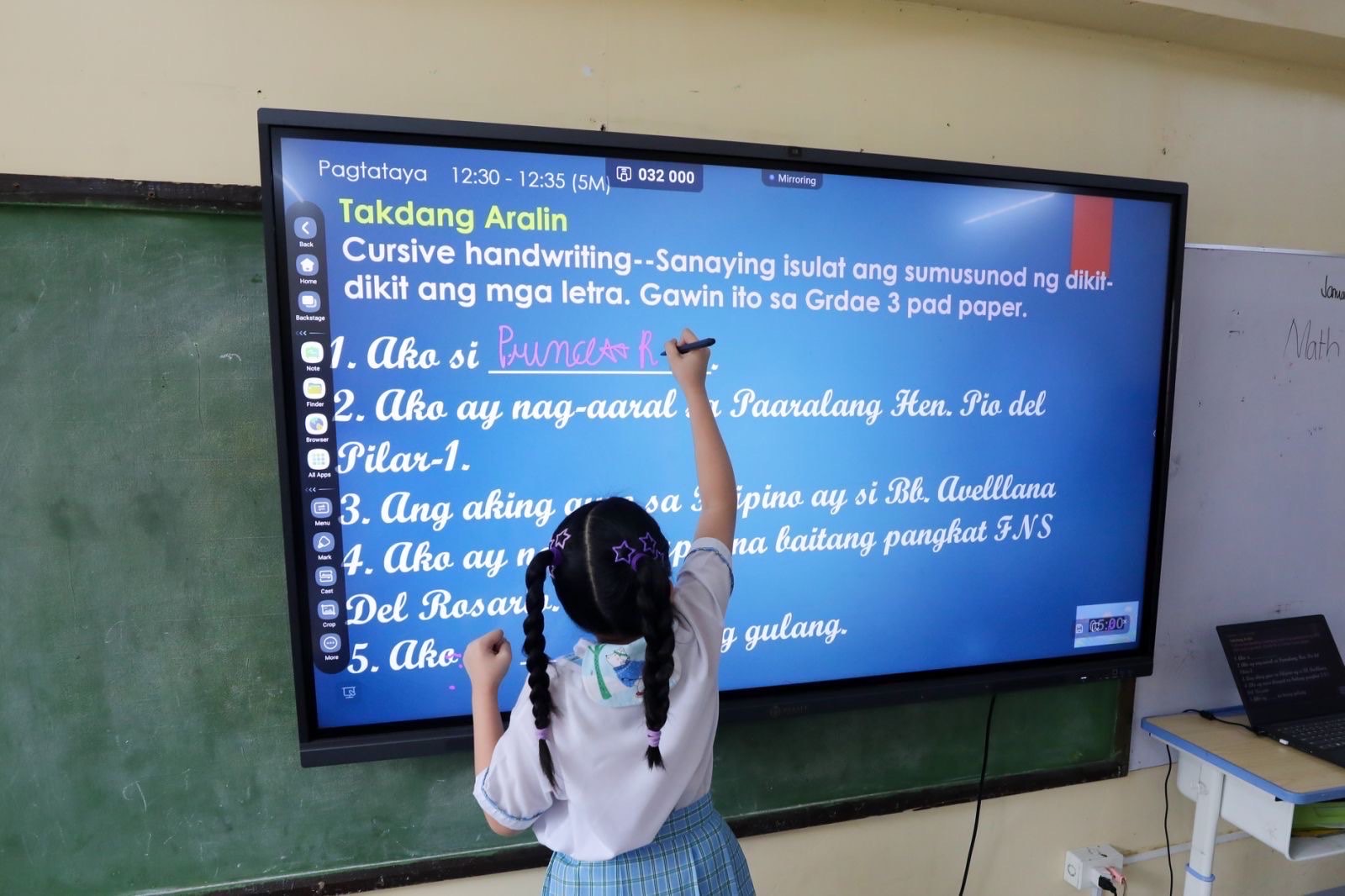
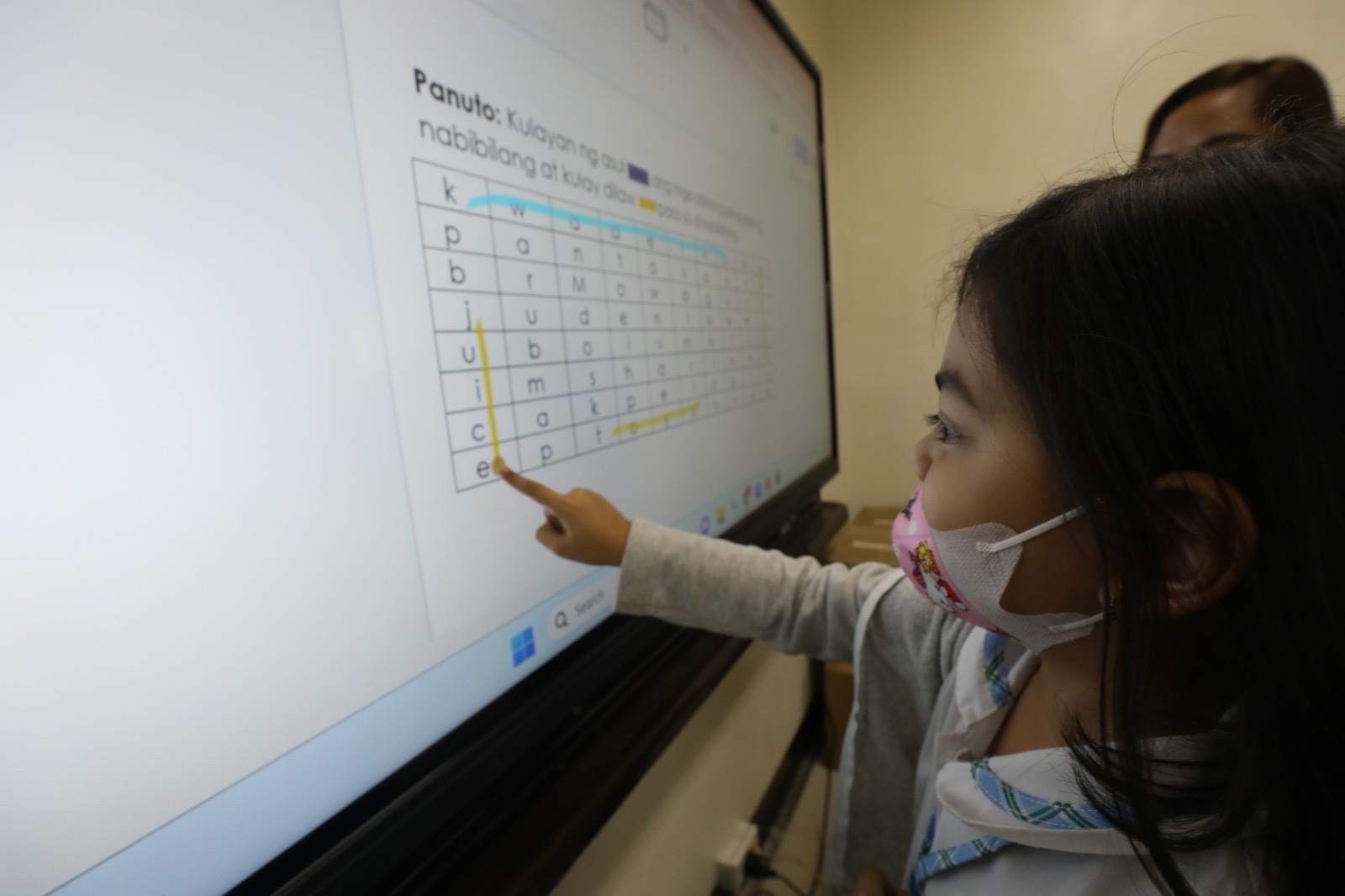
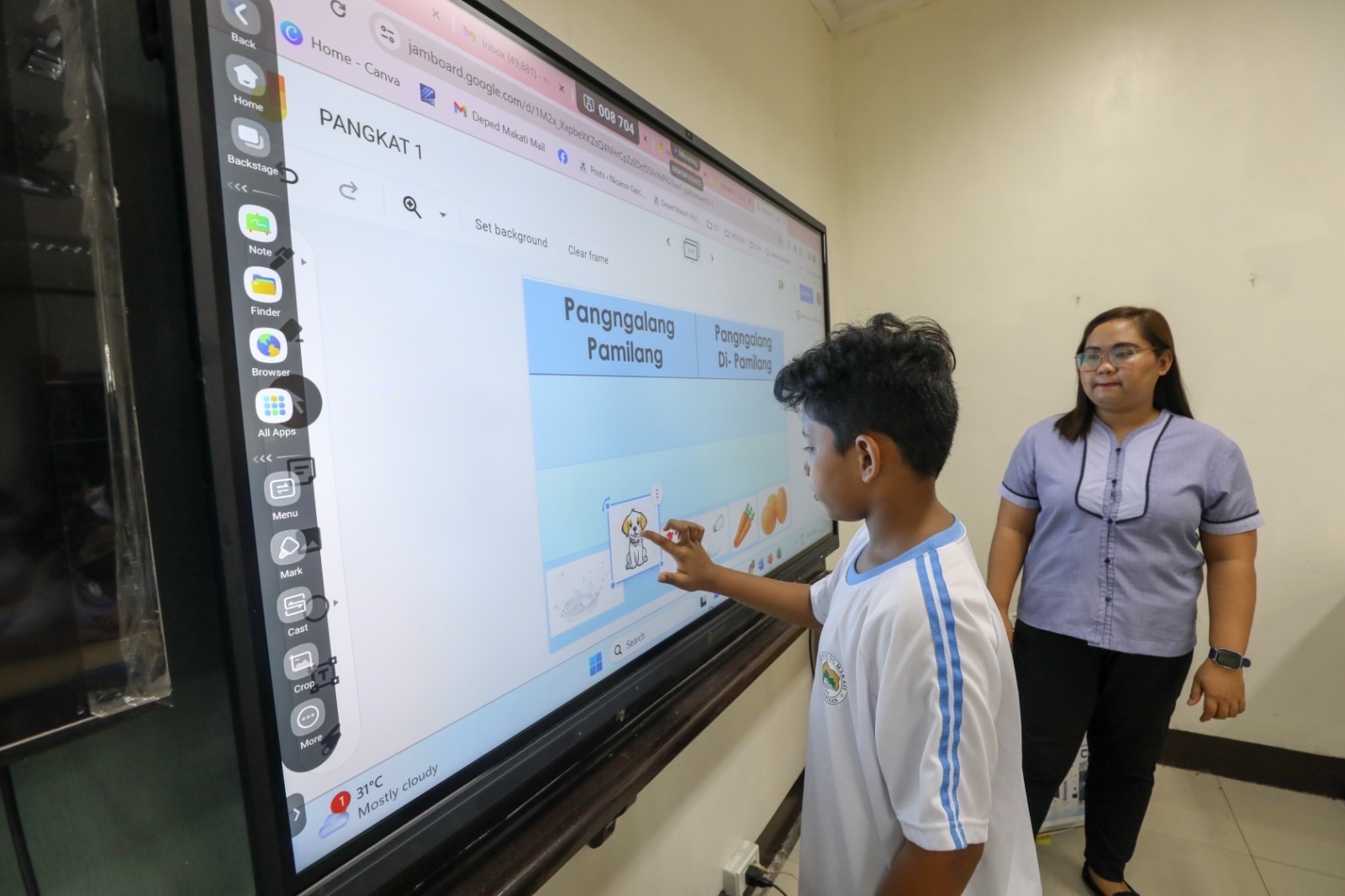
A total of 400 traditional classrooms in Makati City are set to be converted into "smart classrooms" by the city government as part of its efforts in boosting the quality of learning of the Makatizen youth through technology.
Makati City Mayor Abby Binay made the announcement on Friday, Jan. 26, saying the 400 classrooms will be installed with interactive whiteboards, notebook tablets, and unlimited internet access by this year.
(Photos from Makati LGU)
The city government have already distributed 200 Hybrid Interactive Boards (HIBs) equivalent to 50 percent of its target.
Binay said 119 HIBs have been installed in elementary schools and 81 in secondary schools.
"Each HIB unit is equipped with Adroid 11.0 intelligent operating system and built with 5G wireless internet access with WiFi hotspot, and a three-way USB interface support. It also has a 4-core 64-bit CPU, a 4K touchscreen whiteboard with multi-gesture writing features, wireless co-screening with multiple screening, and remote snapshot. Its 8-array microphones have a 10-meter pickup distance for convenient video conferencing," she explained.
"We aim to incorporate IoT (Internet of Things) devices into 400 smart classrooms and expand this initiative in the near future. Our goal is to continuously provide quality education and modern instructional resources that meet the demands of the 21st century," she added.
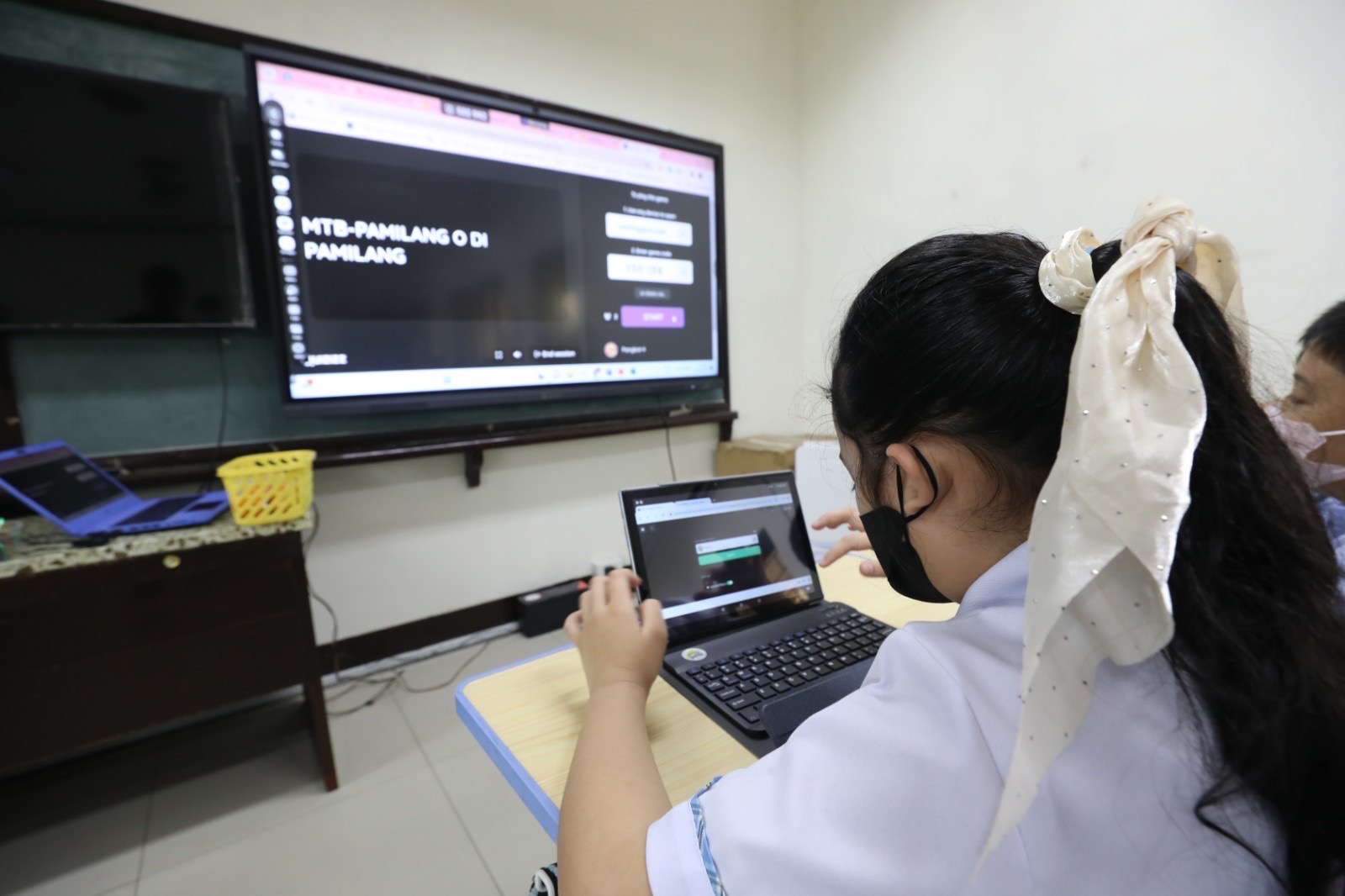
Learners will also have access to notebook tablets connected to the school's Learning Management System (LMS), aside from an HIB unit featuring remote classroom capabilities.
The internet access will also be unlimited for all students and teachers during classes inside the smart classrooms. Charging stations will be installed in the schools to ensure continuous use of the students' digital devices during learning activities.
Students will have each have a notebook tablets on the desk, allowing them to directly submit answers for exercises, worksheets, or exams provided by their teachers.
Meanwhile, learning analytics tools integrated into the LMS will help reduce the administrative workload for teachers in assessing and evaluating the students' performance.
“The assessment scores of students can be accurately reported through a smart classroom’s HIB,” Mayor Abby explained.
“This approach will save time, decrease paperwork, reduce teachers' administrative burdens, and allow more time for student-centered activities and the development of teaching strategies and innovations in their smart classrooms," the three-term mayor explained.
“This demonstrates Makati City's commitment to exceeding expectations in providing quality education. Our public school facilities and equipment are comparable to those in top private schools. We believe our students deserve the best educational services a local government can offer. The dedication of our city's teachers will lead to improved learning outcomes,” she added.
From October to November 2023, some 692 public school teachers in Makati received hands-on training in the Intensive Hybrid Interactive Smart Classroom Television Orientation and Hands-on Training program across various schools.
Solarize our schools
In March of last year, the local government launched its solar panel installation project in the city's public schools as part of its efforts in promoting sustainability and awareness about the adverse effects of climate change.
During the ceremonial launch of the project at San Antonio National High School, Binay stressed the importance of “walking the talk” when it comes to promoting sustainability and raising awareness about the impact of climate change.
"As a city, we have a responsibility to protect the environment and address the effects of climate change. The use of solar panels in schools is just one step towards achieving our goal of creating a more sustainable and resilient city. By investing in solar panels for our public schools, we are taking a step towards a greener, more sustainable future for our beloved city,” Binay said.
Under the said project, a total of 25 public elementary and high schools in the city will transition to the use of solar energy with San Antonio National High School as one of the first schools to have fully operational solar panels on site.
The solar panels will effectively reduce energy consumption and costs in schools by harnessing the power of the sun.
By using solar panels, schools will be able to generate electricity, reduce their reliance on traditional power sources, and decrease their carbon footprint.
The panels are projected to produce enough energy to power the schools during daylight hours, with excess energy being fed back into the grid.
In a report by San Antonio National High School, 88 percent (3644 kWh) of its recent total electricity consumption came from collected solar power energy, while the remaining 12 percent (498 kWh) was sourced from the usual electric distribution utility company.
Besides saving the city energy and money, the mayor said San Antonio High School’s transition to renewable energy also translates to environmental benefits: 2.41 equivalent trees planted and 4.35 t CO2 emissions saved.