






 Philippines
National
Marcos orders agencies to focus on high-risk regions in implementing climate change plan
Philippines
National
Marcos orders agencies to focus on high-risk regions in implementing climate change plan
Marcos orders agencies to focus on high-risk regions in implementing climate change plan


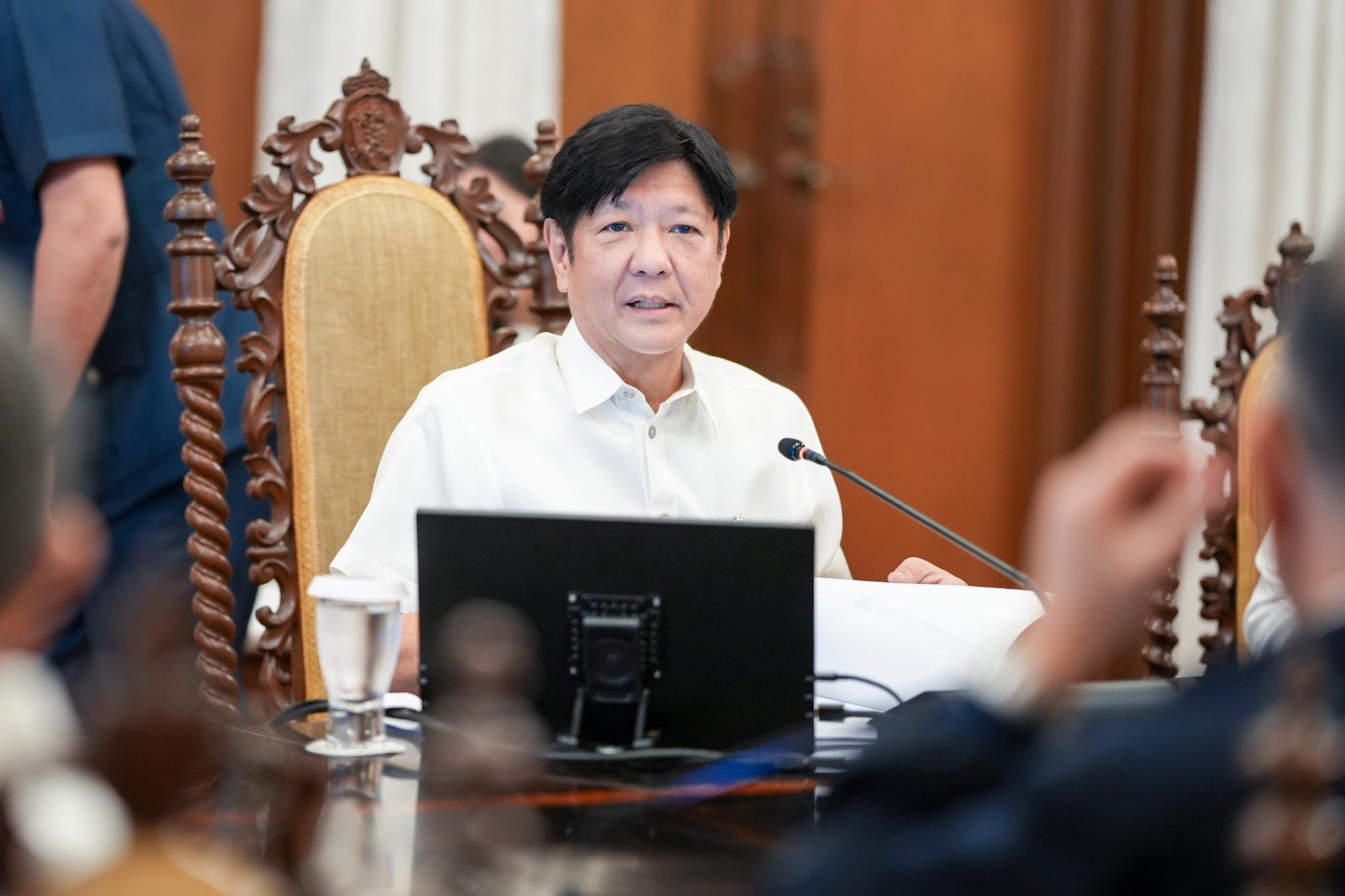
President Marcos has ordered government agencies to focus on high-risk regions in the country in the implementation of the National Adaptation Plan (NAP) aimed at mitigating the effects of climate change.
Marcos also directed concerned agencies to conduct an aggressive information dissemination campaign to raise public awareness on the adaptation plan, as well as the risks posed by the changing climate.
“It’s a big, big (task). This covers three decades and the entire country. It’s a completely different situation when it comes to climate change. Anyway, I think that’s the approach that we should take," Marcos said in a meeting with the Department of Environment and Natural Resources (DENR) and other agencies.
"We have to try and work our way down through the system—the economic system—so that we can address the specific situations, the specific conditions (of each area),” he added.
According to the Presidential Communications Office (PCO), the President met with the agencies on Wednesday, Jan. 24, to discuss the key outcomes of the COP28 and present the Nationally Determined Contribution Implementation Plan (NDCIP) 2023-2030 and the Philippine National Adaptation Plan (NAP) 2023-2050.
He said all efforts under the NDCIP and NAP must be for the interest of the Philippines, especially those in high-risk areas.
“The best that we can do is number one, be very specific on what is necessary for the Philippines. If we take care of the Philippines, we can bet with confidence that we are doing our part. So, asikasuhin muna natin yung Pilipinas, kung what is good for us. So, the communities that are high risk, ano kailangan nila. Let’s focus on that,” the President said.
Marcos pointed out that different government agencies and local government units (LGUs) involved in carrying out the plan must fully understand the NDCIP and NAP and what they intend to achieve in order for them to implement them in their programs.
He also said ordinary people must also have a full grasp of the two plans as they relate to their own condition and environment.
Environment Secretary Antonia Yulo-Loyzaga told the President that there are several ongoing bilateral projects that actually deal with adaptation and resilience of LGUs.
These projects include the ongoing $15-$16 million Strengthening Institutions and Empowering Localities Against Disasters and Climate Change in the Philippines (SHIELD) project backed by Australian government and a US-funded project called Climate Resilient Cities focusing on metropolis.