

ADVERTISEMENT

N. Korea fires several cruise missiles towards Yellow Sea: Seoul military

Published Jan 25, 2024 12:27 am

Seoul, South Korea - North Korea fired several cruise missiles towards the Yellow Sea on Wednesday, Seoul's military said, the latest in a series of tension-raising moves by the nuclear-armed state.
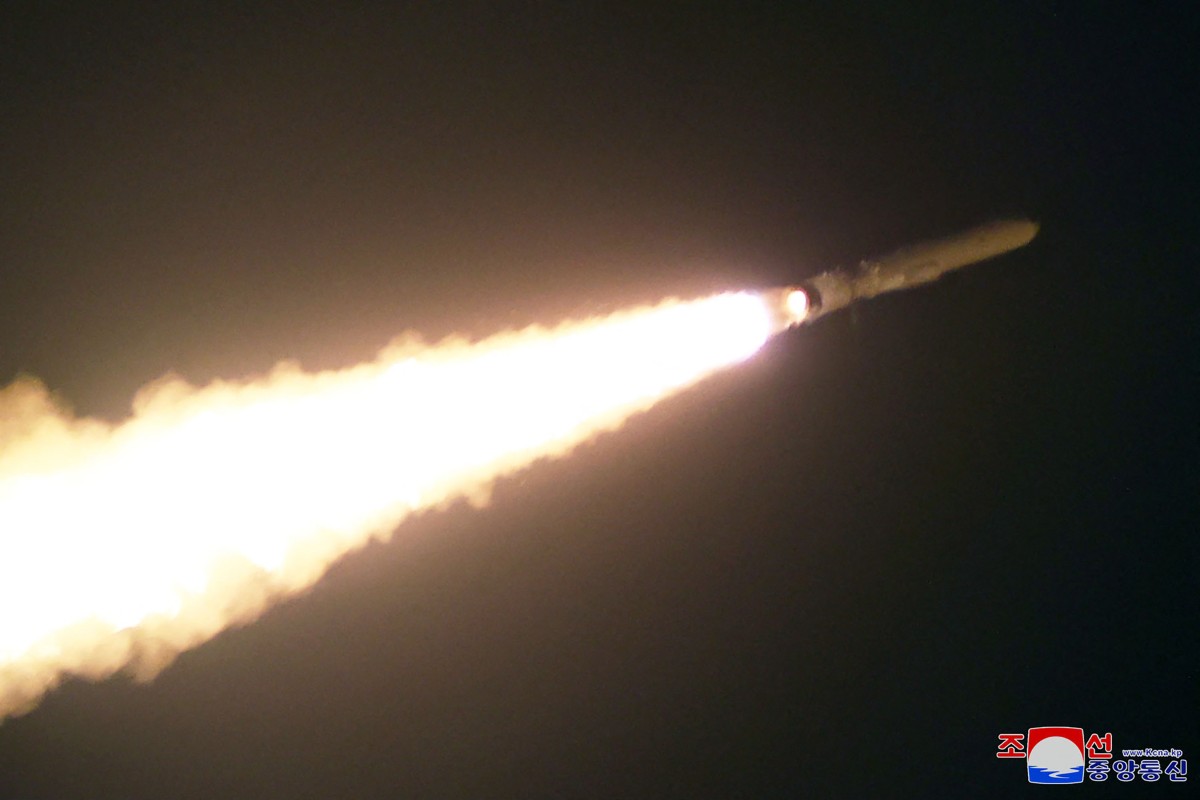
IMG_4292.jpeg

This picture taken on January 24, 2024 and released by North Korea's official Korean Central News Agency (KCNA) on January 25, 2024 shows North Korea conducting its first test firing of a new strategic cruise missile "Pulhwasal-3-31", at an undisclosed location in North Korea. North Korea fired several cruise missiles towards the Yellow Sea on January 24, Seoul's military said, the latest in a series of tension-raising moves by the nuclear-armed state. (Photo by KCNA VIA KNS / AFP)

Hours later, North Korea appeared to confirm the firing, saying it had carried out its first test of a new generation of strategic cruise missiles it is developing, the Pulhwasal-3-31.

Pyongyang has accelerated weapons testing in the new year, including tests of what it called an "underwater nuclear weapon system" and a solid-fuelled hypersonic ballistic missile.

"Our military detected several cruise missiles launched by North Korea towards the Yellow Sea at around 7:00 am today," the South Korean Joint Chiefs of Staff said in a statement.

Unlike their ballistic counterparts, the testing of cruise missiles is not banned under current UN sanctions against Pyongyang.

Cruise missiles tend to be jet-propelled and fly at a lower altitude than more sophisticated ballistic missiles, making them harder to detect and intercept.

North Korea insisted Thursday the test the previous day was "a process of constant updating of the weapon system and a regular and obligatory activity," the state news agency KCNA said. It did not specify how many missiles were fired.

"The test-fire had no impact on the security of neighboring countries and has nothing to do with the regional situation," the agency said.

The latest launch comes as South Korea is conducting a 10-day special forces infiltration drill off its east coast, "in light of serious security situations" with the North, that runs until Thursday, according to the South's navy.

"We will achieve our mission to infiltrate deep into the enemy's territory and neutralize them completely under any circumstances," the drill's commander said in a statement.


- 'Principal' enemy -


Last week, North Korean leader Kim Jong Un declared the South his country's "principal enemy", jettisoned agencies dedicated to reunification and outreach and threatened war over "even 0.001 mm" of territorial infringement.

Hours after the missiles were fired by Pyongyang Wednesday, Seoul's defence minister said North Korea would face the end of its regime if it ever waged war.

"If the Kim Jong Un regime makes the worst choice to start a war, you must become the invisible force that protects South Korea and... eliminate the enemy's leadership in the shortest possible time and end their regime," Shin Won-sik said.

Shin made the remarks during his visit to an air force base operating the South's advanced stealth fighter jets.

Recent months have seen a sharp deterioration in ties between the two Koreas, with both sides jettisoning key tension-reducing agreements, ramping up frontier security, and conducting live-fire drills along the border.

The North Korean leader Kim also said Pyongyang would not recognise the two countries' de facto maritime border, the Northern Limit Line, and called for constitutional changes allowing the North to "occupy" Seoul in war, the Korean Central News Agency (KCNA) said.


- 'Overwhelming response' -


In Seoul, President Yoon Suk Yeol told his cabinet that should the nuclear-armed North carry out a provocation, South Korea would hit back with a response "multiple times stronger", pointing to his military's "overwhelming response capabilities".

At Pyongyang's year-end policy meetings, Kim threatened a nuclear attack on the South and called for a build-up of his country's military arsenal ahead of armed conflict he warned could "break out any time".

Earlier this month, the North launched a solid-fuel hypersonic missile, just days after Pyongyang staged live-fire exercises near the country's tense maritime border with South Korea, which prompted counter-exercises and evacuation orders for some border islands belonging to the South.

Kim also successfully put a spy satellite into orbit late last year, after receiving what Seoul said was Russian help, in exchange for arms transfers for Moscow's war in Ukraine.


Related Tags

world news
ADVERTISEMENT
.most-popular .layout-ratio{ padding-bottom: 79.13%; } @media (min-width: 768px) and (max-width: 1024px) { .widget-title { font-size: 15px !important; } }

{{ articles_filter_1561_widget.title }}

.most-popular .layout-ratio{ padding-bottom: 79.13%; } @media (min-width: 768px) and (max-width: 1024px) { .widget-title { font-size: 15px !important; } }

{{ articles_filter_1562_widget.title }}

.most-popular .layout-ratio{ padding-bottom: 79.13%; } @media (min-width: 768px) and (max-width: 1024px) { .widget-title { font-size: 15px !important; } }

{{ articles_filter_1563_widget.title }}

{{ articles_filter_1564_widget.title }}

.mb-article-details { position: relative; } .mb-article-details .article-body-preview, .mb-article-details .article-body-summary{ font-size: 17px; line-height: 30px; font-family: "Libre Caslon Text", serif; color: #000; } .mb-article-details .article-body-preview iframe , .mb-article-details .article-body-summary iframe{ width: 100%; margin: auto; } .read-more-background { background: linear-gradient(180deg, color(display-p3 1.000 1.000 1.000 / 0) 13.75%, color(display-p3 1.000 1.000 1.000 / 0.8) 30.79%, color(display-p3 1.000 1.000 1.000) 72.5%); position: absolute; height: 200px; width: 100%; bottom: 0; display: flex; justify-content: center; align-items: center; padding: 0; } .read-more-background a{ color: #000; } .read-more-btn { padding: 17px 45px; font-family: Inter; font-weight: 700; font-size: 18px; line-height: 16px; text-align: center; vertical-align: middle; border: 1px solid black; background-color: white; } .hidden { display: none; }
function initializeAllSwipers() { // Get all hidden inputs with cms_article_id document.querySelectorAll('[id^="cms_article_id_"]').forEach(function (input) { const cmsArticleId = input.value; const articleSelector = '#article-' + cmsArticleId + ' .body_images'; const swiperElement = document.querySelector(articleSelector); if (swiperElement && !swiperElement.classList.contains('swiper-initialized')) { new Swiper(articleSelector, { loop: true, pagination: false, navigation: { nextEl: '#article-' + cmsArticleId + ' .swiper-button-next', prevEl: '#article-' + cmsArticleId + ' .swiper-button-prev', }, }); } }); } setTimeout(initializeAllSwipers, 3000); const intersectionObserver = new IntersectionObserver( (entries) => { entries.forEach((entry) => { if (entry.isIntersecting) { const newUrl = entry.target.getAttribute("data-url"); if (newUrl) { history.pushState(null, null, newUrl); let article = entry.target; // Extract metadata const author = article.querySelector('.author-section').textContent.replace('By', '').trim(); const section = article.querySelector('.section-info ').textContent.replace(' ', ' '); const title = article.querySelector('.article-title h1').textContent; // Parse URL for Chartbeat path format const parsedUrl = new URL(newUrl, window.location.origin); const cleanUrl = parsedUrl.host + parsedUrl.pathname; // Update Chartbeat configuration if (typeof window._sf_async_config !== 'undefined') { window._sf_async_config.path = cleanUrl; window._sf_async_config.sections = section; window._sf_async_config.authors = author; } // Track virtual page view with Chartbeat if (typeof pSUPERFLY !== 'undefined' && typeof pSUPERFLY.virtualPage === 'function') { try { pSUPERFLY.virtualPage({ path: cleanUrl, title: title, sections: section, authors: author }); } catch (error) { console.error('ping error', error); } } // Optional: Update document title if (title && title !== document.title) { document.title = title; } } } }); }, { threshold: 0.1 } ); function showArticleBody(button) { const article = button.closest("article"); const summary = article.querySelector(".article-body-summary"); const body = article.querySelector(".article-body-preview"); const readMoreSection = article.querySelector(".read-more-background"); // Hide summary and read-more section summary.style.display = "none"; readMoreSection.style.display = "none"; // Show the full article body body.classList.remove("hidden"); } document.addEventListener("DOMContentLoaded", () => { let loadCount = 0; // Track how many times articles are loaded const offset = [1, 2, 3, 4, 5, 6, 7, 8, 9, 10]; // Offset values const currentUrl = window.location.pathname.substring(1); let isLoading = false; // Prevent multiple calls if (!currentUrl) { console.log("Current URL is invalid."); return; } const sentinel = document.getElementById("load-more-sentinel"); if (!sentinel) { console.log("Sentinel element not found."); return; } function isSentinelVisible() { const rect = sentinel.getBoundingClientRect(); return ( rect.top < window.innerHeight && rect.bottom >= 0 ); } function onScroll() { if (isLoading) return; if (isSentinelVisible()) { if (loadCount >= offset.length) { console.log("Maximum load attempts reached."); window.removeEventListener("scroll", onScroll); return; } isLoading = true; const currentOffset = offset[loadCount]; window.loadMoreItems().then(() => { let article = document.querySelector('#widget_1690 > div:nth-last-of-type(2) article'); intersectionObserver.observe(article) loadCount++; }).catch(error => { console.error("Error loading more items:", error); }).finally(() => { isLoading = false; }); } } window.addEventListener("scroll", onScroll); });

Sign up by email to receive news.