

ADVERTISEMENT

Shake shingles off: Makati City holds lectures, master listing for shingles vaccination

Published Jan 24, 2024 02:54 am

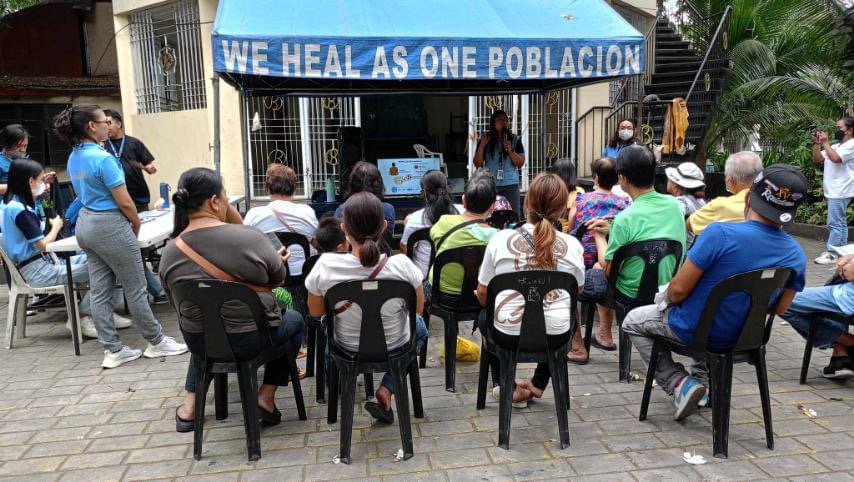
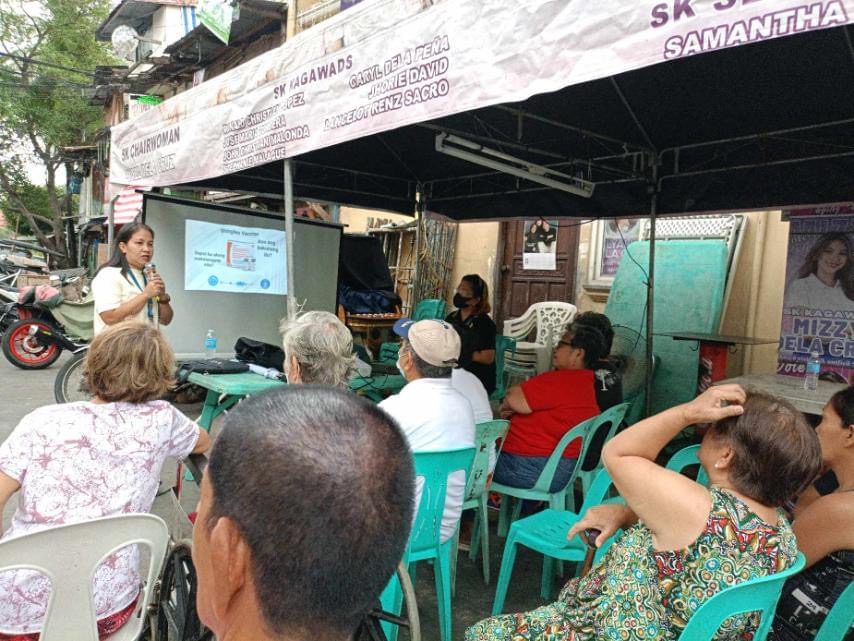
As part of its efforts in ensuring the health and welfare of its citizens, the Makati City local government conducted community lectures and master-listing of its residents who wish to avail of vaccines against shingles.
IMG_4285.jpegIMG_4286.jpeg

(Photos from Makati LGU)

Spearheaded by the Makati Health Department (MHD), the community lectures tackled the causes, symptoms, and possible treatment of the infection. The MHD said it is already done with the lectures and master listing in barangays Poblacion, Guadalupe Viejo, and Valenzuela, with the other barangays to be visited by them in the coming days.

"Ayon kay Mayora Abby, dalawang dose ng shingles vaccine ang ibibigay sa mga immunocompomised adults 19 years old pataas at mga residente mula 50 to 80 years old. Ang bawat isang dose nito ay nagkakahalaga ng P8,000 to P10,000 sa labas, pero libreng ibibigay para sa mga Yellow Card holder (According to Mayor Abby, two doses of shingles vaccines will be given to immunocompromised adults aged 19-years-old and above and residents aged 50 to 80-years-old. Each dose of the vaccine costs around P8,000 to P10,000 outside, but these will be given to Yellow Card holders for free)," the city government said.

It urged residents to monitor Makati's official Facebook page for announcements regarding the shingles vaccination.

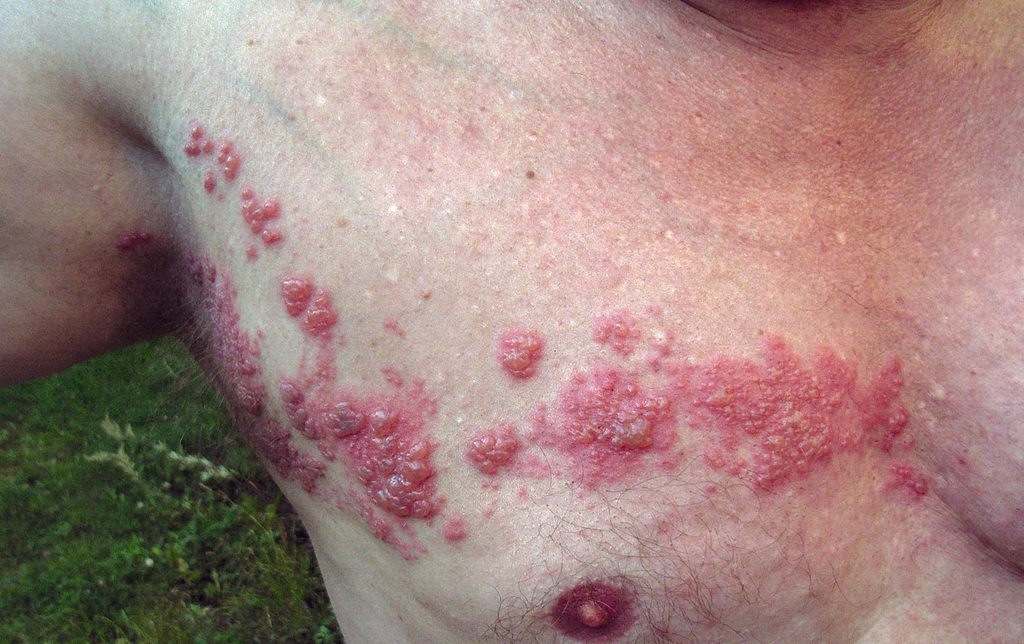
Shingles is a viral infection that causes a painful rash which can occur anywhere in the body. It usually looks like a single stripe of blisters that wraps around the left side or the right side of the torso.
IMG_4287.png

The disease is caused by the varicella-zoster virus — the same virus that causes chickenpox. Doctors explained after a person had chickenpox, the virus stays in the body for the rest of his life. Years later, the virus may reactivate as shingles.

Although not life-threatening, shingles can be very painful.

Vaccines can help lower the risk of shingles while early treatment may shorten a shingles infection and lessen the chance of complications. The most common complication is postherpetic neuralgia which is a painful condition that causes shingles pain for a long time even after the blisters have cleared.

The symptoms of shingles include:

- Pain, burning or tingling
- Sensitivity to touch
- A red rash that begins a few days after the pain
- Fluid-filled blisters that break open and crust over
- Itching

Some people also experience:

- Fever
- Headache
- Sensitivity to light
- Fatigue

Related Tags

metro news
ADVERTISEMENT
.most-popular .layout-ratio{ padding-bottom: 79.13%; } @media (min-width: 768px) and (max-width: 1024px) { .widget-title { font-size: 15px !important; } }

{{ articles_filter_1561_widget.title }}

.most-popular .layout-ratio{ padding-bottom: 79.13%; } @media (min-width: 768px) and (max-width: 1024px) { .widget-title { font-size: 15px !important; } }

{{ articles_filter_1562_widget.title }}

.most-popular .layout-ratio{ padding-bottom: 79.13%; } @media (min-width: 768px) and (max-width: 1024px) { .widget-title { font-size: 15px !important; } }

{{ articles_filter_1563_widget.title }}

{{ articles_filter_1564_widget.title }}

.mb-article-details { position: relative; } .mb-article-details .article-body-preview, .mb-article-details .article-body-summary{ font-size: 17px; line-height: 30px; font-family: "Libre Caslon Text", serif; color: #000; } .mb-article-details .article-body-preview iframe , .mb-article-details .article-body-summary iframe{ width: 100%; margin: auto; } .read-more-background { background: linear-gradient(180deg, color(display-p3 1.000 1.000 1.000 / 0) 13.75%, color(display-p3 1.000 1.000 1.000 / 0.8) 30.79%, color(display-p3 1.000 1.000 1.000) 72.5%); position: absolute; height: 200px; width: 100%; bottom: 0; display: flex; justify-content: center; align-items: center; padding: 0; } .read-more-background a{ color: #000; } .read-more-btn { padding: 17px 45px; font-family: Inter; font-weight: 700; font-size: 18px; line-height: 16px; text-align: center; vertical-align: middle; border: 1px solid black; background-color: white; } .hidden { display: none; }
function initializeAllSwipers() { // Get all hidden inputs with cms_article_id document.querySelectorAll('[id^="cms_article_id_"]').forEach(function (input) { const cmsArticleId = input.value; const articleSelector = '#article-' + cmsArticleId + ' .body_images'; const swiperElement = document.querySelector(articleSelector); if (swiperElement && !swiperElement.classList.contains('swiper-initialized')) { new Swiper(articleSelector, { loop: true, pagination: false, navigation: { nextEl: '#article-' + cmsArticleId + ' .swiper-button-next', prevEl: '#article-' + cmsArticleId + ' .swiper-button-prev', }, }); } }); } setTimeout(initializeAllSwipers, 3000); const intersectionObserver = new IntersectionObserver( (entries) => { entries.forEach((entry) => { if (entry.isIntersecting) { const newUrl = entry.target.getAttribute("data-url"); if (newUrl) { history.pushState(null, null, newUrl); let article = entry.target; // Extract metadata const author = article.querySelector('.author-section').textContent.replace('By', '').trim(); const section = article.querySelector('.section-info ').textContent.replace(' ', ' '); const title = article.querySelector('.article-title h1').textContent; // Parse URL for Chartbeat path format const parsedUrl = new URL(newUrl, window.location.origin); const cleanUrl = parsedUrl.host + parsedUrl.pathname; // Update Chartbeat configuration if (typeof window._sf_async_config !== 'undefined') { window._sf_async_config.path = cleanUrl; window._sf_async_config.sections = section; window._sf_async_config.authors = author; } // Track virtual page view with Chartbeat if (typeof pSUPERFLY !== 'undefined' && typeof pSUPERFLY.virtualPage === 'function') { try { pSUPERFLY.virtualPage({ path: cleanUrl, title: title, sections: section, authors: author }); } catch (error) { console.error('ping error', error); } } // Optional: Update document title if (title && title !== document.title) { document.title = title; } } } }); }, { threshold: 0.1 } ); function showArticleBody(button) { const article = button.closest("article"); const summary = article.querySelector(".article-body-summary"); const body = article.querySelector(".article-body-preview"); const readMoreSection = article.querySelector(".read-more-background"); // Hide summary and read-more section summary.style.display = "none"; readMoreSection.style.display = "none"; // Show the full article body body.classList.remove("hidden"); } document.addEventListener("DOMContentLoaded", () => { let loadCount = 0; // Track how many times articles are loaded const offset = [1, 2, 3, 4, 5, 6, 7, 8, 9, 10]; // Offset values const currentUrl = window.location.pathname.substring(1); let isLoading = false; // Prevent multiple calls if (!currentUrl) { console.log("Current URL is invalid."); return; } const sentinel = document.getElementById("load-more-sentinel"); if (!sentinel) { console.log("Sentinel element not found."); return; } function isSentinelVisible() { const rect = sentinel.getBoundingClientRect(); return ( rect.top < window.innerHeight && rect.bottom >= 0 ); } function onScroll() { if (isLoading) return; if (isSentinelVisible()) { if (loadCount >= offset.length) { console.log("Maximum load attempts reached."); window.removeEventListener("scroll", onScroll); return; } isLoading = true; const currentOffset = offset[loadCount]; window.loadMoreItems().then(() => { let article = document.querySelector('#widget_1690 > div:nth-last-of-type(2) article'); intersectionObserver.observe(article) loadCount++; }).catch(error => { console.error("Error loading more items:", error); }).finally(() => { isLoading = false; }); } } window.addEventListener("scroll", onScroll); });

Sign up by email to receive news.