







Proposed Chemical Weapons Prohibition Act hurdles House


At A Glance
- With 197 "yes" votes, the House of Representatives approved on third and final reading on Tuesday, Jan. 23 the measure that prohibits the development, production, acquisition, stockpiling, or retention of any chemical weapons, among others.
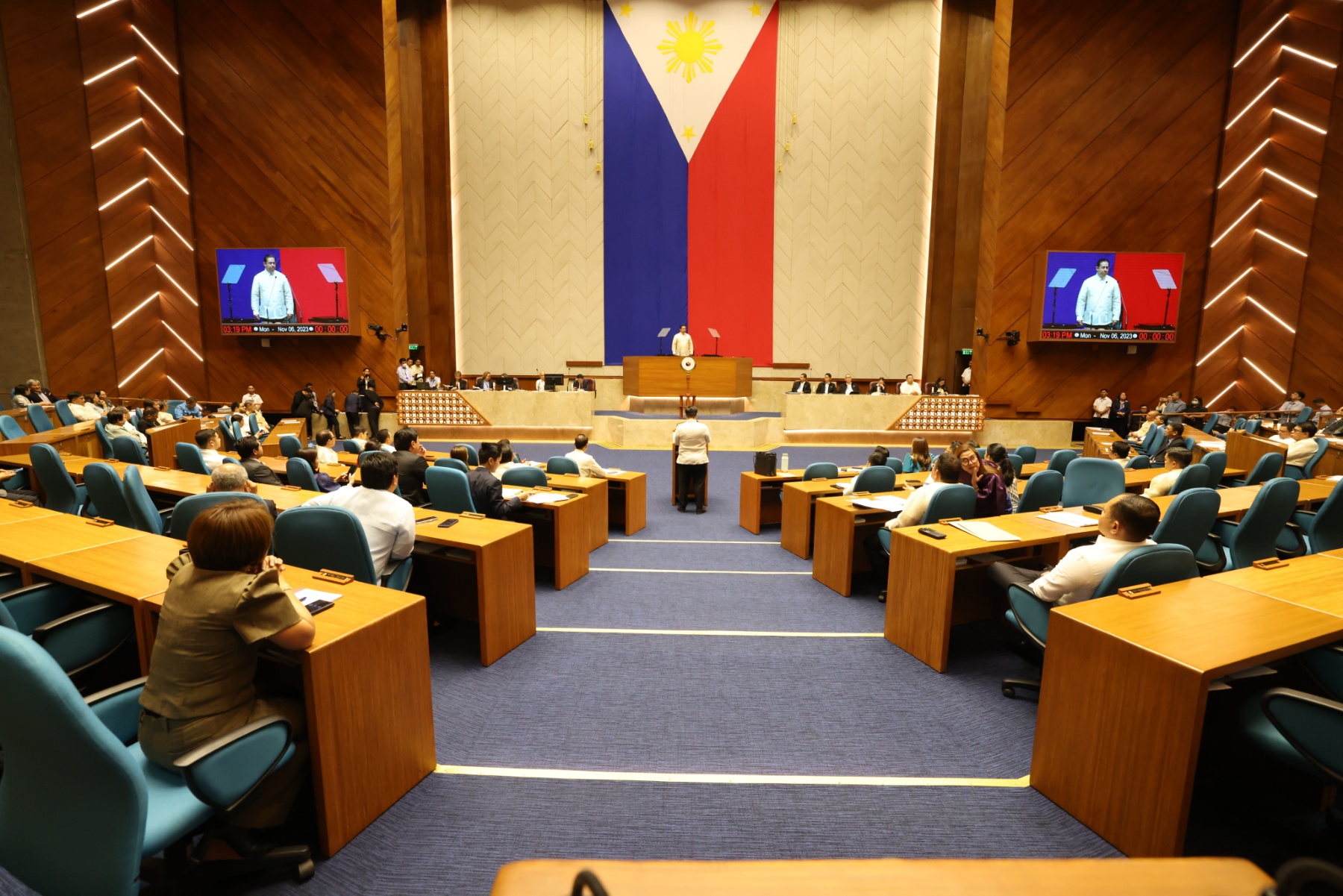 The House plenary. (Speaker’s office)
With 197 "yes" votes, the House of Representatives approved on third and final reading on Tuesday, Jan. 23 the measure that prohibits the development, production, acquisition, stockpiling, or retention of any chemical weapons, among others.
Passed during Tuesday's plenary session was House Bill (HB) No. 9571, or the proposed Chemical Weapons Prohibition Act.
Through the proposed statute, the Philippines will adopt a policy of freedom from chemical weapons to protect the people and the global environment, as well as to fulfill the country’s international commitment under the Chemical Weapons Convention.
“The bill designates the Anti-Terrorism Council (ATC) as the Philippine National Authority on the Chemical Weapons Convention (PNA-CWC), to be headed by the Executive Secretary,” House Speaker Martin Romualdez said in a statement following HB No.9571's passage.
The measure lists the responsibilities of the PNA-CWC including the development of policies concerning the production, processing, consumption, importation, exportation, use and proper disposition of scheduled chemicals and facilities, and production facilities of other chemicals not listed in Schedules 1 to 3 of the Annex on Chemicals to the Convention to which the Philippines is a signatory.
The Philippines signed the Convention in 1993 and subsequently ratified it in 1996.
“This proposed bill essentially serves as the enabling law required to fulfill our obligations under the Convention,” added Romualdez, leader of the 300-plus strong chamber.
The measure also prohibits the following: transfer, directly or indirectly, chemical weapons to persons; use of chemical weapons; any military preparations to use a chemical weapon; to assist, encourage or induce a person in any way to engage in any activity that is prohibited to a State Party under the Convention; to use a riot control agent as a method of warfare; to engage in any other activity prohibited to a State Party under the Convention; and to export and import Schedule 1 chemicals to or from a State not a Party to the Convention, including transit through such State.
It also seeks to impose penalties and sanctions for criminal and administrative violations committed by officers of partnerships, corporations, associations, and other juridical entities; government officials and employees; and foreign nationals.
Under the measure, any chemical weapon subject of the offense, the fruits and proceeds and such other instrument related thereto, shall be forfeited in favor of the government, and that the cost of destruction or disposal shall be borne by the erring individual or entity.
The Convention “aims to eliminate an entire category of weapons of mass destruction", and requires States Parties to “take the steps necessary to enforce that prohibition in respect of persons (natural or legal) within their jurisdiction", according to the website of the Organisation for the Prohibition of Chemical Weapons (OPCW).
With 193 member-states, the OPCW is the implementing body for the Convention, which came into force on April 29, 1997.