







China's rights record under fire at UN


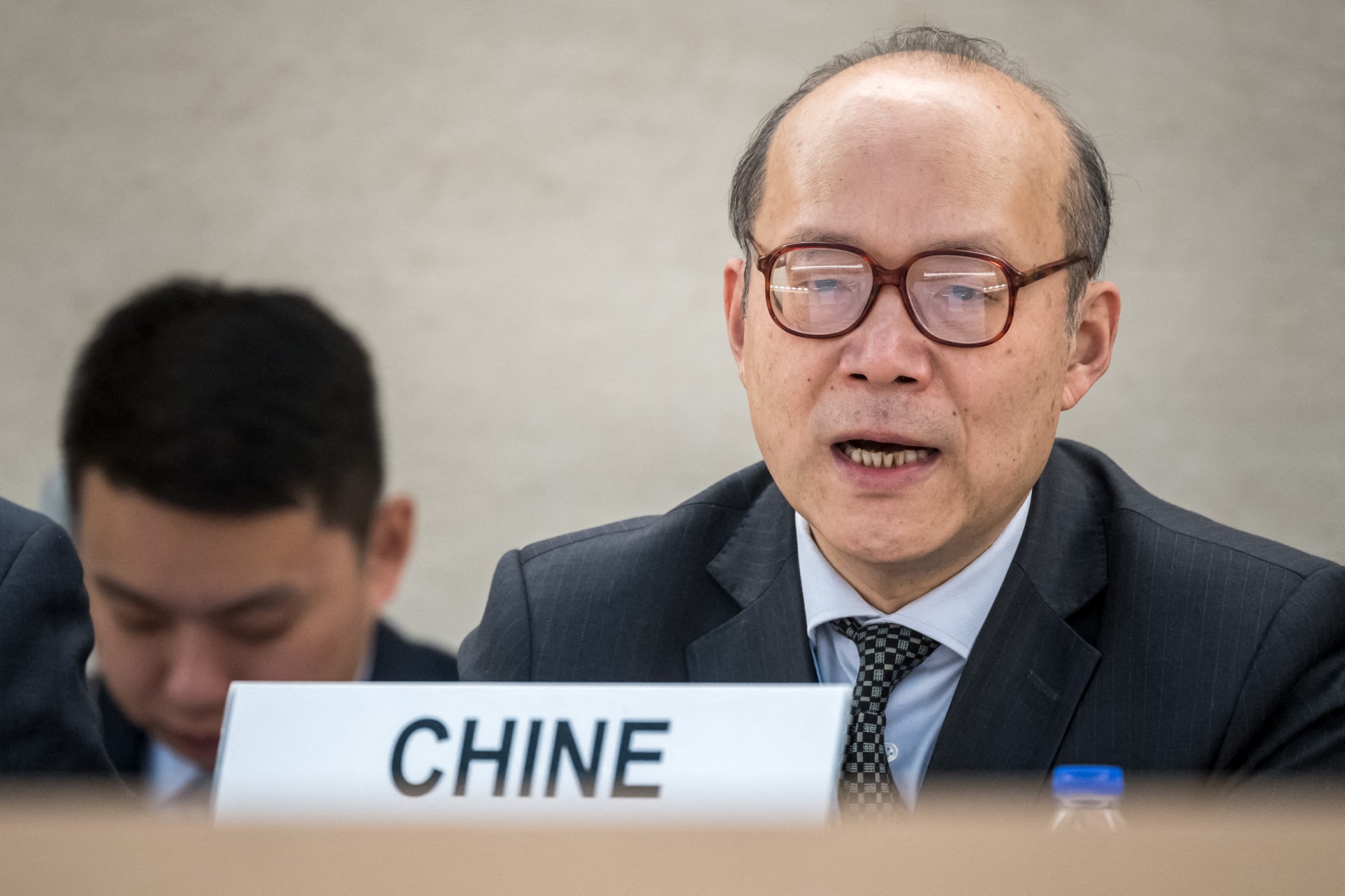
(Photo by Fabrice COFFRINI / AFP)
GENEVA, Switzerland– China faced stinging criticism from Western countries during a review of its rights record at the United Nations on Tuesday but it was also lauded by many countries including India and Eritrea.
Beijing was facing a regular Universal Periodic Review (UPR) -- an examination all 193 UN member states must undergo every four to five years to assess their human rights record.
A large Chinese delegation insisted Beijing was making great strides to improve the lives of its people, end poverty and protect rights.
"China upholds respect for protection of the rights as a task of importance," said Chen Xu, China's ambassador to the UN, who headed the delegation.
But diplomats from Western countries highlighted a crackdown on civil liberties and a sweeping national security law imposed on Hong Kong in 2020 to quash dissent after pro-democracy protests.
They also voiced alarm at repression in the northwestern Xinjiang region and alleged efforts to erase cultural and religious identity in Tibet.
Irish ambassador Noel White said Dublin was "deeply concerned about the continued repression of civil society in China, including harassment of human rights defenders, restrictions on freedom of expression... and the treatment of ethnic and religious groups, including in Xinjiang and Tibet."
There was a lot of focus on the situation in Xinjiang, where China is accused of incarcerating more than a million Uyghurs and other Muslim minorities.
- 'Crimes against humanity' -
Beijing vehemently rejects the charges, which were already put forward during its last UPR in 2018.
Since then, more UN documentation has been provided, including a report released by UN rights chief Michelle Bachelet just minutes before her term ended in 2022.
That report, flatly rejected by China, cites possible "crimes against humanity".
Rights advocates voiced hope the review would provide a chance for countries to demand concrete steps from Beijing.
A number of ambassadors did just that, with Danish ambassador Ib Petersen for instance calling on Beijing to "immediately implement the recommendations from the (UN rights office) assessment on Xinjiang."
He also urged China to "release writers, bloggers, journalists, human rights defenders and others arbitrarily detained for exercising their right to freedom of expression, and guarantee this right, including in Hong Kong".
Western diplomats were meanwhile pressed to get their points across quickly.
Observers said China had been pressuring its supporters to fill up the allotted speaking time with praise -- something many countries did.
Eritrea's representative for instance urged China to "continue to uphold the regional ethnic autonomy system and comprehensively promote ethnic unity and progress".
The Indian representative meanwhile urged Beijing to "continue taking steps to ensure fullest enjoyment of basic human rights by its people, through inclusive and sustainable development".
A full 163 countries signed up to talk during the half-day session, leaving each country with just 45 seconds to get their points across.
Ahead of the review, a Western diplomat asked "how do we encapsulate our concerns regarding China in 45 seconds?"