







Whitewashing the Manila Post Office building
Why put white paint over the fire-damaged structure?


At A Glance
- The fire-damaged structure was painted before a conservation assessment was performed. An assessment on structures (even more so for heritage structures) damaged by fire is imperative to identify structural and non-structural issues as part of the building's defect diagnosis
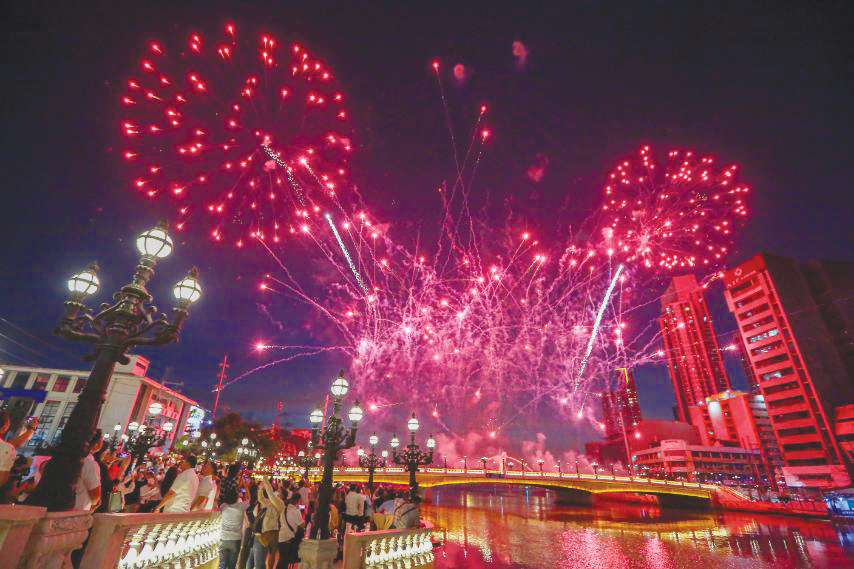
A few days ago, President Ferdinand R. Marcos Jr. (PBBM) launched the “Pasig Bigyang Buhay Muli” project at a ceremony along the Pasig River, just behind the fire-damaged Manila Post Office building.
The project aims to transform a 26-kilometer stretch of the Pasig River, where PBBM envisions “civic spaces where our children will play, our seniors relax, families will exercise, artists can showcase their talents, and the creative can display their wares.”
The government also plans to develop and “maximize the ready-to use maritime highways by deploying more ferry boats and stations in a bid to invite more riders to patronize the transport system.”
All very good news indeed, especially for those (me included) searching for new walking and running paths for myself and my dogs in the metropolis. And if the First Lady Liza Araneta-Marcos is at the helm of the project, whom PBBM fondly calls Ms. “Consider It Done” (CID), this will surely come to fruition.
The Pasig “Bigyang Buhay Muli” launch was capped by a fireworks display against the purpling night sky, accompanied by some amazing drone footage, which filled social and mainstream media the next day. The pageantry of it all would make one think it was the relaunch of a rehabilitated Manila Post Office building featured oh-so-prominently in the background. One could easily mistake it as such, given that the fire-damaged structure was newly painted to serve as a pristine backdrop for the event.
Fire gutted the Manila Post Office, almost a century old, in May 2023. The central office of the Philippine Postal Corporation, the building, built in 1926, was designed by Juan Marcos de Guzman Arellano. Having sustained major damage during WWII, it was rebuilt in 1945.
Unknown to me then, as I was witnessing such an event, that I was joining a growing number of heritage advocates, stunned, even horrified, with red flags unfurling in our minds amid the booming and the crackling of fireworks and the oohs and aahs of guests while the glowing newly painted post office building towered over them.
I soon found out that 50 percent of the exterior of the Manila Post Office was painted for the launch of the “Pasig Bigyang Buhay Muli” program. It was painted before a conservation assessment was performed. An assessment on structures (even more so for heritage structures) damaged by fire is imperative to identify structural and non-structural issues as part of the building’s defect diagnosis. Painting over the exterior of a burned-out building (and a cultural property at that) will have some ramifications, among them, “concealing damage, compromising structural integrity, moisture trapping, hindering professional assessment (making it harder for professionals to accurately assess and analyze the structure’s condition), complicating restoration (a layer of paint will make careful analysis of materials and methods harder), historical and cultural significance (painting over a façade may compromise its authenticity and cultural value), regulatory compliance (painting over heritage structures without proper approval could be in violation of the law),” among others.
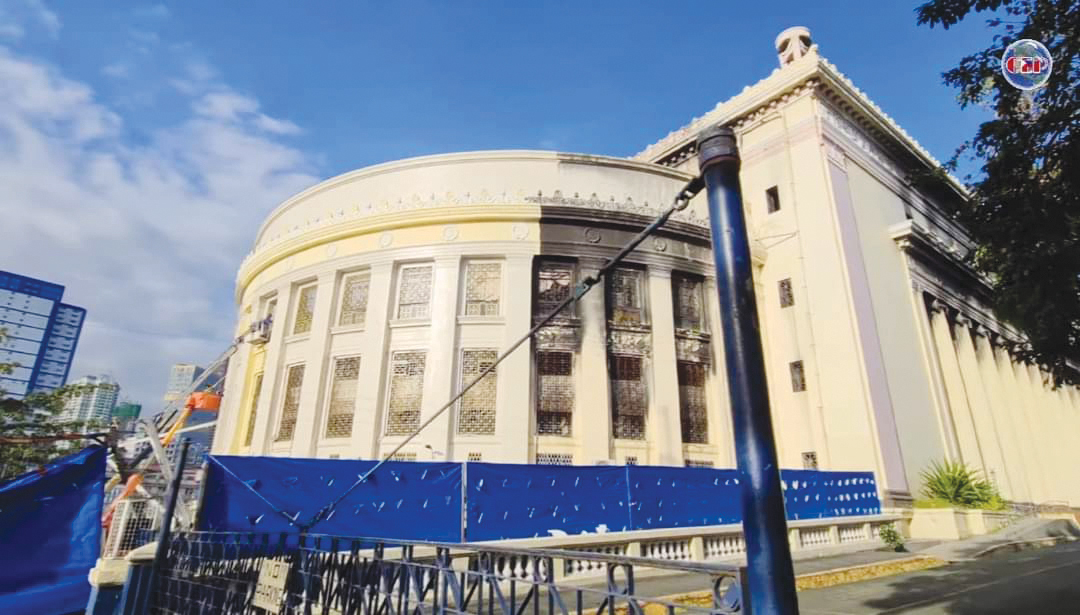
I grew curious to know the thoughts running in the minds of the heads of the various government cultural agencies, as they were seen in images posted on social and mainstream media attending the event. How can they pretend they weren’t seeing this? It makes one think, are our cultural government agencies (the heads no less) not up to speed with even the most basic conservation processes and procedures for heritage and cultural properties? Was the National Commission for Culture and the Arts even consulted in the matter of painting the razed heritage structure to begin with? Given the sheer size of the gleaming newly painted “white elephant in the room” behind them during the “Pasig Bigyang Buhay Muli” launch, how could they not have seen that something was amiss?
As conservation architect Gerard Lico posted on his FB page on Jan. 11, 2024, accompanied by a photo of the Manila Post Office building in the process of being painted, “You don’t just paint over the burned structure as the forensic evidence is unnecessarily hidden and obscured from the scrutiny and assessment of the ‘real’ conservation experts. The project to restore the Post Office building is still in the process of public bidding under TIEZA so academically trained and legitimate conservation experts would come in very soon. In this superficial process, para ka lang nga-apply ng makeup sa patay (It’s just like putting makeup on the dead).”
TIEZA stands for Tourism Infrastructure and Enterprise Zone Authority. It is under the Department of Tourism (DOT). It is the DOT’s implementing arm, “providing supporting infrastructure and facilitating investments in tourism enterprise zones (TEZ) nationwide.”
The TIEZA website says, “It’s primary objective is to encourage investments.” TIEZA took over the functions previously exercised by the Philippine Tourism Agency (PTA), which, along with the Department of Tourism, was created via Presidential Decree No 564 signed in 1974.
Postscript: It is reported that the paint used to whitewash the gutted Old Manila Post Office was donated by the leading paint manufacturer in the country, so no government funds were harmed in the whitewashing process.