

ADVERTISEMENT

US re-designates Yemen's Huthis as 'terrorist' entity

Published Jan 18, 2024 12:57 am

WASHINGTON, United States - The United States said Wednesday that it will put Yemen's Huthis back on a list of "terrorist" entities, but the announcement failed to deter the Iran-backed rebels, who responded by attacking a US-owned ship.
IMG_4251.jpeg

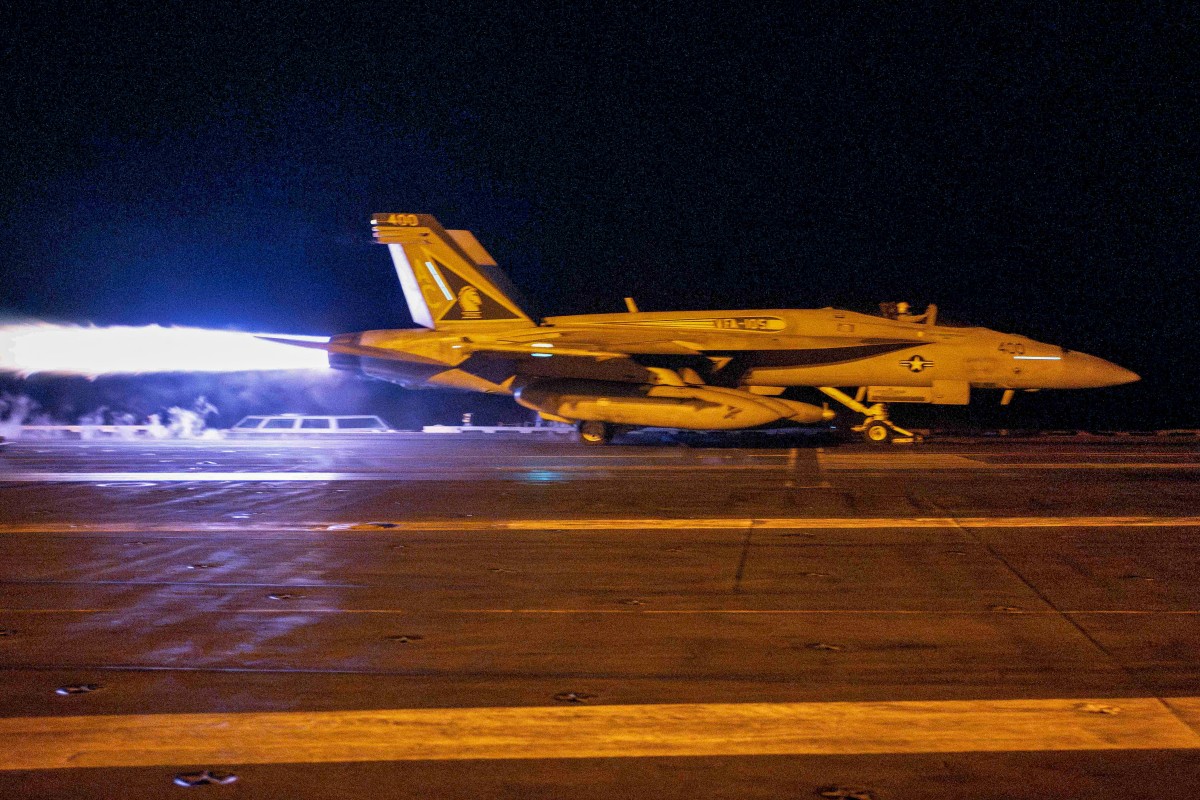
This handout picture taken on January 12, 2024 shows a fighter jet taking off from USS Dwight D. Eisenhower (CVN 69) during flight operations in response to increased Iranian-backed Houthi attacks on ships in the Red Sea. A string of Huthi attacks and retaliatory US and British strikes have heightened fears of the Israel-Hamas war flaring across the region and disrupted trade in one of the world's key maritime commercial routes. (Photo by Zachary Elmore / US NAVY / AFP)

The Huthis have already faced multiple rounds of air strikes in response to their targeting of merchant vessels in the Red Sea, and vowed after the designation announcement that they would continue attacks they say are in support of Palestinians in Gaza, where Israel is battling the militant group Hamas.

"The Department of State today is announcing the designation of Ansarallah, commonly referred to as the Huthis, as a Specially Designated Global Terrorist group, effective 30 days from today," Secretary of State Antony Blinken said in a statement.

"The Huthis must be held accountable for their actions, but it should not be at the expense of Yemeni civilians," he said.

"During the 30-day implementation delay, the US government will conduct robust outreach to stakeholders, aid providers, and partners who are crucial to facilitating humanitarian assistance and the commercial import of critical commodities in Yemen," Blinken said.

US National Security Advisor Jake Sullivan said the designation "is an important tool to impede terrorist funding to the Huthis, further restrict their access to financial markets, and hold them accountable for their actions."

"If the Huthis cease their attacks in the Red Sea and Gulf of Aden, the United States will immediately reevaluate this designation," Sullivan said in a statement.

The Huthis, however, said they will not call off their strikes.


- US-owned ship targeted -


"We will not give up targeting Israeli ships or ships heading towards ports in occupied Palestine... in support of the Palestinian people," the group's spokesman Mohammed Abdelsalam told Al Jazeera TV, adding that they would respond to new strikes on Yemen by the United States or Britain.

While the Huthis say they have been attacking Israeli-linked vessels, Washington says dozens of countries have connections to the ships that have been targeted.

The rebels have also declared American and British interests "legitimate targets," and Huthi military spokesman Yahya Saree said in televised remarks that they targeted a US vessel called the Genco Picardy in the Gulf of Aden.

The US Central Command (CENTCOM) confirmed the vessel had been targeted on Wednesday, saying a drone was launched from Huthi-controlled territory in Yemen and hit the US-owned and -operated, Marshall Islands-flagged bulk carrier ship.

"There were no injuries and some damage reported. M/V Genco Picardy is seaworthy and continuing underway," CENTCOM said in a social media post.

The "terrorist" designation is part of Washington's strategy to put pressure on the Huthis, which also includes military action against them, and the establishment of an international coalition to help protect shipping from the rebels' attacks.

On Tuesday, the US military said it destroyed four anti-ship missiles in Yemen that posed an imminent threat to military and civilian vessels.

The United States and Britain targeted nearly 30 sites in Yemen with more than 150 munitions last week, while American forces later attacked a Huthi radar site in what was described as "a follow-on action" related to the previous strikes.

In 2021, US President Joe Biden's administration removed his predecessor Donald Trump's last-minute designation of the Huthis as both a foreign terrorist organization and a specially designated global terrorist group.

The removals came in response to fears from aid groups that they would need to pull out of Yemen as they are obliged to deal with the rebels, who effectively are the government in vast areas including the capital Sanaa.

The United States decided to use the specially designated global terrorist designation now because it "provides better flexibility to achieve the aims that we have in terms of carving out and safeguarding humanitarian assistance, as well as the broader well-being of the people of Yemen," a senior administration official said.


Related Tags

world news
ADVERTISEMENT
.most-popular .layout-ratio{ padding-bottom: 79.13%; } @media (min-width: 768px) and (max-width: 1024px) { .widget-title { font-size: 15px !important; } }

{{ articles_filter_1561_widget.title }}

.most-popular .layout-ratio{ padding-bottom: 79.13%; } @media (min-width: 768px) and (max-width: 1024px) { .widget-title { font-size: 15px !important; } }

{{ articles_filter_1562_widget.title }}

.most-popular .layout-ratio{ padding-bottom: 79.13%; } @media (min-width: 768px) and (max-width: 1024px) { .widget-title { font-size: 15px !important; } }

{{ articles_filter_1563_widget.title }}

{{ articles_filter_1564_widget.title }}

.mb-article-details { position: relative; } .mb-article-details .article-body-preview, .mb-article-details .article-body-summary{ font-size: 17px; line-height: 30px; font-family: "Libre Caslon Text", serif; color: #000; } .mb-article-details .article-body-preview iframe , .mb-article-details .article-body-summary iframe{ width: 100%; margin: auto; } .read-more-background { background: linear-gradient(180deg, color(display-p3 1.000 1.000 1.000 / 0) 13.75%, color(display-p3 1.000 1.000 1.000 / 0.8) 30.79%, color(display-p3 1.000 1.000 1.000) 72.5%); position: absolute; height: 200px; width: 100%; bottom: 0; display: flex; justify-content: center; align-items: center; padding: 0; } .read-more-background a{ color: #000; } .read-more-btn { padding: 17px 45px; font-family: Inter; font-weight: 700; font-size: 18px; line-height: 16px; text-align: center; vertical-align: middle; border: 1px solid black; background-color: white; } .hidden { display: none; }
function initializeAllSwipers() { // Get all hidden inputs with cms_article_id document.querySelectorAll('[id^="cms_article_id_"]').forEach(function (input) { const cmsArticleId = input.value; const articleSelector = '#article-' + cmsArticleId + ' .body_images'; const swiperElement = document.querySelector(articleSelector); if (swiperElement && !swiperElement.classList.contains('swiper-initialized')) { new Swiper(articleSelector, { loop: true, pagination: false, navigation: { nextEl: '#article-' + cmsArticleId + ' .swiper-button-next', prevEl: '#article-' + cmsArticleId + ' .swiper-button-prev', }, }); } }); } setTimeout(initializeAllSwipers, 3000); const intersectionObserver = new IntersectionObserver( (entries) => { entries.forEach((entry) => { if (entry.isIntersecting) { const newUrl = entry.target.getAttribute("data-url"); if (newUrl) { history.pushState(null, null, newUrl); let article = entry.target; // Extract metadata const author = article.querySelector('.author-section').textContent.replace('By', '').trim(); const section = article.querySelector('.section-info ').textContent.replace(' ', ' '); const title = article.querySelector('.article-title h1').textContent; // Parse URL for Chartbeat path format const parsedUrl = new URL(newUrl, window.location.origin); const cleanUrl = parsedUrl.host + parsedUrl.pathname; // Update Chartbeat configuration if (typeof window._sf_async_config !== 'undefined') { window._sf_async_config.path = cleanUrl; window._sf_async_config.sections = section; window._sf_async_config.authors = author; } // Track virtual page view with Chartbeat if (typeof pSUPERFLY !== 'undefined' && typeof pSUPERFLY.virtualPage === 'function') { try { pSUPERFLY.virtualPage({ path: cleanUrl, title: title, sections: section, authors: author }); } catch (error) { console.error('ping error', error); } } // Optional: Update document title if (title && title !== document.title) { document.title = title; } } } }); }, { threshold: 0.1 } ); function showArticleBody(button) { const article = button.closest("article"); const summary = article.querySelector(".article-body-summary"); const body = article.querySelector(".article-body-preview"); const readMoreSection = article.querySelector(".read-more-background"); // Hide summary and read-more section summary.style.display = "none"; readMoreSection.style.display = "none"; // Show the full article body body.classList.remove("hidden"); } document.addEventListener("DOMContentLoaded", () => { let loadCount = 0; // Track how many times articles are loaded const offset = [1, 2, 3, 4, 5, 6, 7, 8, 9, 10]; // Offset values const currentUrl = window.location.pathname.substring(1); let isLoading = false; // Prevent multiple calls if (!currentUrl) { console.log("Current URL is invalid."); return; } const sentinel = document.getElementById("load-more-sentinel"); if (!sentinel) { console.log("Sentinel element not found."); return; } function isSentinelVisible() { const rect = sentinel.getBoundingClientRect(); return ( rect.top < window.innerHeight && rect.bottom >= 0 ); } function onScroll() { if (isLoading) return; if (isSentinelVisible()) { if (loadCount >= offset.length) { console.log("Maximum load attempts reached."); window.removeEventListener("scroll", onScroll); return; } isLoading = true; const currentOffset = offset[loadCount]; window.loadMoreItems().then(() => { let article = document.querySelector('#widget_1690 > div:nth-last-of-type(2) article'); intersectionObserver.observe(article) loadCount++; }).catch(error => { console.error("Error loading more items:", error); }).finally(() => { isLoading = false; }); } } window.addEventListener("scroll", onScroll); });

Sign up by email to receive news.