

ADVERTISEMENT

Djokovic's 15-year 'special relationship' with Melbourne tree

Published Jan 18, 2024 05:00 am

At A Glance

  • Novak Djokovic has long credited a series of unusual methods for helping him become one of the greatest players ever, not least his 15-year "special relationship" with a Melbourne tree.
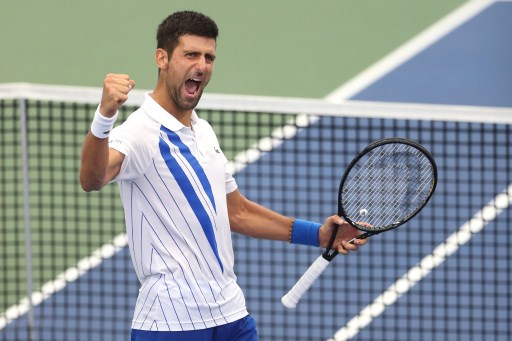
MELBOURNE (AFP) -- Novak Djokovic has long credited a series of unusual methods for helping him become one of the greatest players ever, not least his 15-year "special relationship" with a Melbourne tree.

Novak Djokovic says women to be part of new players' association
Serbia's Novak Djokovic (AFP/File photo)

The world number one, who swears by a plant-based diet, extols the virtues of meditation and has previously used a spiritual guru, has never been shy of talking about his eccentricities.

As he targets an unprecedented 11th Australian Open title, he said he had been connecting again with his "old friend" -- a Melbourne fig tree in the city's Royal Botanic Gardens that he likes to hug and climb.

"It is true. It is true. There's one particular tree that I've been having a special relationship with, so to say, in the last 15 years," he said after battling into the third round on Wednesday evening, Jan. 17.

"I love every corner of the Botanic Gardens. I think it's an incredible treasure for Melbourne to have such a park and nature in the middle of the city.

"That particular tree, I cannot reveal which one, I'll try to keep it discreet for myself when I'm there to have my own time. I like to ground myself and connect with that old friend."

Djokovic broke through for his first Grand Slam title at the 2008 Australian Open and he has been a regular visitor to Melbourne since, long professing an affinity with its vegetation.

Asked why he was attracted to that particular tree, he replied: "I just liked it.

"I liked its roots and the trunks and branches and everything. So I started climbing it years ago. That's it. I just have a connection."

Earlier in the tournament, he insisted he was not superstitious "but I do obviously like to visit certain places that have brought me luck".

"Just be by myself in nature, just grounding, hugging trees, climbing trees and stuff," he said.

"Whether that's the secret of success here in Australia or not, I don't know, but it has definitely made me feel good."

The Serb's fondness for the unusual has made him stand out from his peers, who enjoy a more straightforward lifestyle.

He has previously spoken about using hyperbaric oxygen chambers and healing "pyramids", while meditating with Spanish guru Pepe Imaz, a former journeyman player who extols a "love and peace" philosophy.

Th 36-year-old has also dabbled in various diets including gluten-free and dairy-free, and is now a proud "plant-based athlete" -- the subject of a Netflix documentary, "The Game Changers", for which he was executive producer.

Known for his humanitarian work as well as his sporting prowess, Djokovic also made headlines after claiming it was possible to alter the composition of water and food through the power of positive thinking.

He is a known vaccine-sceptic, a stance that led to his deportation from Melbourne ahead of the 2022 Australian Open during the Covid pandemic.

Related Tags

AUSTRALIAN OPEN Novak Djokovic
ADVERTISEMENT
.most-popular .layout-ratio{ padding-bottom: 79.13%; } @media (min-width: 768px) and (max-width: 1024px) { .widget-title { font-size: 15px !important; } }

{{ articles_filter_1561_widget.title }}

.most-popular .layout-ratio{ padding-bottom: 79.13%; } @media (min-width: 768px) and (max-width: 1024px) { .widget-title { font-size: 15px !important; } }

{{ articles_filter_1562_widget.title }}

.most-popular .layout-ratio{ padding-bottom: 79.13%; } @media (min-width: 768px) and (max-width: 1024px) { .widget-title { font-size: 15px !important; } }

{{ articles_filter_1563_widget.title }}

{{ articles_filter_1564_widget.title }}

.mb-article-details { position: relative; } .mb-article-details .article-body-preview, .mb-article-details .article-body-summary{ font-size: 17px; line-height: 30px; font-family: "Libre Caslon Text", serif; color: #000; } .mb-article-details .article-body-preview iframe , .mb-article-details .article-body-summary iframe{ width: 100%; margin: auto; } .read-more-background { background: linear-gradient(180deg, color(display-p3 1.000 1.000 1.000 / 0) 13.75%, color(display-p3 1.000 1.000 1.000 / 0.8) 30.79%, color(display-p3 1.000 1.000 1.000) 72.5%); position: absolute; height: 200px; width: 100%; bottom: 0; display: flex; justify-content: center; align-items: center; padding: 0; } .read-more-background a{ color: #000; } .read-more-btn { padding: 17px 45px; font-family: Inter; font-weight: 700; font-size: 18px; line-height: 16px; text-align: center; vertical-align: middle; border: 1px solid black; background-color: white; } .hidden { display: none; }
function initializeAllSwipers() { // Get all hidden inputs with cms_article_id document.querySelectorAll('[id^="cms_article_id_"]').forEach(function (input) { const cmsArticleId = input.value; const articleSelector = '#article-' + cmsArticleId + ' .body_images'; const swiperElement = document.querySelector(articleSelector); if (swiperElement && !swiperElement.classList.contains('swiper-initialized')) { new Swiper(articleSelector, { loop: true, pagination: false, navigation: { nextEl: '#article-' + cmsArticleId + ' .swiper-button-next', prevEl: '#article-' + cmsArticleId + ' .swiper-button-prev', }, }); } }); } setTimeout(initializeAllSwipers, 3000); const intersectionObserver = new IntersectionObserver( (entries) => { entries.forEach((entry) => { if (entry.isIntersecting) { const newUrl = entry.target.getAttribute("data-url"); if (newUrl) { history.pushState(null, null, newUrl); let article = entry.target; // Extract metadata const author = article.querySelector('.author-section').textContent.replace('By', '').trim(); const section = article.querySelector('.section-info ').textContent.replace(' ', ' '); const title = article.querySelector('.article-title h1').textContent; // Parse URL for Chartbeat path format const parsedUrl = new URL(newUrl, window.location.origin); const cleanUrl = parsedUrl.host + parsedUrl.pathname; // Update Chartbeat configuration if (typeof window._sf_async_config !== 'undefined') { window._sf_async_config.path = cleanUrl; window._sf_async_config.sections = section; window._sf_async_config.authors = author; } // Track virtual page view with Chartbeat if (typeof pSUPERFLY !== 'undefined' && typeof pSUPERFLY.virtualPage === 'function') { try { pSUPERFLY.virtualPage({ path: cleanUrl, title: title, sections: section, authors: author }); } catch (error) { console.error('ping error', error); } } // Optional: Update document title if (title && title !== document.title) { document.title = title; } } } }); }, { threshold: 0.1 } ); function showArticleBody(button) { const article = button.closest("article"); const summary = article.querySelector(".article-body-summary"); const body = article.querySelector(".article-body-preview"); const readMoreSection = article.querySelector(".read-more-background"); // Hide summary and read-more section summary.style.display = "none"; readMoreSection.style.display = "none"; // Show the full article body body.classList.remove("hidden"); } document.addEventListener("DOMContentLoaded", () => { let loadCount = 0; // Track how many times articles are loaded const offset = [1, 2, 3, 4, 5, 6, 7, 8, 9, 10]; // Offset values const currentUrl = window.location.pathname.substring(1); let isLoading = false; // Prevent multiple calls if (!currentUrl) { console.log("Current URL is invalid."); return; } const sentinel = document.getElementById("load-more-sentinel"); if (!sentinel) { console.log("Sentinel element not found."); return; } function isSentinelVisible() { const rect = sentinel.getBoundingClientRect(); return ( rect.top < window.innerHeight && rect.bottom >= 0 ); } function onScroll() { if (isLoading) return; if (isSentinelVisible()) { if (loadCount >= offset.length) { console.log("Maximum load attempts reached."); window.removeEventListener("scroll", onScroll); return; } isLoading = true; const currentOffset = offset[loadCount]; window.loadMoreItems().then(() => { let article = document.querySelector('#widget_1690 > div:nth-last-of-type(2) article'); intersectionObserver.observe(article) loadCount++; }).catch(error => { console.error("Error loading more items:", error); }).finally(() => { isLoading = false; }); } } window.addEventListener("scroll", onScroll); });

Sign up by email to receive news.