

ADVERTISEMENT

EU chief 'confident' of Hungary deal on Ukraine aid

Published Jan 17, 2024 02:01 pm

STRASBOURG, France - EU chief Ursula von der Leyen on Wednesday said she was "confident" of getting Hungary to drop its veto on a 50-billion-euro ($54-billion) aid package for Ukraine at a crunch summit in two weeks.

Hungary's right-wing Prime Minister Viktor Orban -- Russia's closest EU ally --  refused in December to sign off on the assistance to prop up Kyiv's state spending over the next four years.
34FK2JX-Preview_W.jpg
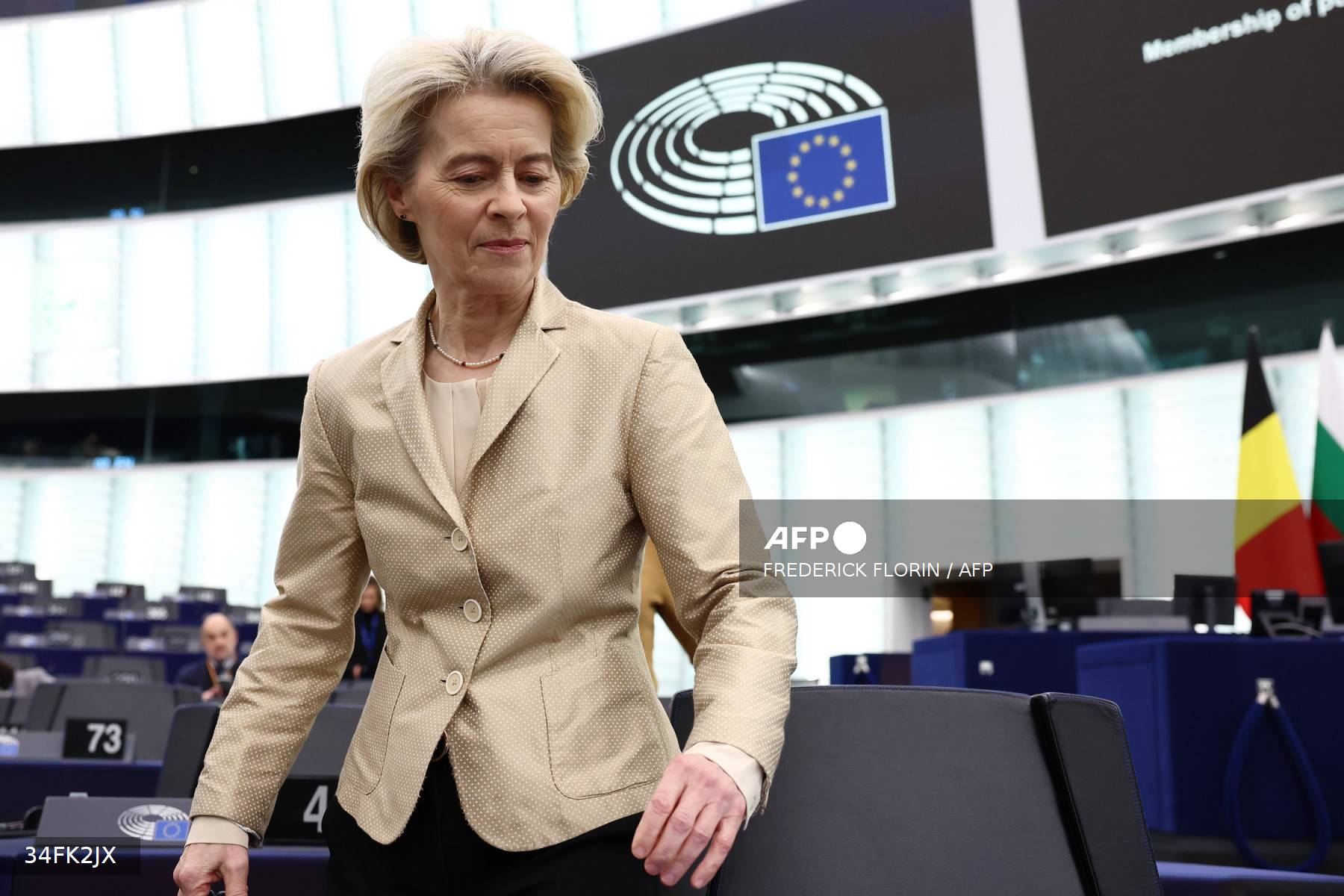
European Commission President Ursula von der Leyen arrives for a debate on the conclusions of the December 14-15, 2023 European Council and preparations for the extraordinary European Council scheduled for February 1, 2024, at the European Parliament in Strasbourg, eastern France, on January 17, 2024. (Photo by FREDERICK FLORIN / AFP)

The EU's 27 leaders agreed to reconvene for a new meeting in Brussels on February 1 to try to hammer out a deal with Budapest on the aid and a broader update to the bloc's budget.

"I am confident that a solution at 27 is possible," von der Leyen, the head of the EU's executive arm, told the European Parliament.

Budapest has signalled it could be in the mood to compromise and might agree to the aid if it is given the chance each year to veto further payments.

Other EU states have so far baulked at that demand, and officials in Brussels are frantically trying to pitch a solution.

EU officials say that if they cannot win over Hungary, the other 26 member states will look to provide cash directly, outside the EU's budget, but this is likely to be for a shorter timeframe.

The EU says that billions of euros in budgetary support it has already given should tide Ukraine over for a few more months.

But Kyiv urgently needs a green light on the new funds as it seeks to keep government services running and pay salaries as Russia's all-out war nears the two-year mark.

The European Commission headed by von der Leyen has faced criticism for last month unlocking 10 billion euros in frozen EU funds for Hungary as it sought to win over Orban.

EU lawmakers at Wednesday's debate urged von der Leyen not to cave into "blackmail" from Orban and are threatening a possible lawsuit against the commission over the release of the funds.

Von der Leyen defended the decision to release the 10 billion euros to Hungary, arguing that Budapest had passed a new law on judicial reform, something requested by Brussels, to get the funds.

"At the same time, around 20 billion euros remain frozen. They are suspended for reasons that include concerns on LGTBIQ rights, academic freedom and asylum rights," she said.

She said that billions held up by Brussels "will remain blocked until Hungary fulfils all the necessary conditions."

Related Tags

WORLDNEWS
ADVERTISEMENT
.most-popular .layout-ratio{ padding-bottom: 79.13%; } @media (min-width: 768px) and (max-width: 1024px) { .widget-title { font-size: 15px !important; } }

{{ articles_filter_1561_widget.title }}

.most-popular .layout-ratio{ padding-bottom: 79.13%; } @media (min-width: 768px) and (max-width: 1024px) { .widget-title { font-size: 15px !important; } }

{{ articles_filter_1562_widget.title }}

.most-popular .layout-ratio{ padding-bottom: 79.13%; } @media (min-width: 768px) and (max-width: 1024px) { .widget-title { font-size: 15px !important; } }

{{ articles_filter_1563_widget.title }}

{{ articles_filter_1564_widget.title }}

.mb-article-details { position: relative; } .mb-article-details .article-body-preview, .mb-article-details .article-body-summary{ font-size: 17px; line-height: 30px; font-family: "Libre Caslon Text", serif; color: #000; } .mb-article-details .article-body-preview iframe , .mb-article-details .article-body-summary iframe{ width: 100%; margin: auto; } .read-more-background { background: linear-gradient(180deg, color(display-p3 1.000 1.000 1.000 / 0) 13.75%, color(display-p3 1.000 1.000 1.000 / 0.8) 30.79%, color(display-p3 1.000 1.000 1.000) 72.5%); position: absolute; height: 200px; width: 100%; bottom: 0; display: flex; justify-content: center; align-items: center; padding: 0; } .read-more-background a{ color: #000; } .read-more-btn { padding: 17px 45px; font-family: Inter; font-weight: 700; font-size: 18px; line-height: 16px; text-align: center; vertical-align: middle; border: 1px solid black; background-color: white; } .hidden { display: none; }
function initializeAllSwipers() { // Get all hidden inputs with cms_article_id document.querySelectorAll('[id^="cms_article_id_"]').forEach(function (input) { const cmsArticleId = input.value; const articleSelector = '#article-' + cmsArticleId + ' .body_images'; const swiperElement = document.querySelector(articleSelector); if (swiperElement && !swiperElement.classList.contains('swiper-initialized')) { new Swiper(articleSelector, { loop: true, pagination: false, navigation: { nextEl: '#article-' + cmsArticleId + ' .swiper-button-next', prevEl: '#article-' + cmsArticleId + ' .swiper-button-prev', }, }); } }); } setTimeout(initializeAllSwipers, 3000); const intersectionObserver = new IntersectionObserver( (entries) => { entries.forEach((entry) => { if (entry.isIntersecting) { const newUrl = entry.target.getAttribute("data-url"); if (newUrl) { history.pushState(null, null, newUrl); let article = entry.target; // Extract metadata const author = article.querySelector('.author-section').textContent.replace('By', '').trim(); const section = article.querySelector('.section-info ').textContent.replace(' ', ' '); const title = article.querySelector('.article-title h1').textContent; // Parse URL for Chartbeat path format const parsedUrl = new URL(newUrl, window.location.origin); const cleanUrl = parsedUrl.host + parsedUrl.pathname; // Update Chartbeat configuration if (typeof window._sf_async_config !== 'undefined') { window._sf_async_config.path = cleanUrl; window._sf_async_config.sections = section; window._sf_async_config.authors = author; } // Track virtual page view with Chartbeat if (typeof pSUPERFLY !== 'undefined' && typeof pSUPERFLY.virtualPage === 'function') { try { pSUPERFLY.virtualPage({ path: cleanUrl, title: title, sections: section, authors: author }); } catch (error) { console.error('ping error', error); } } // Optional: Update document title if (title && title !== document.title) { document.title = title; } } } }); }, { threshold: 0.1 } ); function showArticleBody(button) { const article = button.closest("article"); const summary = article.querySelector(".article-body-summary"); const body = article.querySelector(".article-body-preview"); const readMoreSection = article.querySelector(".read-more-background"); // Hide summary and read-more section summary.style.display = "none"; readMoreSection.style.display = "none"; // Show the full article body body.classList.remove("hidden"); } document.addEventListener("DOMContentLoaded", () => { let loadCount = 0; // Track how many times articles are loaded const offset = [1, 2, 3, 4, 5, 6, 7, 8, 9, 10]; // Offset values const currentUrl = window.location.pathname.substring(1); let isLoading = false; // Prevent multiple calls if (!currentUrl) { console.log("Current URL is invalid."); return; } const sentinel = document.getElementById("load-more-sentinel"); if (!sentinel) { console.log("Sentinel element not found."); return; } function isSentinelVisible() { const rect = sentinel.getBoundingClientRect(); return ( rect.top < window.innerHeight && rect.bottom >= 0 ); } function onScroll() { if (isLoading) return; if (isSentinelVisible()) { if (loadCount >= offset.length) { console.log("Maximum load attempts reached."); window.removeEventListener("scroll", onScroll); return; } isLoading = true; const currentOffset = offset[loadCount]; window.loadMoreItems().then(() => { let article = document.querySelector('#widget_1690 > div:nth-last-of-type(2) article'); intersectionObserver.observe(article) loadCount++; }).catch(error => { console.error("Error loading more items:", error); }).finally(() => { isLoading = false; }); } } window.addEventListener("scroll", onScroll); });

Sign up by email to receive news.