






 Philippines
National
New defense cooperation deal between PH, Canada in the offing -- Teodoro
Philippines
National
New defense cooperation deal between PH, Canada in the offing -- Teodoro
New defense cooperation deal between PH, Canada in the offing -- Teodoro


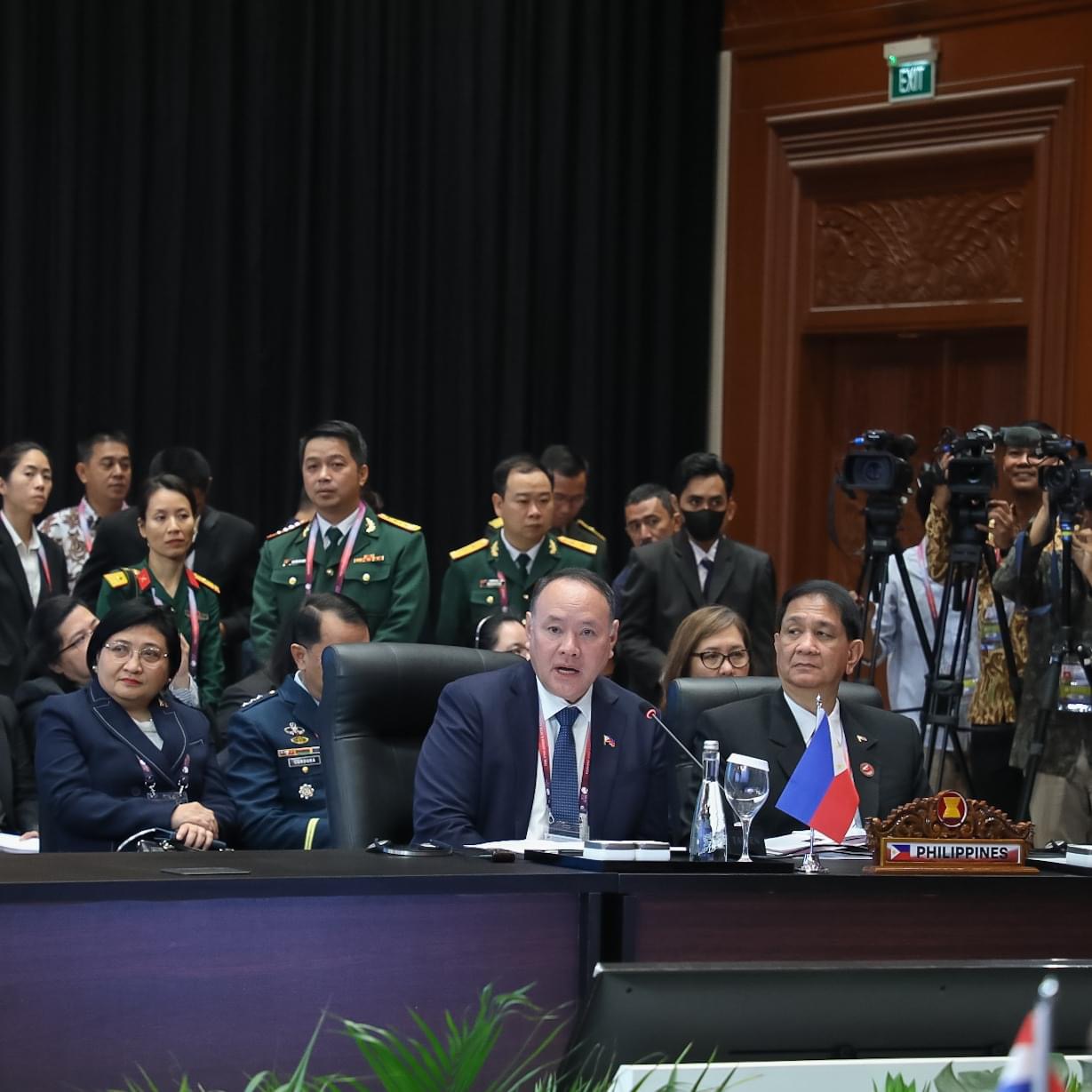
The Philippines and Canada are set to sign a memorandum of understanding (MOU) on defense cooperation "very soon" as more countries back Manila's position amid its territorial dispute with China in the West Philippine Sea (WPS).
This was confirmed by Department of National Defense (DND) Secretary Gilberto Teodoro Jr. at the sidelines of the Cybersecurity Conference organized by international think tank Stratbase ADR Institute and Canadian Embassy in Makati City on Tuesday, Jan. 16.
The MOU will increase military-to-military training between Manila and Ottawa.
"[This is for] increased defense cooperation between [our] countries, like the MOUs we have with other countries," Teodoro said.
Exchanges on cybersecurity is also being considered to be a vital part of the deal.
"We know that the Philippines now, as (Canadian) Ambassador (David) Hartman said, is patient zero for vulnerability. This gives us room for working and cooperating with like-minded partners, creating the proper frameworks and operational and institutional arrangements for long-term cooperation, with the Philippines’ interests in mind, and respecting those of like-minded nations," he added.
While the defense chief clarified that the MOU is not related to the escalating tension in the WPS, he underscored Canada's support for the Philippines' claims in the said waters.
"They support our stand with the arbitral award and they support our stand in the West Philippine Sea," Teodoro noted.
Teodoro expects that the MOU will be signed within the first quarter of the year. Further discussions are already being conducted by the DND and Department of Foreign Affairs, he said.
The new defense pact is the latest on the side of the Philippines, which is also looking forward to finalize the Reciprocal Access Agreement (RAA) with Japan this year.
Meanwhile, Teodoro disclosed that the DND is undertaking a transition to stricter operational security as well as exploring ways to enhance cybersecurity infrastructure and processes.
"Naturally, cooperation in cybersecurity entails a critical political analysis of your foreign partners, like-minded nations, treaty partners. Your friend today could be an adversary tomorrow in different aspects," he said.