

ADVERTISEMENT

Iran seizes oil tanker off Oman in dispute with US

Published Jan 12, 2024 01:09 am

DUBAI, United Arab Emirates- Iran's navy seized a ship off Oman to retaliate for the "theft" of its oil from the same tanker last year by the United States, state media said Thursday.
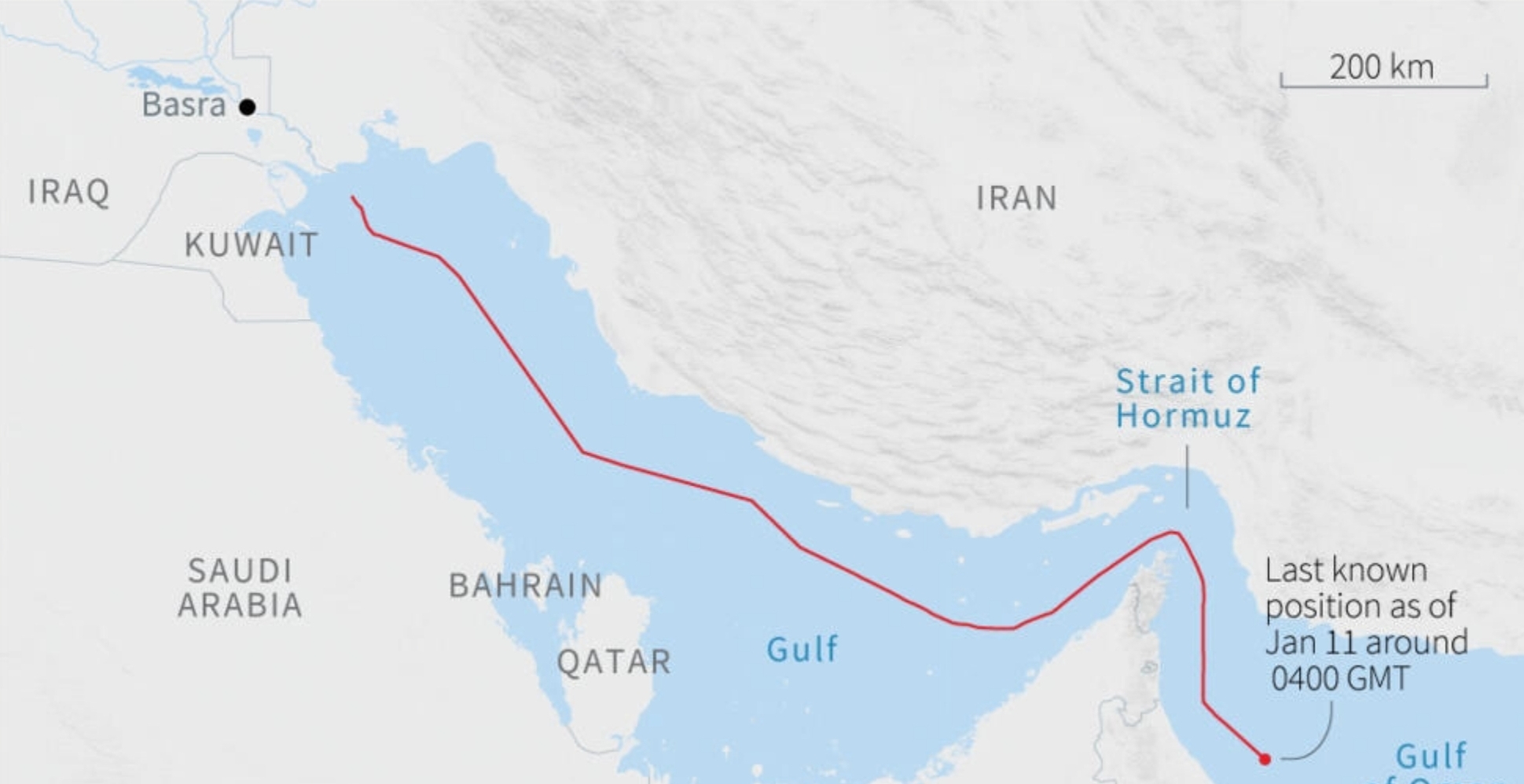
A map showing the region around the Gulf of Oman where the oil tanker St Nikolas was seized by the Iranian navy © Kevin TRUBLET, Anibal MAIZ CACERES / AFP

The United States condemned what it called an "unlawful seizure" and demanded Iran "immediately release the ship and its crew".

The announcement came hours after a British navy maritime security agency said armed men boarded the Greek-owned, Marshall Islands-flagged St Nikolas off Oman and changed course towards Bandar-e Jask in Iran.

Four or five "unauthorised boarders are reported to be wearing military-style black uniforms with black masks", the United Kingdom Maritime Trade Operations (UKMTO) said.

Iran's navy later confirmed it had seized the ship, which was previously called the Suez Rajan.

"The Navy of the Islamic Republic of Iran seized an American oil tanker in the waters of the Gulf of Oman in accordance with a court order," the official IRNA news agency said.

The seizure was in retaliation for "violation committed by the Suez Rajan ship... and the theft of Iranian oil by the United States", IRNA said.

"Iran's actions are contrary to international law and threaten maritime security and stability," said Vice Adm. Brad Cooper, the commander of U.S. Naval Forces Central Command and Commander U.S. 5th Fleet.

Iran has responded with tit-for-tat measures in the past after seizures of Iranian oil shipments.

Crippling US sanctions, reimposed following Washington's 2018 withdrawal from a landmark nuclear deal, target Iranian oil and petrochemical sales in a bid to reduce Iran's energy exports.

"The Iranian government must immediately release the ship and its crew," US State Department spokesman Vedant Patel told reporters.

"This unlawful seizure of a commercial vessel is just the latest behaviour by Iran or enabled by Iran aimed at disrupting international commerce."

- Communications lost -


Ambrey, a British maritime risk company, said the group which boarded the St Nikolas covered the ship's cameras. A security officer "reported hearing unknown voices over the phone along with the master's voice", it added.

Communications have been lost with the vessel, which was carrying 19 crew -- 18 Filipinos and one Greek -- the tanker's Greece-based management company Empire Navigation told AFP.

The vessel had been loaded with 145,000 tonnes of crude oil in Basra, Iraq and was destined for Aliaga in Turkey via the Suez Canal, Empire added.

Ambrey said the recently renamed tanker was previously prosecuted and fined for carrying sanctioned Iranian oil, which was confiscated by US authorities.

IRNA, quoting the Iranian navy's public relations office, said the ship was "being transferred to the ports of the Islamic republic for delivery to the judicial authorities".

In September, the United States said it had seized the Suez Rajan and its cargo of 980,000 barrels of crude oil months earlier.

The US Department of Justice said at the time that the oil on the Greek-managed tanker was allegedly being sold by Iran's Islamic Revolutionary Guard Corps to China.

Shortly after that seizure, Iran seized two tankers -- the Marshall Islands-flagged Advantage Sweet as it sailed toward the United States in the Gulf of Oman, and then the Greek-owned Niovi, as it travelled from Dubai to Fujairah.

The Gulf of Oman, a key route for the oil industry that separates Oman and Iran, has witnessed a series of hijackings and attacks over the years, often involving Iran.

Shipping in the resource-rich region is also on heightened alert following weeks of drone and missile attacks in the Red Sea by Yemen's Iran-backed Huthi rebels.

Related Tags

WORLDNEWS
ADVERTISEMENT
.most-popular .layout-ratio{ padding-bottom: 79.13%; } @media (min-width: 768px) and (max-width: 1024px) { .widget-title { font-size: 15px !important; } }

{{ articles_filter_1561_widget.title }}

.most-popular .layout-ratio{ padding-bottom: 79.13%; } @media (min-width: 768px) and (max-width: 1024px) { .widget-title { font-size: 15px !important; } }

{{ articles_filter_1562_widget.title }}

.most-popular .layout-ratio{ padding-bottom: 79.13%; } @media (min-width: 768px) and (max-width: 1024px) { .widget-title { font-size: 15px !important; } }

{{ articles_filter_1563_widget.title }}

{{ articles_filter_1564_widget.title }}

.mb-article-details { position: relative; } .mb-article-details .article-body-preview, .mb-article-details .article-body-summary{ font-size: 17px; line-height: 30px; font-family: "Libre Caslon Text", serif; color: #000; } .mb-article-details .article-body-preview iframe , .mb-article-details .article-body-summary iframe{ width: 100%; margin: auto; } .read-more-background { background: linear-gradient(180deg, color(display-p3 1.000 1.000 1.000 / 0) 13.75%, color(display-p3 1.000 1.000 1.000 / 0.8) 30.79%, color(display-p3 1.000 1.000 1.000) 72.5%); position: absolute; height: 200px; width: 100%; bottom: 0; display: flex; justify-content: center; align-items: center; padding: 0; } .read-more-background a{ color: #000; } .read-more-btn { padding: 17px 45px; font-family: Inter; font-weight: 700; font-size: 18px; line-height: 16px; text-align: center; vertical-align: middle; border: 1px solid black; background-color: white; } .hidden { display: none; }
function initializeAllSwipers() { // Get all hidden inputs with cms_article_id document.querySelectorAll('[id^="cms_article_id_"]').forEach(function (input) { const cmsArticleId = input.value; const articleSelector = '#article-' + cmsArticleId + ' .body_images'; const swiperElement = document.querySelector(articleSelector); if (swiperElement && !swiperElement.classList.contains('swiper-initialized')) { new Swiper(articleSelector, { loop: true, pagination: false, navigation: { nextEl: '#article-' + cmsArticleId + ' .swiper-button-next', prevEl: '#article-' + cmsArticleId + ' .swiper-button-prev', }, }); } }); } setTimeout(initializeAllSwipers, 3000); const intersectionObserver = new IntersectionObserver( (entries) => { entries.forEach((entry) => { if (entry.isIntersecting) { const newUrl = entry.target.getAttribute("data-url"); if (newUrl) { history.pushState(null, null, newUrl); let article = entry.target; // Extract metadata const author = article.querySelector('.author-section').textContent.replace('By', '').trim(); const section = article.querySelector('.section-info ').textContent.replace(' ', ' '); const title = article.querySelector('.article-title h1').textContent; // Parse URL for Chartbeat path format const parsedUrl = new URL(newUrl, window.location.origin); const cleanUrl = parsedUrl.host + parsedUrl.pathname; // Update Chartbeat configuration if (typeof window._sf_async_config !== 'undefined') { window._sf_async_config.path = cleanUrl; window._sf_async_config.sections = section; window._sf_async_config.authors = author; } // Track virtual page view with Chartbeat if (typeof pSUPERFLY !== 'undefined' && typeof pSUPERFLY.virtualPage === 'function') { try { pSUPERFLY.virtualPage({ path: cleanUrl, title: title, sections: section, authors: author }); } catch (error) { console.error('ping error', error); } } // Optional: Update document title if (title && title !== document.title) { document.title = title; } } } }); }, { threshold: 0.1 } ); function showArticleBody(button) { const article = button.closest("article"); const summary = article.querySelector(".article-body-summary"); const body = article.querySelector(".article-body-preview"); const readMoreSection = article.querySelector(".read-more-background"); // Hide summary and read-more section summary.style.display = "none"; readMoreSection.style.display = "none"; // Show the full article body body.classList.remove("hidden"); } document.addEventListener("DOMContentLoaded", () => { let loadCount = 0; // Track how many times articles are loaded const offset = [1, 2, 3, 4, 5, 6, 7, 8, 9, 10]; // Offset values const currentUrl = window.location.pathname.substring(1); let isLoading = false; // Prevent multiple calls if (!currentUrl) { console.log("Current URL is invalid."); return; } const sentinel = document.getElementById("load-more-sentinel"); if (!sentinel) { console.log("Sentinel element not found."); return; } function isSentinelVisible() { const rect = sentinel.getBoundingClientRect(); return ( rect.top < window.innerHeight && rect.bottom >= 0 ); } function onScroll() { if (isLoading) return; if (isSentinelVisible()) { if (loadCount >= offset.length) { console.log("Maximum load attempts reached."); window.removeEventListener("scroll", onScroll); return; } isLoading = true; const currentOffset = offset[loadCount]; window.loadMoreItems().then(() => { let article = document.querySelector('#widget_1690 > div:nth-last-of-type(2) article'); intersectionObserver.observe(article) loadCount++; }).catch(error => { console.error("Error loading more items:", error); }).finally(() => { isLoading = false; }); } } window.addEventListener("scroll", onScroll); });

Sign up by email to receive news.