







US to send delegation to Taiwan after vote


WASHINGTON, United States - The United States said Wednesday it plans to send an unofficial delegation to Taiwan after a crucial election on the self-ruled island, and warned China against any military provocation.
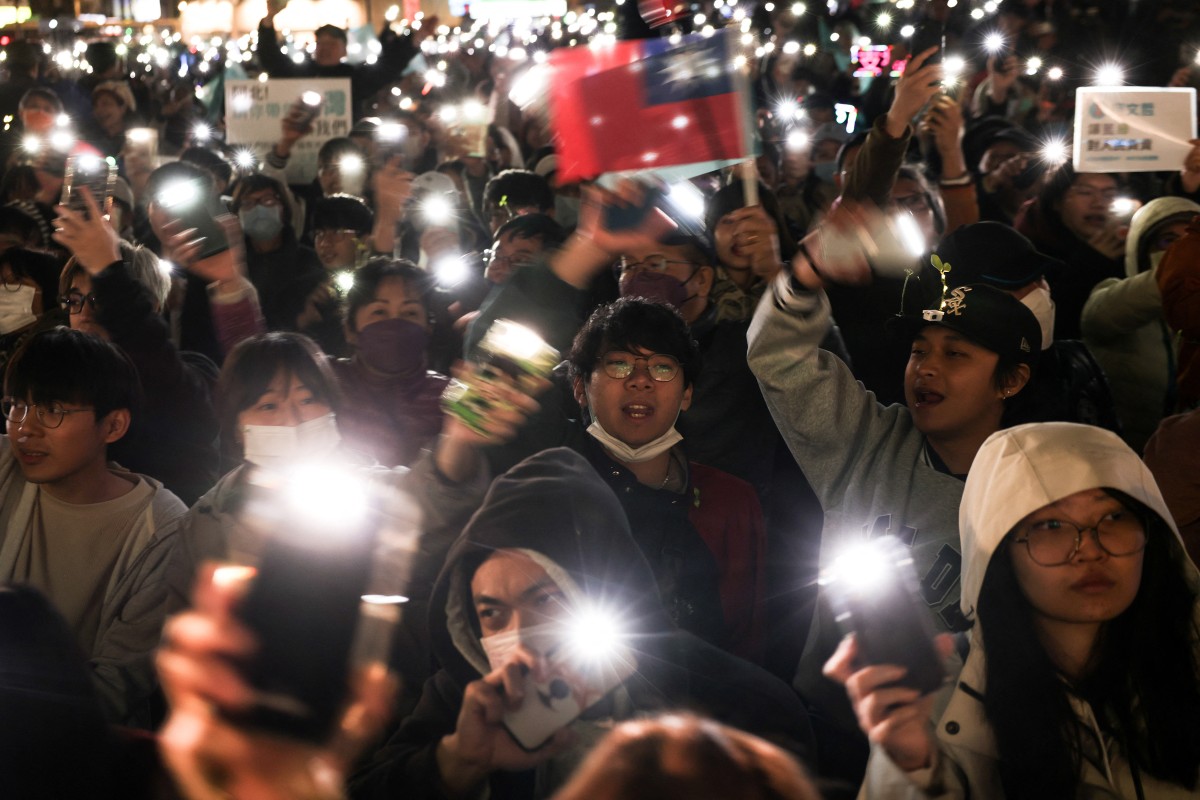
Supporters sing and wave their smartphones with flashlights during an election campaign rally of Taiwan People's Party (TPP) in Keelung on January 10, 2024. (Photo by I-Hwa CHENG / AFP)
The move by Washington comes amid rising tensions over Saturday's election, with Beijing pledging earlier that it would "never compromise" on its vow to one day seize Taiwan.
"We intend to send an unofficial delegation after the Taiwan election," a senior Biden administration official speaking on condition of anonymity told reporters in a call.
The official suggested that it would comprise former US government officials, as with previous such delegations over the past 20 years, but said details were still being confirmed.
"These have been used in the past just to ensure that we are communicating clearly to the president-elect but also the other candidates as well, about the importance of a strong, unofficial partnership," the official said.
Such delegations involve "being clear about what US One China policy is and what it is not", the official said, referring to Washington's stance that it does not support Taiwanese independence.
"It's exactly the type of engagement that contributes to peace and stability, in our view," the official said.
Beijing reacted furiously to a visit to Taiwan in 2022 by then US House speaker Nancy Pelosi, severing military communications with Washington.
China claims Taiwan, which holds presidential and parliamentary elections on Saturday, as part of its territory and has vowed to seize the island democracy one day.
- 'Provocateur' -
Washington warned China against stoking tensions over the elections, which are being closely watched as determining the future of Taiwan's relations with an increasingly assertive Beijing.
"Beijing will be the provocateur should it choose to respond with additional military pressure or coercion," the US official said
Relations between Beijing and Washington nosedived in recent years but have warmed since a summit between US President Joe Biden and Chinese President Xi Jinping in San Francisco in November.
The two leaders agreed then to resume stalled military talks and senior Chinese and US officials met at the Pentagon on Monday and Tuesday.
But Taiwan remains a thorny issue.
China's defense ministry said its officials demanded that Washington "stop arming Taiwan, and oppose Taiwan's 'independence'", according to a Chinese defense ministry readout.
A senior White House official meanwhile met with a top Chinese official in Washington on Tuesday.
Biden's deputy national security advisor Jon Finer met Liu Jianchao as part of "ongoing efforts to maintain open lines of communication and responsibly manage competition," the White House said in a statement.
"Mr Finer stressed the importance of peace and stability across the Taiwan Strait and in the South China Sea."