ADVERTISEMENT

Streets all but empty in Ecuador as gang attacks sow terror

Published Jan 11, 2024 01:40 am

STATEOFWAR PHOTO.jpg

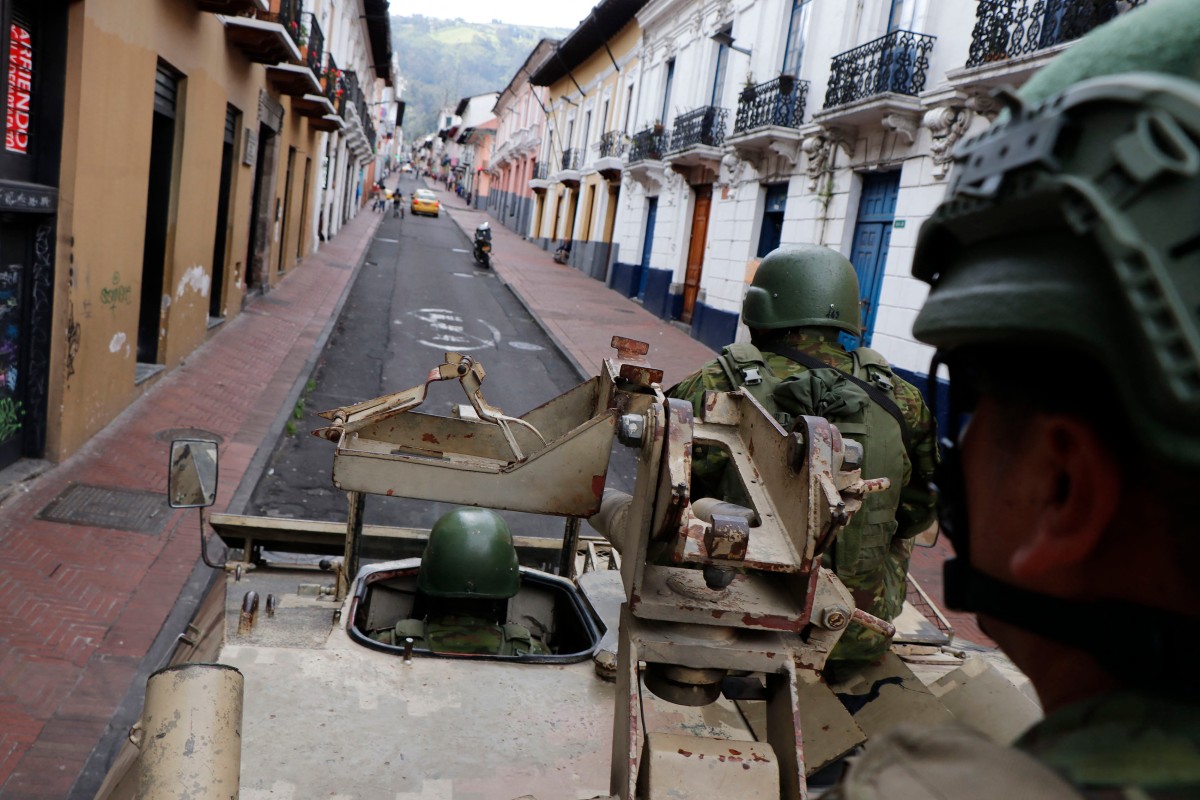
STATE OF EMERGENCY -- Members of the Armed Forces patrol a street during an operation to protect civil security in Quito, on January 10, 2024. Ecuador's president Daniel Noboa gave orders on Tuesday to "neutralize" criminal gangs after gunmen stormed and opened fire in a TV studio, as bandits threatened random executions on a second day of terror in the country. Gangs declared war on the government after Noboa announced a state of emergency following the prison escape on January 7 of one of Ecuador's most powerful narco bosses. (Photo by STRINGER / AFP)


QUITO, Ecuador -- Walking fast, with their eyes alert and voices low, a few Ecuadorans flitted about fearfully Wednesday on city streets all but deserted amid an escalating conflict between the armed forces and violent drug gangs.

Since Monday, narco gunmen have kidnapped police and prison guards, opened fire in a TV studio during a live broadcast, set off explosions in public places in several cities, and threatened random executions.

In the capital Quito, where a heavy military presence has been deployed, 54-year-old shopkeeper Rocio Guzman says the terrifying sounds of a shootout near her businesses and a hospital Tuesday still resonated in her head.

"People closed their businesses and ran," she told AFP. She, too, closed up shop. "Everything was closed, by 8 p.m. there was nothing: no cars, no business."

In the port city of Guayaquil, hotels, offices and shops also shuttered their doors.

The few pedestrians around Wednesday were too afraid to talk to AFP, and in many areas of the city there were more police than merchants.

The small South American country has been plunged into crisis after years of growing control by transnational cartels who use its ports to ship cocaine to the United States and Europe.

The most recent explosion of violence was sparked by the discovery Sunday of the prison escape of Jose Adolfo Macias, a.k.a "Fito", leader of the country's main crime gang, called Los Choneros.

In response, President Daniel Noboa, who took office in November with promises to clamp down on Ecuador's spiraling problem of gang-related crime and violence, declared a nationwide curfew and state of emergency.

The criminal rejoinder was quick to follow, with riots in prisons, seven police officers kidnapped, dozens of prison guards held hostage and at least 14 people killed to date.


'A lot of fear' 

The usual hubbub in La Carolina park in Quito's financial district was on Wednesday replaced by an eerie silence -- devoid of the athletes and footballers that are usually there from early morning.

Bakery owner Daniel Lituma, 30, said he opened his shop only because he needs to make a living.

"What gets us out right now is the need to keep working. There is a lot of fear," Lituma, whose bakery is near the heavily guarded seat of government, told AFP.

On Tuesday, he was shopping with his wife at a market when employees alerted him to looting in the vicinity of the bakery. With bus services suspended, he ran back to make sure his daughter was safe.

"It is overwhelming. You have to go out every day (to make money) but with a lot of fear, uncertainty," he said.

By Wednesday, buses were running again but fewer than usual, and less frequently.

In some places, fear gave way to solidarity as strangers joined up to walk together or offer each other rides.


Report every hour 

School classes countrywide were taught online Wednesday, and many companies urged staff to work from home.

Quito medical supplies salesman Manuel Munoz said he opted to work a half day to return home before dark, and has agreed on a strategy with his parents to keep track of each other's movements.

"The plan is to report every hour" with a phone call or text message, he said.

Taxi driver Santiago Enriquez, 30, said he and his colleagues were also keeping tabs on each other's whereabouts.

He welcomed the presence of police and soldiers on the streets after Noboa gave orders to "neutralize" the violent gangs.

"They (the government) are going to act harder and that’s what people want to feel safe," he said.


Related Tags

WORLDNEWS
ADVERTISEMENT
.most-popular .layout-ratio{ padding-bottom: 79.13%; } @media (min-width: 768px) and (max-width: 1024px) { .widget-title { font-size: 15px !important; } }

{{ articles_filter_1561_widget.title }}

.most-popular .layout-ratio{ padding-bottom: 79.13%; } @media (min-width: 768px) and (max-width: 1024px) { .widget-title { font-size: 15px !important; } }

{{ articles_filter_1562_widget.title }}

.most-popular .layout-ratio{ padding-bottom: 79.13%; } @media (min-width: 768px) and (max-width: 1024px) { .widget-title { font-size: 15px !important; } }

{{ articles_filter_1563_widget.title }}

{{ articles_filter_1564_widget.title }}

.mb-article-details { position: relative; } .mb-article-details .article-body-preview, .mb-article-details .article-body-summary{ font-size: 17px; line-height: 30px; font-family: "Libre Caslon Text", serif; color: #000; } .mb-article-details .article-body-preview iframe , .mb-article-details .article-body-summary iframe{ width: 100%; margin: auto; } .read-more-background { background: linear-gradient(180deg, color(display-p3 1.000 1.000 1.000 / 0) 13.75%, color(display-p3 1.000 1.000 1.000 / 0.8) 30.79%, color(display-p3 1.000 1.000 1.000) 72.5%); position: absolute; height: 200px; width: 100%; bottom: 0; display: flex; justify-content: center; align-items: center; padding: 0; } .read-more-background a{ color: #000; } .read-more-btn { padding: 17px 45px; font-family: Inter; font-weight: 700; font-size: 18px; line-height: 16px; text-align: center; vertical-align: middle; border: 1px solid black; background-color: white; } .hidden { display: none; }
function initializeAllSwipers() { // Get all hidden inputs with cms_article_id document.querySelectorAll('[id^="cms_article_id_"]').forEach(function (input) { const cmsArticleId = input.value; const articleSelector = '#article-' + cmsArticleId + ' .body_images'; const swiperElement = document.querySelector(articleSelector); if (swiperElement && !swiperElement.classList.contains('swiper-initialized')) { new Swiper(articleSelector, { loop: true, pagination: false, navigation: { nextEl: '#article-' + cmsArticleId + ' .swiper-button-next', prevEl: '#article-' + cmsArticleId + ' .swiper-button-prev', }, }); } }); } setTimeout(initializeAllSwipers, 3000); const intersectionObserver = new IntersectionObserver( (entries) => { entries.forEach((entry) => { if (entry.isIntersecting) { const newUrl = entry.target.getAttribute("data-url"); if (newUrl) { history.pushState(null, null, newUrl); let article = entry.target; // Extract metadata const author = article.querySelector('.author-section').textContent.replace('By', '').trim(); const section = article.querySelector('.section-info ').textContent.replace(' ', ' '); const title = article.querySelector('.article-title h1').textContent; // Parse URL for Chartbeat path format const parsedUrl = new URL(newUrl, window.location.origin); const cleanUrl = parsedUrl.host + parsedUrl.pathname; // Update Chartbeat configuration if (typeof window._sf_async_config !== 'undefined') { window._sf_async_config.path = cleanUrl; window._sf_async_config.sections = section; window._sf_async_config.authors = author; } // Track virtual page view with Chartbeat if (typeof pSUPERFLY !== 'undefined' && typeof pSUPERFLY.virtualPage === 'function') { try { pSUPERFLY.virtualPage({ path: cleanUrl, title: title, sections: section, authors: author }); } catch (error) { console.error('ping error', error); } } // Optional: Update document title if (title && title !== document.title) { document.title = title; } } } }); }, { threshold: 0.1 } ); function showArticleBody(button) { const article = button.closest("article"); const summary = article.querySelector(".article-body-summary"); const body = article.querySelector(".article-body-preview"); const readMoreSection = article.querySelector(".read-more-background"); // Hide summary and read-more section summary.style.display = "none"; readMoreSection.style.display = "none"; // Show the full article body body.classList.remove("hidden"); } document.addEventListener("DOMContentLoaded", () => { let loadCount = 0; // Track how many times articles are loaded const offset = [1, 2, 3, 4, 5, 6, 7, 8, 9, 10]; // Offset values const currentUrl = window.location.pathname.substring(1); let isLoading = false; // Prevent multiple calls if (!currentUrl) { console.log("Current URL is invalid."); return; } const sentinel = document.getElementById("load-more-sentinel"); if (!sentinel) { console.log("Sentinel element not found."); return; } function isSentinelVisible() { const rect = sentinel.getBoundingClientRect(); return ( rect.top < window.innerHeight && rect.bottom >= 0 ); } function onScroll() { if (isLoading) return; if (isSentinelVisible()) { if (loadCount >= offset.length) { console.log("Maximum load attempts reached."); window.removeEventListener("scroll", onScroll); return; } isLoading = true; const currentOffset = offset[loadCount]; window.loadMoreItems().then(() => { let article = document.querySelector('#widget_1690 > div:nth-last-of-type(2) article'); intersectionObserver.observe(article) loadCount++; }).catch(error => { console.error("Error loading more items:", error); }).finally(() => { isLoading = false; }); } } window.addEventListener("scroll", onScroll); });

Sign up by email to receive news.