






 Philippines
National
Did Lagman walk back on his stance on joint voting? Ex-solon says yes
Philippines
National
Did Lagman walk back on his stance on joint voting? Ex-solon says yes
Did Lagman walk back on his stance on joint voting? Ex-solon says yes


At A Glance
- Former Ako Bicol Party-list Rep. Alfredo Garbin Jr. is claiming that his province-mate, incumbent 1st district Rep. Edcel Lagman, has made an about-face regarding the latter's stance on joint voting of the House of Representatives and the Senate when acting as a Constituent Assembly (Con-Ass).
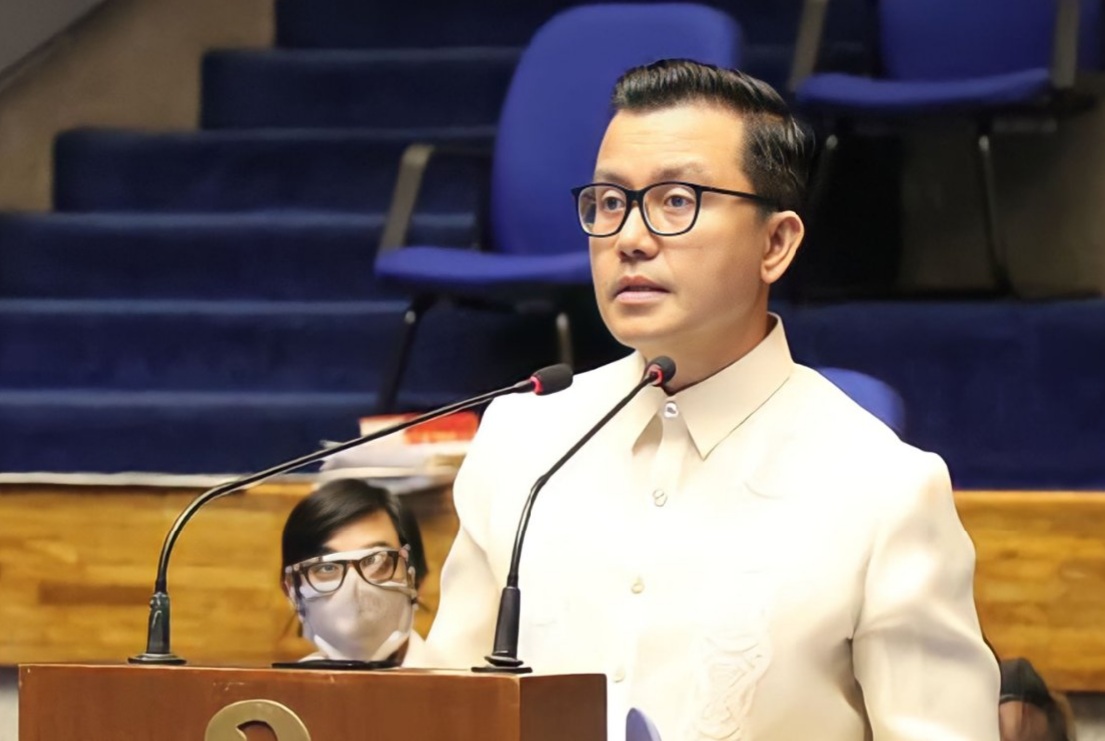 Former Ako Bicol Party-list Rep. Alfredo Garbin Jr. (Garbin)
A former congressman from Albay is claiming that his province-mate, incumbent 1st district Rep. Edcel Lagman, has made an about-face regarding the latter's stance on joint voting of the House of Representatives and the Senate when acting as a Constituent Assembly (Con-Ass).
According to ex-Ako Bicol Party-list Rep. Alfredo Garbin Jr., Lagman strongly advocated” for joint voting between that two legislative chambers in connection with a Con-Ass proposal three years ago.
A Con-Ass is one of the three modes of Charter change (Cha-cha), which is again en vogue in the 300-plus strong House.
“In an apparent 180-degree turn, Manong Edcel is now saying that joint voting of the House and the Senate is not desirable because the House will ‘overwhelm’ the Senate by its superiority in numbers. Why the sudden change of heart? Why is he now opposed to the joint voting of the House and the Senate?” asked Garin in a statement Thursday, Jan. 11.
“Whatever the reason is, the saying in Albay that being forgetful is a very strong Lagman trait looks to be justified,” added the former chairman of the House Committee on Constitutional Amendments.
Citing the transcript of the committee’s discussions in Jan. 13, 2021, Garbin said Lagman referred to the long-established Supreme Court (SC) decision on the issue of joint or separate voting in the 1967 case of Gonzales vs Comelec.
“I would submit that the positions should be consistent with the ruling in the case of Gonzales versus Comelec that the voting...should not be separate but joint, joint voting by all members of the [Con-Ass]. I would like to emphasize, it should be joint, not separate)," Lagman explained then, as per the transcript of the particular hearing.
The House and the smaller, 24-member Senate comprise the Philippine bicameral Congress.
Garbin said Lagman even pointed out the different capacities members of Congress exercises when they sit as a legislative body and as a Con-Ass. He said his fellow Bicolano even explained that when members of Congress occupy the Con-Ass, they are not acting as legislators, but merely as members of the said assembly.
“There is unequivocal distinction between legislative power exercised by Congress and the constituent authority discharged by it as a constituent assembly,” Lagman said according to official transcript.
Garbin, who is advocating to amend the 1987 Constitution through a People’s Initiative (PI), says Lagman’s advocacy for joint voting during the 18th Congress is the only subject matter of the current movement to amend the Charter via PI.
“The proposed amendment to the Constitution is to only clarify the manner of voting by adding the phrase ‘voting jointly, at the call of the Senate President or the Speaker of the House of Representatives,’” added Garbin, who is a lawyer like Lagman.
ALSO READ:
In March 2023, the House overwhelmingly approved on third and final reading Resolution of Both Houses (RBH) 6, which called for a Constitutional Convention (Con-Con) to amend the Constitution.
The bigger chamber also passed last year House Bill (HB) No. 7352, also known as "An Act implementing Resolution of Both Houses No.6 of the Congress of the Philippines calling for a Constitutional Convention to propose amendments to, or revision of, the 1987 Constitution, appropriating funds therefor, and for other purposes".
The twin measures ended up gathering dust at the Senate.
Last December, Speaker Martin Romualdez said the House will revive talks on Cha-cha this 2024. He says the lifting of the restrictive economic provisions in the existing Constitution remains a big motivation.
A Con-Ass, Con-Con, and PI are the three modes by which the Constitution may be revised.