ADVERTISEMENT

2.4 magnitude earthquake hits near North Korea nuclear test site: weather agency

Published Jan 11, 2024 04:17 pm
34BZ8BV-Preview.jpg
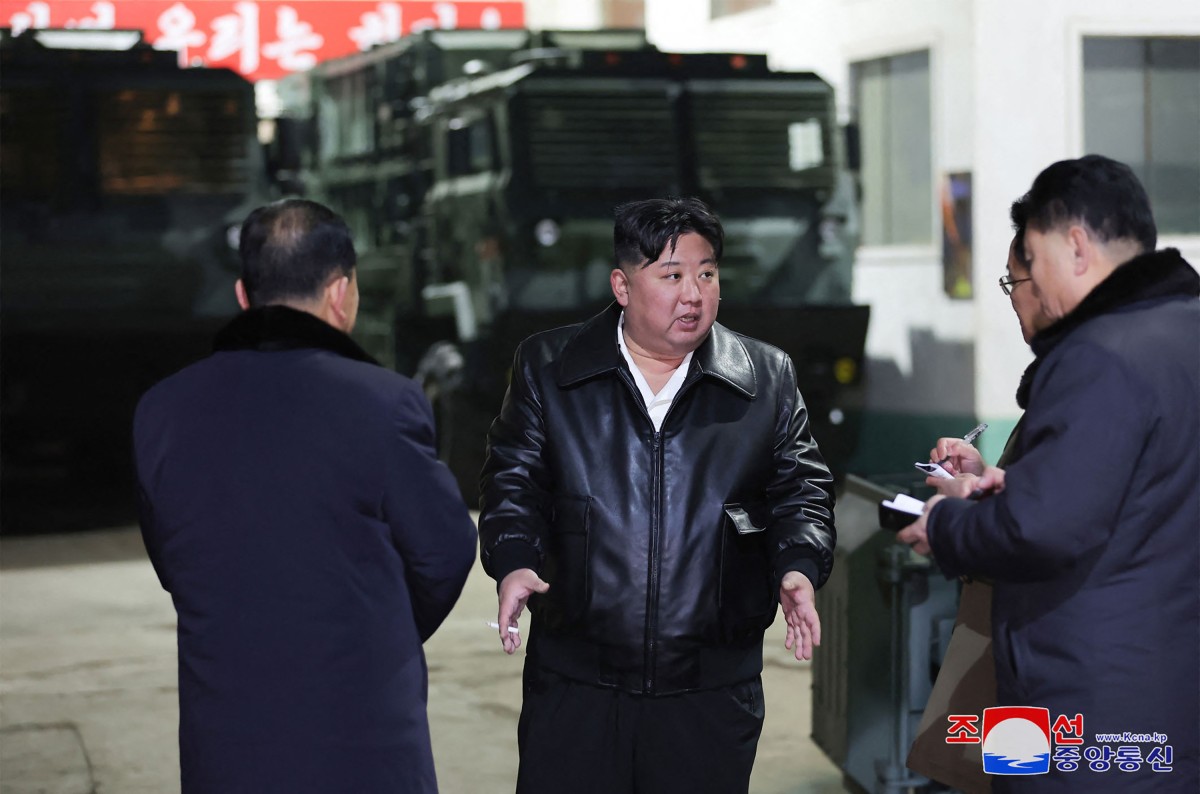
TOPSHOT - This undated picture taken by North Korea's official Korean Central News Agency (KCNA) and released on January 10, 2024 shows North Korean leader Kim Jong Un (C) inspecting a major munitions factory to learn about the production of weapons and equipment at an undisclosed location in North Korea. (Photo by KCNA VIA KNS / AFP)

SEOUL, South Korea– A 2.4 magnitude earthquake hit near a North Korean nuclear test site on Thursday, according to South Korea's state weather agency, which analysed the quake as having occurred naturally.

The quake was detected 41 kilometres (25 miles) northwest of Kilju, which is home to the Punggye-ri nuclear test site, Yonhap news agency reported.

The quake was detected at 7:00 pm (1000 GMT) at a depth of 20 kilometres (12 miles), according to the Korea Meteorological Administration.

Between 2006 and 2017, North Korea conducted six nuclear tests at the Punggye-ri facility.

The 2017 nuclear test triggered a much bigger 6.3 magnitude quake that was felt across the border in China.

Kilju has seen a string of small natural earthquakes in recent months.

Citing experts, Yonhap has said the area around Kilju has grown more quake-prone due to North Korea's repeated tests.


- Stockpiles -


At Pyongyang's year-end policy meetings, North Korean leader Kim Jong Un threatened a nuclear attack on the South and called for a build-up of his country's military arsenal ahead of armed conflict that he warned could "break out any time".

Kim also successfully put a spy satellite into orbit late last year, after receiving what Seoul said was Russian help, in exchange for arms transfers for Moscow's war in Ukraine.

The 2017 test sparked global condemnation, leading the United Nations Security Council to unanimously adopt new sanctions that included restrictions on oil shipments.

Monitoring groups estimated the sixth nuclear test had a yield of up to 250 kilotons, which is 16 times the size of the US bomb that destroyed Hiroshima in 1945.

Following the 2017 test, the North claimed it had detonated a hydrogen bomb "of unprecedently big power", saying it marked a "very significant occasion" in achieving the "final goal" of becoming a complete nuclear power.

US intelligence officials estimated in 2018 that Pyongyang had enough fissile material -- the core component of nuclear weapons -- for 65 weapons, and that it produces enough fissile material for 12 additional weapons every year.

A 2021 report from the RAND Corporation projected that North Korea could have more than 200 nuclear weapons and hundreds of ballistic missiles stockpiled by 2027.


Related Tags

WORLDNEWS
ADVERTISEMENT
.most-popular .layout-ratio{ padding-bottom: 79.13%; } @media (min-width: 768px) and (max-width: 1024px) { .widget-title { font-size: 15px !important; } }

{{ articles_filter_1561_widget.title }}

.most-popular .layout-ratio{ padding-bottom: 79.13%; } @media (min-width: 768px) and (max-width: 1024px) { .widget-title { font-size: 15px !important; } }

{{ articles_filter_1562_widget.title }}

.most-popular .layout-ratio{ padding-bottom: 79.13%; } @media (min-width: 768px) and (max-width: 1024px) { .widget-title { font-size: 15px !important; } }

{{ articles_filter_1563_widget.title }}

{{ articles_filter_1564_widget.title }}

.mb-article-details { position: relative; } .mb-article-details .article-body-preview, .mb-article-details .article-body-summary{ font-size: 17px; line-height: 30px; font-family: "Libre Caslon Text", serif; color: #000; } .mb-article-details .article-body-preview iframe , .mb-article-details .article-body-summary iframe{ width: 100%; margin: auto; } .read-more-background { background: linear-gradient(180deg, color(display-p3 1.000 1.000 1.000 / 0) 13.75%, color(display-p3 1.000 1.000 1.000 / 0.8) 30.79%, color(display-p3 1.000 1.000 1.000) 72.5%); position: absolute; height: 200px; width: 100%; bottom: 0; display: flex; justify-content: center; align-items: center; padding: 0; } .read-more-background a{ color: #000; } .read-more-btn { padding: 17px 45px; font-family: Inter; font-weight: 700; font-size: 18px; line-height: 16px; text-align: center; vertical-align: middle; border: 1px solid black; background-color: white; } .hidden { display: none; }
function initializeAllSwipers() { // Get all hidden inputs with cms_article_id document.querySelectorAll('[id^="cms_article_id_"]').forEach(function (input) { const cmsArticleId = input.value; const articleSelector = '#article-' + cmsArticleId + ' .body_images'; const swiperElement = document.querySelector(articleSelector); if (swiperElement && !swiperElement.classList.contains('swiper-initialized')) { new Swiper(articleSelector, { loop: true, pagination: false, navigation: { nextEl: '#article-' + cmsArticleId + ' .swiper-button-next', prevEl: '#article-' + cmsArticleId + ' .swiper-button-prev', }, }); } }); } setTimeout(initializeAllSwipers, 3000); const intersectionObserver = new IntersectionObserver( (entries) => { entries.forEach((entry) => { if (entry.isIntersecting) { const newUrl = entry.target.getAttribute("data-url"); if (newUrl) { history.pushState(null, null, newUrl); let article = entry.target; // Extract metadata const author = article.querySelector('.author-section').textContent.replace('By', '').trim(); const section = article.querySelector('.section-info ').textContent.replace(' ', ' '); const title = article.querySelector('.article-title h1').textContent; // Parse URL for Chartbeat path format const parsedUrl = new URL(newUrl, window.location.origin); const cleanUrl = parsedUrl.host + parsedUrl.pathname; // Update Chartbeat configuration if (typeof window._sf_async_config !== 'undefined') { window._sf_async_config.path = cleanUrl; window._sf_async_config.sections = section; window._sf_async_config.authors = author; } // Track virtual page view with Chartbeat if (typeof pSUPERFLY !== 'undefined' && typeof pSUPERFLY.virtualPage === 'function') { try { pSUPERFLY.virtualPage({ path: cleanUrl, title: title, sections: section, authors: author }); } catch (error) { console.error('ping error', error); } } // Optional: Update document title if (title && title !== document.title) { document.title = title; } } } }); }, { threshold: 0.1 } ); function showArticleBody(button) { const article = button.closest("article"); const summary = article.querySelector(".article-body-summary"); const body = article.querySelector(".article-body-preview"); const readMoreSection = article.querySelector(".read-more-background"); // Hide summary and read-more section summary.style.display = "none"; readMoreSection.style.display = "none"; // Show the full article body body.classList.remove("hidden"); } document.addEventListener("DOMContentLoaded", () => { let loadCount = 0; // Track how many times articles are loaded const offset = [1, 2, 3, 4, 5, 6, 7, 8, 9, 10]; // Offset values const currentUrl = window.location.pathname.substring(1); let isLoading = false; // Prevent multiple calls if (!currentUrl) { console.log("Current URL is invalid."); return; } const sentinel = document.getElementById("load-more-sentinel"); if (!sentinel) { console.log("Sentinel element not found."); return; } function isSentinelVisible() { const rect = sentinel.getBoundingClientRect(); return ( rect.top < window.innerHeight && rect.bottom >= 0 ); } function onScroll() { if (isLoading) return; if (isSentinelVisible()) { if (loadCount >= offset.length) { console.log("Maximum load attempts reached."); window.removeEventListener("scroll", onScroll); return; } isLoading = true; const currentOffset = offset[loadCount]; window.loadMoreItems().then(() => { let article = document.querySelector('#widget_1690 > div:nth-last-of-type(2) article'); intersectionObserver.observe(article) loadCount++; }).catch(error => { console.error("Error loading more items:", error); }).finally(() => { isLoading = false; }); } } window.addEventListener("scroll", onScroll); });

Sign up by email to receive news.