






 Philippines
National
PH Navy labels China's alleged disinformation as 'Marites warfare'
Philippines
National
PH Navy labels China's alleged disinformation as 'Marites warfare'
PH Navy labels China's alleged disinformation as 'Marites warfare'
By Jel Santos


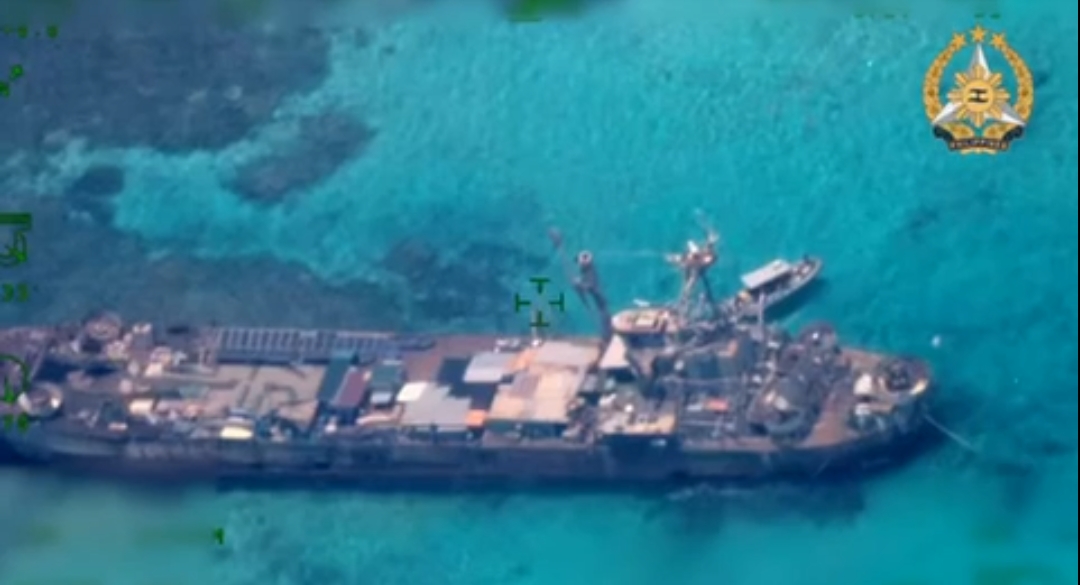
The alleged disinformation campaign of China was dubbed as “Marites warfare” by an official of the Philippine Navy (PN) who bellied that a conversation between a Western Command (WESCOM) chief and a Chinese diplomat took place.
For context, "Marites" is often used colloquially by Filipinos to refer to someone who enjoys gossiping or spreading rumors.
On May 7, a diplomatic source from the Chinese embassy in Manila revealed to the Manila Bulletin purported details regarding the supposed "new model" agreement between the Philippine government and China concerning the resupply of the BRP Sierra Madre in the West Philippine Sea (WPS).
Commodore Roy Vincent Trinidad, the spokesperson for the Philippine Navy regarding the West Philippine Sea, stated that President Marcos and other officials in the defense and security sector have already debunked China's purported agreement and the supposed awareness of Philippine officials regarding the said agreement.
The alleged recording surfaced by China, he said, is part of their disinformation campaign to divide Filipinos.
“Now, naglabas na naman sila ng bagong usapan na may recorded daw between WESCOM and a Chinese official. Ito ay kasama sa disinformation (Now, they have released another new discussion that allegedly has an alleged recorded conversation between WESCOM and a Chinese official. This is part of the disinformation),” he said during a televised media briefing by state-controlled PTV 4 on Friday, May 10.
“Pero lahat ng sinasabi nila, I call it part of ‘Marites Warfare’—to sow intrigue among us Filipinos na tayo ang mag-away-away and we will be diverted from the true issue which is China encroaching into our territorial domain in the West Philippines Sea (But everything they're saying, I call it part of 'Marites Warfare'—to sow intrigue among us Filipinos, making us fight amongst ourselves and diverting us from the true issue, which is China encroaching into our territorial domain in the West Philippine Sea),” he continued.
Meanwhile, Trinidad said the leave of WESCOM head Vice Admiral Alberto Carlos has nothing to do with the alleged “new model.”
Carlos, he said, filed the personal leave last month.
“Anybody could say anything, anybody could connect the dots, and link certain actions to what is happening. That leave was filed last month,” the spokesperson said.
“Kumbaga, bago lumabas ‘yung issue na ito, nandoon na ‘yun, it just so happened na more or less coincidental, just before the issue [ay] nag-leave siya but that has been prearranged before and it was approved already even before the issue came out (I mean, before this issue emerged, it was already there. It just so happened that it was more or less coincidental, just before the issue arose, they left, but that departure had been prearranged beforehand and was already approved even before the issue came out).”
Trinidad emphasized the crucial need for every Filipino to grasp the modern battlefield, which resides in the cognitive domain—within their minds.
“Today’s warfare is less of kinetic action—kinetic versus kinetic—it’s more of deception, it’s more of false narratives, it’s more of shaping the perception of the public para ang taongbayan kapag siya ang nasabi na, ‘Ayaw namin ng ganito,’ hihina ang fighting spirit ng tao (Today's warfare is less about kinetic action—kinetic versus kinetic—it's more about deception, false narratives, and shaping the perception of the public so that when the people say, ‘We don't want this,’ it weakens the fighting spirit of the people),” the spokesperson stated.
The only positive outcome of China's disinformation campaign is that it strengthens Filipinos' sense of nationhood, he said.
“Lalong pinapatibay natin ‘yung pagmamahal sa sarili natin sapagkat ang kalaban natin dito ay hindi kapwa Pilipino, ang kalaban ay dayuhan (It strengthens our love for our selves because our enemy here is not our fellow Filipino, the enemy is foreign),” said Trinidad.
In July 2016, China’s nine-dash line claims in the South China Sea were rejected by an arbitral tribunal at the Permanent Court of Arbitration. The case was brought by the Philippines based on the United Nations Convention on the Law of the Sea (UNCLOS).
However, China declined to accept the ruling against it.