






 Philippines
National
President may declare 'National Rice Emergency' under Quimbo's bill
Philippines
National
President may declare 'National Rice Emergency' under Quimbo's bill
President may declare 'National Rice Emergency' under Quimbo's bill


At A Glance
- Economist-solon Marikina City 2nd district Rep. Stella Quimbo has filed a bill that would allow the President to declare a "National Rice Emergency" for a maximum period of six months.
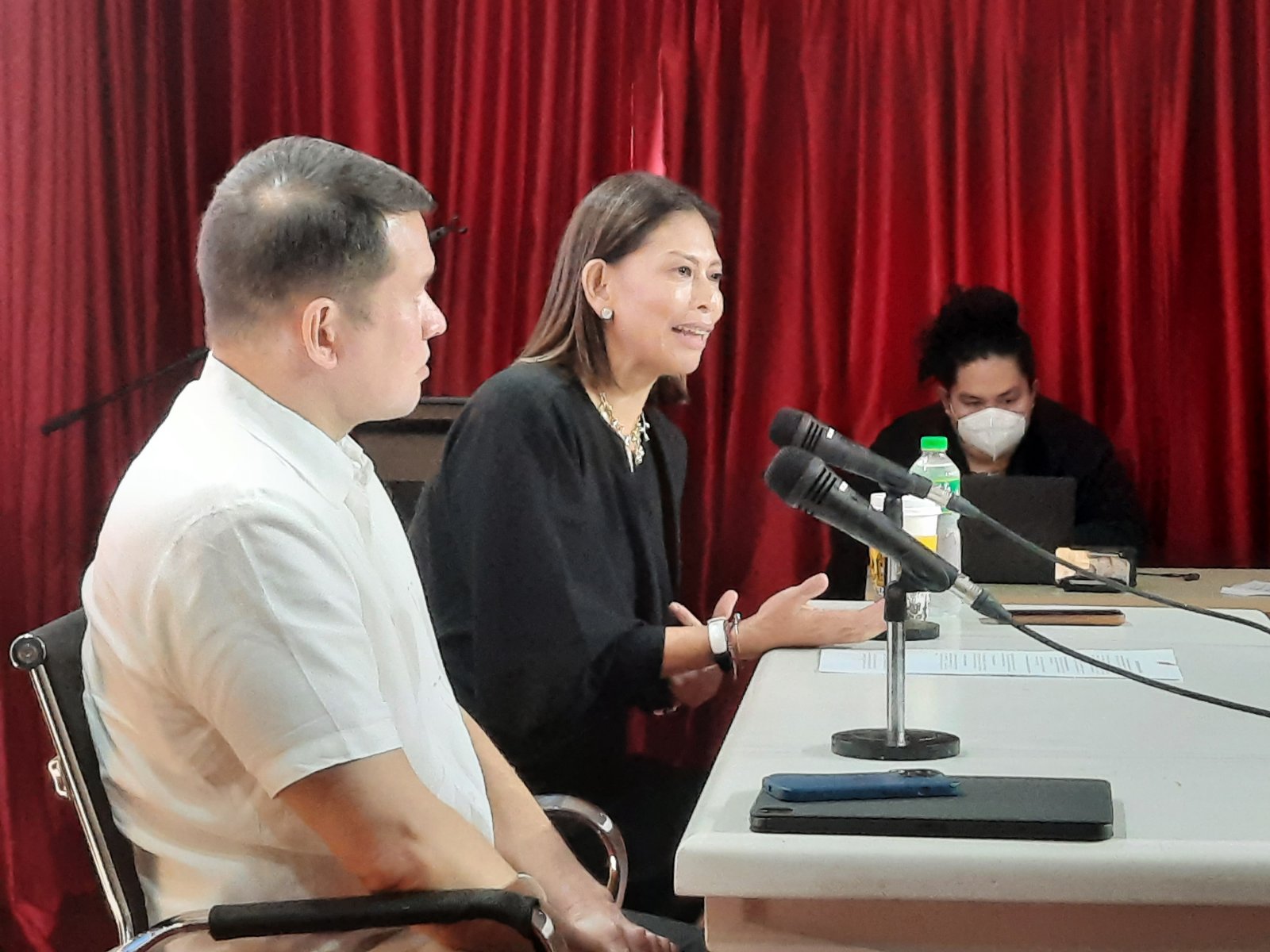 Marikina City 2nd district Rep. Stella Quimbo (Ellson Quismorio/ MANILA BULLETIN)
Economist-solon Marikina City 2nd district Rep. Stella Quimbo has filed a bill that would allow the President to declare a "National Rice Emergency" for a maximum period of six months.
Under House Bill (HB) 9030, the Chief Executive may declare a National Rice Emergency "during times of crisis in rice supply or price".
Quimbo, a senior vice chairperson of the House Committee on Appropriations, filed the measure amid steadily rising prices of the staple grain.
"The Department of Agriculture (DA) Price Monitoring reported rice prices at P57 per kilo in NCR (National Capital Region) Markets in August, 16 percent higher than prices in July. With increasing reports of rice hoarders and the threat of El Niño, there are concerns about the sufficiency of domestic rice supply," she said.
"The Philippine Rice Emergency Response Act, filed as House Bill 9030, is not just a reaction to these challenges. Rather, it is a strategic set of solutions— a comprehensive tool kit —that seeks to shield consumers and our local farmers, as well as traders, during tight conditions in the rice market," Quimbo said.
Her measure defines a rice emergency as a situation where there is or there is an expectation of 1) an extreme rice shortage, 2) an extraordinary rice price increase, or 3) a sustained rice price increase.
The lady lawmaker broke the measure down into three sets of strategies.
"The first set of strategies is to directly address prices by ensuring sufficient supply. This bill seeks to allow imports by the NFA (National Food Authority) to increase its buffer stocks. Further, it uses rice tariff reduction as a way to further manage prices, especially when world prices of rice are high," she said.
The second set of strategies, she said, includes subsidizing key stakeholders in the production and consumption of rice, including local farmers and impoverished households. "In case a price ceiling is in place, retailers can also be subsidized if they face operating losses," Quimbo said.
"And finally, to go after hoarders, the third set includes increasing the penalties for hoarding and price manipulation, with higher fines and longer imprisonment," she said.
The bill's penalty provision indicates a minimum of 10 years to a maximum of 30 years, from just five to 15 years under the Price Act. Meanwhile, the fines range from a minimum of P1 million to a Maximum of P100 million, from just P5,000 to P1 million under the Price Act.
Quimbo said government officials found guilty of price manipulation are given the maximum penalties.