






 Philippines
National
PBBM stresses need to 'work together' for rules-based order in South China Sea
Philippines
National
PBBM stresses need to 'work together' for rules-based order in South China Sea
PBBM stresses need to 'work together' for rules-based order in South China Sea
By Raymund Antonio and Raymund Antonio


President Ferdinand “Bongbong” Marcos Jr. sought the cooperation of neighboring countries in maintaining a rules-based order in the South China Sea amid what he called “shifting security issues” that threaten peace in the hotly contested region.
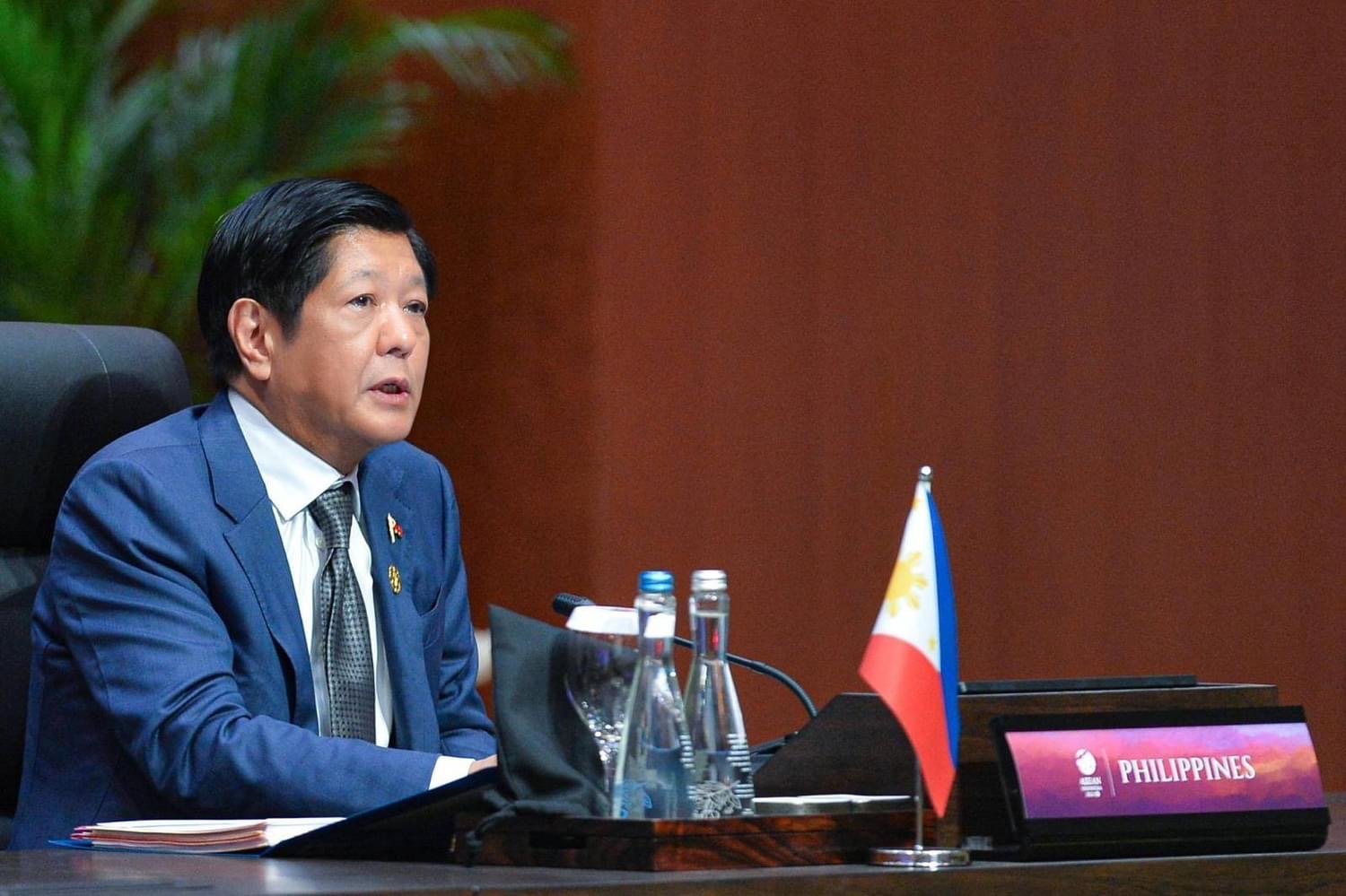 President Ferdinand Marcos Jr. (Photo from the Presidential Communications Office)
In his intervention during the 26th Association of Southeast Asian Nations (ASEAN)-Japan Summit at the Jakarta Convention Center on Wednesday, Sept. 6, the President stressed the role of the 1982 United Nations Convention on the Law of the Sea (UNCLOS).
“I cannot emphasize enough the expediency of maintaining peace and stability in the region through the adherence to the rule of law, particularly the 1982 UNCLOS,” he stated.
“Our shifting security issues make it quite clear that we must work together for the sake of peace and stability in our region and in the world," the President added.
Marcos said this as he commended Japan for its role in maintaining peace in the Indo-Pacific region and opposing the militarization of reclaimed features in the South China Sea.
Though he did not mention China, the Philippine government had been condemning and admonishing Beijing for its Coast Guard’s bullying of Philippine sea vessels and fishermen in the West Philippine Sea, believed by many to be a possible flashpoint of military conflict.
Marcos also lauded the Joint Statement, dubbed as The Spirit of Camp David, which consolidated a common security agenda among Japan, the United States, and South Korea.
“To this end, the trilateral maritime exercises conducted among the Coast Guards of the Philippines, Japan, and the United States held this June was the first of its kind amongst the three countries,” the Chief Executive said.
“The exercises reinforced interoperability between and amongst the coast guards of our countries in responding to maritime disasters and to strengthening [Humanitarian] Assistance and Disaster Relief (HADR) cooperation,” he added.
Aside from this, the Joint Statement consolidated a common security agenda of Japan, the United States, and South Korea, on the most problematic issues in the region that undermine regional peace and prosperity.
The agenda includes, but are not limited to, supporting the free and open international order based on the rule of law, opposing any unilateral attempts to change the status quo in the Indo-Pacific waters and the militarization of reclaimed features in the South China Sea, and expressing concern for continued illegal, unreported, and unregulated (IUU) fishing activities that affect fisherfolks.
Marcos said that since Japan and the Philippines are both maritime nations, they share the common interest of maintaining peace and stability in the South China Sea and enhancing their resiliency against maritime disasters.
The President also welcomed the adoption of the Joint Statement on the Establishment of the ASEAN-Japan Comprehensive Strategic Partnership, which is “a testament to the enduring and deep-rooted relationship between ASEAN and Japan.”
“ASEAN welcomes Japan’s support for our efforts to mainstream the ASEAN Outlook on the Indo-Pacific, the AOIP, especially in upholding ASEAN Centrality,” he said.
Marcos also took note of Japan’s additional injection of $100 million, saying that it is a symbol of the continuing support and its importance in mainstreaming AOIP.