






 Philippines
National
Senators want GCash, PayMaya invited to Senate probe into proliferation of text scams
Philippines
National
Senators want GCash, PayMaya invited to Senate probe into proliferation of text scams
Senators want GCash, PayMaya invited to Senate probe into proliferation of text scams


Senate President Juan Miguel “Migz” Zubiri has sought the participation of GCash, PayMaya and other “e-wallet” providers to the Senate’s ongoing investigation into the proliferation of text scams and other cybercrime activities despite the enactment of the SIM Registration Act.
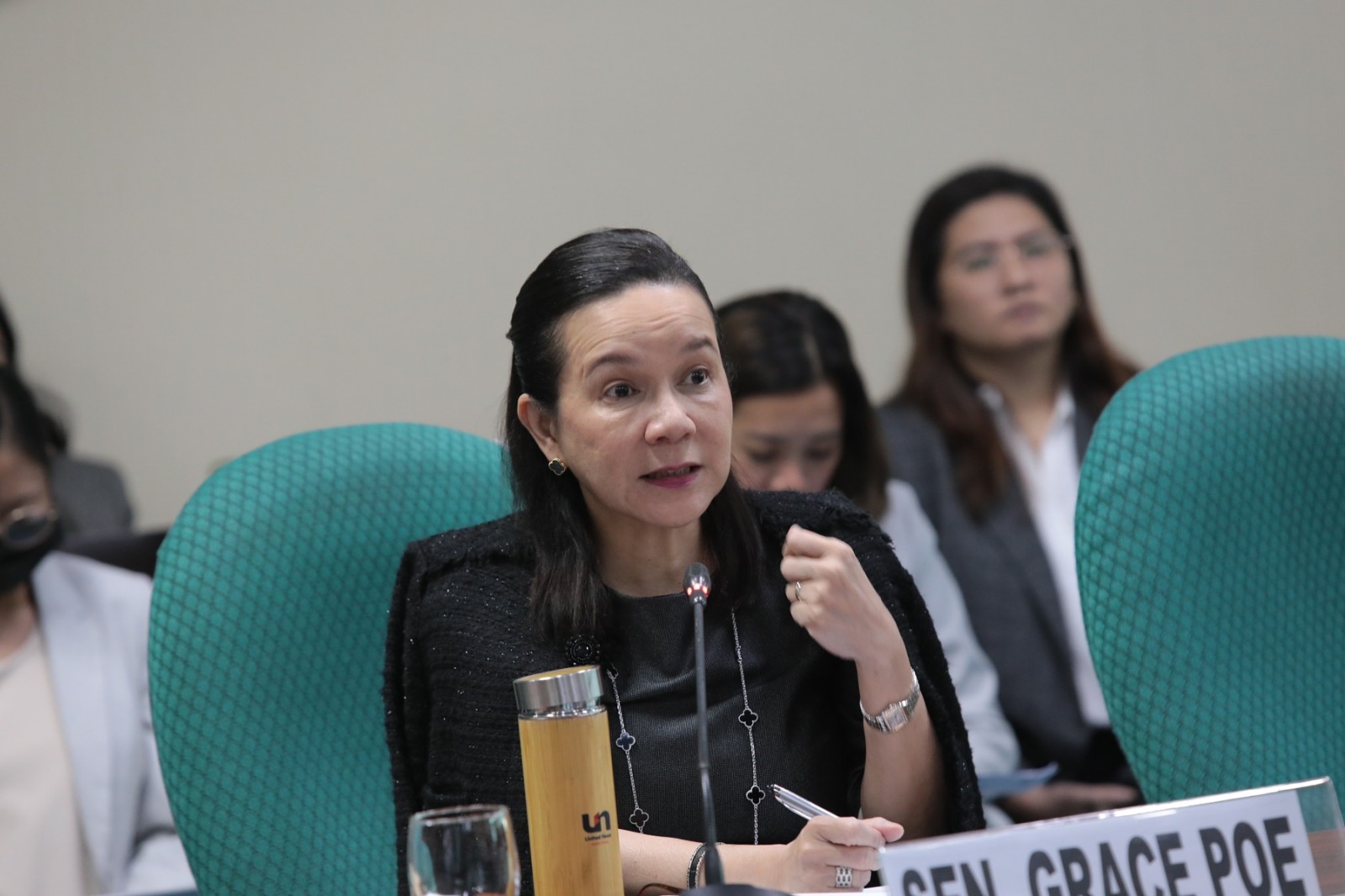
Sen. Grace Poe laments the persisting proliferation of text scams and spam messages despite the enactment of the Subscriber Identity Module (SIM) Registration Act, as she leads the inquiry of the Senate Committee on Public Services on Tuesday, Sept. 5, 2023. (Senate PRIB Photo)
Zubiri made the call during the Senate Committee on Public Services’ probe on Tuesday, September 5, into the issue saying cybercriminals and syndicates’ preferred mode of payment is through GCash, Paymaya and other “e-wallet” services and even remittance services.
“We have to invite in the next hearing, if possible, GCash, PayMaya—all the e-wallets (providers)—that send money, including Palawan (Express), Lhuillier, all these padala or remittance services,” Zubiri said during the hearing called for by Sen. Grace Poe, chairman of the Senate panel.
“Because we have to find a way to cut the source of funding, if you make delivery of funds much stricter, it will deter them to commit a crime,” the Senate leader said.
He said cybercriminal syndicates prefer these mode of payment and as a means to carry out their nefarious activities are regulations within these applications are more relax.
“They can’t deposit it in bank accounts because the bank is very strict when it comes to your details. It’s now all through GCash PayMaya, or Palawan. So I think we have to invite them to the next hearing and get possible solutions on that side,” he said.
Asked if GCash is owned by Globe, Ariel Tubayan, head of the policy division, corporate and legal services group of Globe Telecom Inc., admitted it is a subsidiary of the company, but that Globe is considered one of the “minority owners” of GCash at the moment.
But Tubayan assured that GCash is closely coordinating with the National Bureau of Investigation (NBI) in investigating text scams and other related online criminal activities.
“I don't represent GCash at this hearing, but based on my knowledge, GCash is continuously coordinating with the NBI,” Tubayan said.
During the hearing, Tubayan, representatives of Dito Telecommunity and Smart Communications Inc. also confirmed that all mobile numbers that failed to be registered have all been deactivated.
In the case of Smart Communications, the company is coordinating with law enforcement agencies, including the Department of Justice (DOJ) and the Department of Information and Communication Technology (DICT) in blocking and “most importantly to apprehend these scammers and syndicates” involved in cybercrimes.
“Also, we note that all of these activities have moved to the internet space, in terms of using OTTs (over the top services) like Viber, WhatsApp, Messenger. This will probably require intervention from all these OTT operators. Not only the telcos (telecommunication companies),” said Roy Ibay, Vice President and Head of SMART Inc.’s Regulatory Affairs.
Ibay said they have observed that most of the online scammers have been utilizing these OTTs pointing out that the numbers registered under these services were done prior to the deadline of the SIM registration.
“Based on our observation is that if you have a number that you were using but you did not register it, but even after the registration date, although you may not use the basic services, or the cellphone operator, the service would still continue with the Viber and other OTTs,” Ibay said.
“Aha! So that’s how they are able to sneak in!” Zubiri asked.
“Most likely, yes,” the representative from Smart said, adding that they can still use the OTTs as long as they have an available Wi-Fi.
Poe lamented that this only shows the loopholes in the SIM Registration Act.
“So now they got creative. Wow!” Poe lamented.
This is why, Poe said authorities should “go above and beyond” in implementing the SIM Registration law to curb the continuous proliferation of scams hounding mobile phone users.
Poe also pointed out that the recent raids in alleged cyberscam hubs also yielded pre-registered SIMs with e-wallets purportedly used in illegal transfers of money.
“Gumawa tayo ng batas pero mukhang nagkukulang sa implementasyon (We made a law but it seems there is still lack of implementation),” Poe said of the law which she authored and sponsored.
“Kung malikhain ang mga manloloko, dapat mas maging malikhain tayo (If these scammers are creative, we must be more creative),” she pointed out.
“While we do not discount the warnings and notices sent by the agencies and telecommunications companies (telcos) to the public, we must go above and beyond if we are to combat this plague in our telecom system," Poe added.
Nearly 114 million SIM cards were registered after the seven-month registration that ended last July 25, 2023.