

ADVERTISEMENT

Gov't urged to use rice tariff collection as cash aid for Filipino families

Published Sep 25, 2023 05:22 am

Instead of lowering the rice import tariffs, the government should consider utilizing the revenues to benefit low-income and lower-middle class families.
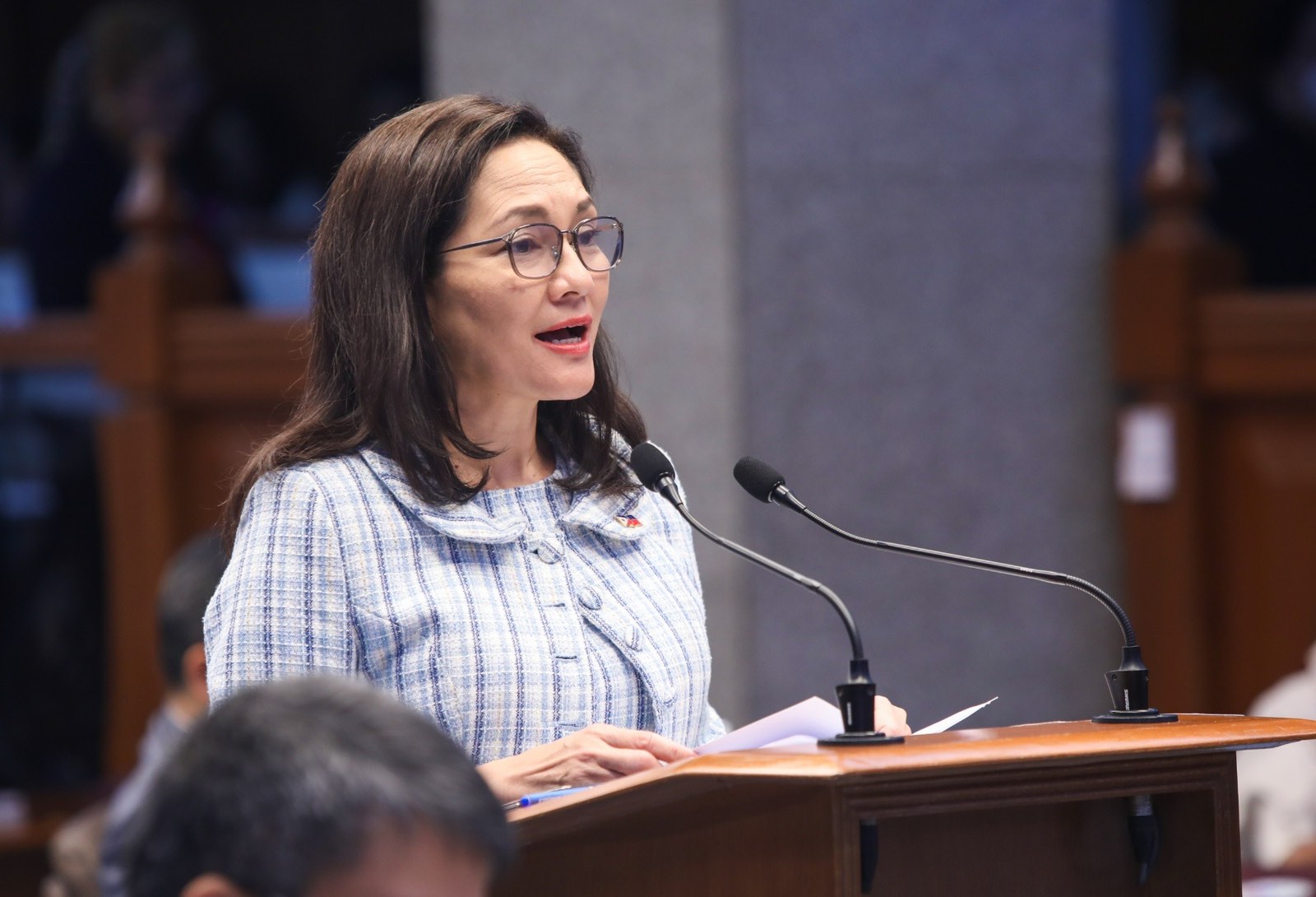
Risa Hontiveros.jpg

Sen. Risa Hontiveros (Senate PRIB Photo)


Senator Risa Hontiveros on Monday, September 25 made the suggestion as she expressed doubts on the feasibility of the Department of Finance’s (DOF) plan to reduce tariffs to help Filipino household have access to affordable rice. 


Hontiveros pointed out the DOF’s plan could ultimately prove detrimental to the agricultural sector and to the consumers.


“Don’t lower the tariffs. Instead, let's work towards a solution that benefits both consumers and our hard working farmers. Local farmers depend on fair prices to sustain their livelihoods, especially in the face of recent challenges such as severe flooding and the looming El Niño,” Hontiveros said.


To assist consumers, the senator suggested leveraging the rice import tariffs that the DOF is willing to forego as a one-time cash transfer to benefit low-income families and the lower-middle class, while the prices are still high. 


This approach, she said, ensures that rice remains affordable for the less fortunate 50 percent of Filipinos.


"We have an opportunity here to collect and employ these rice import tariffs to provide much-needed cash assistance to millions of Filipino households. With P12 billion, for example, we could extend assistance to an additional six million families on top of the four (4) million 4Ps families already receiving rice allowances,” the senator said.


The lawmaker said the government should also considering bolstering support for local farmers in terms of technology, seeds and fertilizers like what other countries did in 2008 during the rice price crisis, where high prices led to increased production in many countries.


“If rice tariffs remain at 35 percent, higher prices will encourage more local production. While a fever is usually not a positive sign, it is believed to stimulate the body's cells to work faster, including those that combat illness,” she stated.


Moreover, the lawmaker said some of the revenues from rice import tariffs, in addition to other windfall revenues such as petroleum excise taxes, could serve as a valuable resource to reinforce financial assistance programs.


“Each family could receive P2,000, equivalent to a P15 reduction for every two kilograms of rice they purchase daily. This assistance could be sustained for the next four months, offering considerable relief to struggling families,” she said.


Likewise, raising the ability of consumers to pay for expensive rice can push importers to increase supply to meet the demand that local production could not.


Such strategy, she said would not only mitigate any concerns about supply shortage but also eliminate the need to allocate the National Food Authority (NFA) budget for rice import deals with countries like Vietnam. 


“Utilizing rice import tariffs offers a win-win solution for consumers and the agricultural sector,” she said.


“This will not only benefit Filipino families but also promote a sustainable, balanced rice market in the long term,” Hontiveros reiterated. 

Related Tags

Rice Tariffication Law (RTL) Risa Hontiveros Cash transfer
ADVERTISEMENT
.most-popular .layout-ratio{ padding-bottom: 79.13%; } @media (min-width: 768px) and (max-width: 1024px) { .widget-title { font-size: 15px !important; } }

{{ articles_filter_1561_widget.title }}

.most-popular .layout-ratio{ padding-bottom: 79.13%; } @media (min-width: 768px) and (max-width: 1024px) { .widget-title { font-size: 15px !important; } }

{{ articles_filter_1562_widget.title }}

.most-popular .layout-ratio{ padding-bottom: 79.13%; } @media (min-width: 768px) and (max-width: 1024px) { .widget-title { font-size: 15px !important; } }

{{ articles_filter_1563_widget.title }}

{{ articles_filter_1564_widget.title }}

.mb-article-details { position: relative; } .mb-article-details .article-body-preview, .mb-article-details .article-body-summary{ font-size: 17px; line-height: 30px; font-family: "Libre Caslon Text", serif; color: #000; } .mb-article-details .article-body-preview iframe , .mb-article-details .article-body-summary iframe{ width: 100%; margin: auto; } .read-more-background { background: linear-gradient(180deg, color(display-p3 1.000 1.000 1.000 / 0) 13.75%, color(display-p3 1.000 1.000 1.000 / 0.8) 30.79%, color(display-p3 1.000 1.000 1.000) 72.5%); position: absolute; height: 200px; width: 100%; bottom: 0; display: flex; justify-content: center; align-items: center; padding: 0; } .read-more-background a{ color: #000; } .read-more-btn { padding: 17px 45px; font-family: Inter; font-weight: 700; font-size: 18px; line-height: 16px; text-align: center; vertical-align: middle; border: 1px solid black; background-color: white; } .hidden { display: none; }
function initializeAllSwipers() { // Get all hidden inputs with cms_article_id document.querySelectorAll('[id^="cms_article_id_"]').forEach(function (input) { const cmsArticleId = input.value; const articleSelector = '#article-' + cmsArticleId + ' .body_images'; const swiperElement = document.querySelector(articleSelector); if (swiperElement && !swiperElement.classList.contains('swiper-initialized')) { new Swiper(articleSelector, { loop: true, pagination: false, navigation: { nextEl: '#article-' + cmsArticleId + ' .swiper-button-next', prevEl: '#article-' + cmsArticleId + ' .swiper-button-prev', }, }); } }); } setTimeout(initializeAllSwipers, 3000); const intersectionObserver = new IntersectionObserver( (entries) => { entries.forEach((entry) => { if (entry.isIntersecting) { const newUrl = entry.target.getAttribute("data-url"); if (newUrl) { history.pushState(null, null, newUrl); let article = entry.target; // Extract metadata const author = article.querySelector('.author-section').textContent.replace('By', '').trim(); const section = article.querySelector('.section-info ').textContent.replace(' ', ' '); const title = article.querySelector('.article-title h1').textContent; // Parse URL for Chartbeat path format const parsedUrl = new URL(newUrl, window.location.origin); const cleanUrl = parsedUrl.host + parsedUrl.pathname; // Update Chartbeat configuration if (typeof window._sf_async_config !== 'undefined') { window._sf_async_config.path = cleanUrl; window._sf_async_config.sections = section; window._sf_async_config.authors = author; } // Track virtual page view with Chartbeat if (typeof pSUPERFLY !== 'undefined' && typeof pSUPERFLY.virtualPage === 'function') { try { pSUPERFLY.virtualPage({ path: cleanUrl, title: title, sections: section, authors: author }); } catch (error) { console.error('ping error', error); } } // Optional: Update document title if (title && title !== document.title) { document.title = title; } } } }); }, { threshold: 0.1 } ); function showArticleBody(button) { const article = button.closest("article"); const summary = article.querySelector(".article-body-summary"); const body = article.querySelector(".article-body-preview"); const readMoreSection = article.querySelector(".read-more-background"); // Hide summary and read-more section summary.style.display = "none"; readMoreSection.style.display = "none"; // Show the full article body body.classList.remove("hidden"); } document.addEventListener("DOMContentLoaded", () => { let loadCount = 0; // Track how many times articles are loaded const offset = [1, 2, 3, 4, 5, 6, 7, 8, 9, 10]; // Offset values const currentUrl = window.location.pathname.substring(1); let isLoading = false; // Prevent multiple calls if (!currentUrl) { console.log("Current URL is invalid."); return; } const sentinel = document.getElementById("load-more-sentinel"); if (!sentinel) { console.log("Sentinel element not found."); return; } function isSentinelVisible() { const rect = sentinel.getBoundingClientRect(); return ( rect.top < window.innerHeight && rect.bottom >= 0 ); } function onScroll() { if (isLoading) return; if (isSentinelVisible()) { if (loadCount >= offset.length) { console.log("Maximum load attempts reached."); window.removeEventListener("scroll", onScroll); return; } isLoading = true; const currentOffset = offset[loadCount]; window.loadMoreItems().then(() => { let article = document.querySelector('#widget_1690 > div:nth-last-of-type(2) article'); intersectionObserver.observe(article) loadCount++; }).catch(error => { console.error("Error loading more items:", error); }).finally(() => { isLoading = false; }); } } window.addEventListener("scroll", onScroll); });

Sign up by email to receive news.