






 Environment and Sustainability
ELEVENTH HOUR — Cities must step up to prioritize people over cars
Environment and Sustainability
ELEVENTH HOUR — Cities must step up to prioritize people over cars
ELEVENTH HOUR — Cities must step up to prioritize people over cars


One out of three households in the country, amounting to approximately 10 million households nationwide, now own at least one bicycle, according to the latest survey released by the Social Weather Stations (SWS).
A significant increase from the past two years, with 7.3 million cyclists recorded in April 2022 and 6.2 million cyclists estimated in May 2021, the recent SWS findings highlight the growing reliance of many Filipinos on bicycles for transport, livelihood, and recreation. This year’s respondents cited economic benefits, health improvements, financial savings, and reduced travel time as their main reasons for cycling.
In response, Mobility Awards National Coordinator Arielle Celine Tabinga underscored that this increase in cyclists must come with the development of policies, programs, and infrastructure to prioritize active mobility and respond to bicycle commuters’ growing needs.
The Mobility Awards, led by its convenors Institute for Climate and Sustainable Cities, The Climate Reality Project Philippines, 350 Pilipinas, MNL Moves, and Pinay Bike Commuter Community, is the first platform in the country that gives recognition to acts of leadership that encourage cycling, walking, and other sustainable mobility options.
“The Metropolitan Manila Development Authority (MMDA) has already said that a bike revolution is underway. The latest SWS survey provides solid evidence that this movement is not only persisting but steadily gaining momentum. With Filipino citizens leading the change, our collective vision of a safer and more inclusive transportation system is clear,” Tabinga said.
“Bicycles are no longer confined as a recreational pastime; but instead, have emerged as a dependable, healthy, affordable, and convenient mode of transportation for Filipinos,” she added.
While the recent SWS data proves that more Filipinos are cycling, Tabinga noted that the nomination period of this year’s Mobility Awards, which closed last Sept. 7, has shown that many citizens are concerned that current efforts are falling short.
“Despite the survey indicating a rising number of Filipino cyclists, there is a resounding sentiment among bicycle users that only a handful of cities, establishments, and workplaces are stepping up to the changing times,” she said.
“We call on our leaders in the national and local governments – in particular, the MMDA, the Department of Public Works and Highways (DPWH), the Department of Transportation (DoTr), and city executives – to pave the way and work together to provide safe and interconnected infrastructures to cyclists, pedestrians, and commuters.”
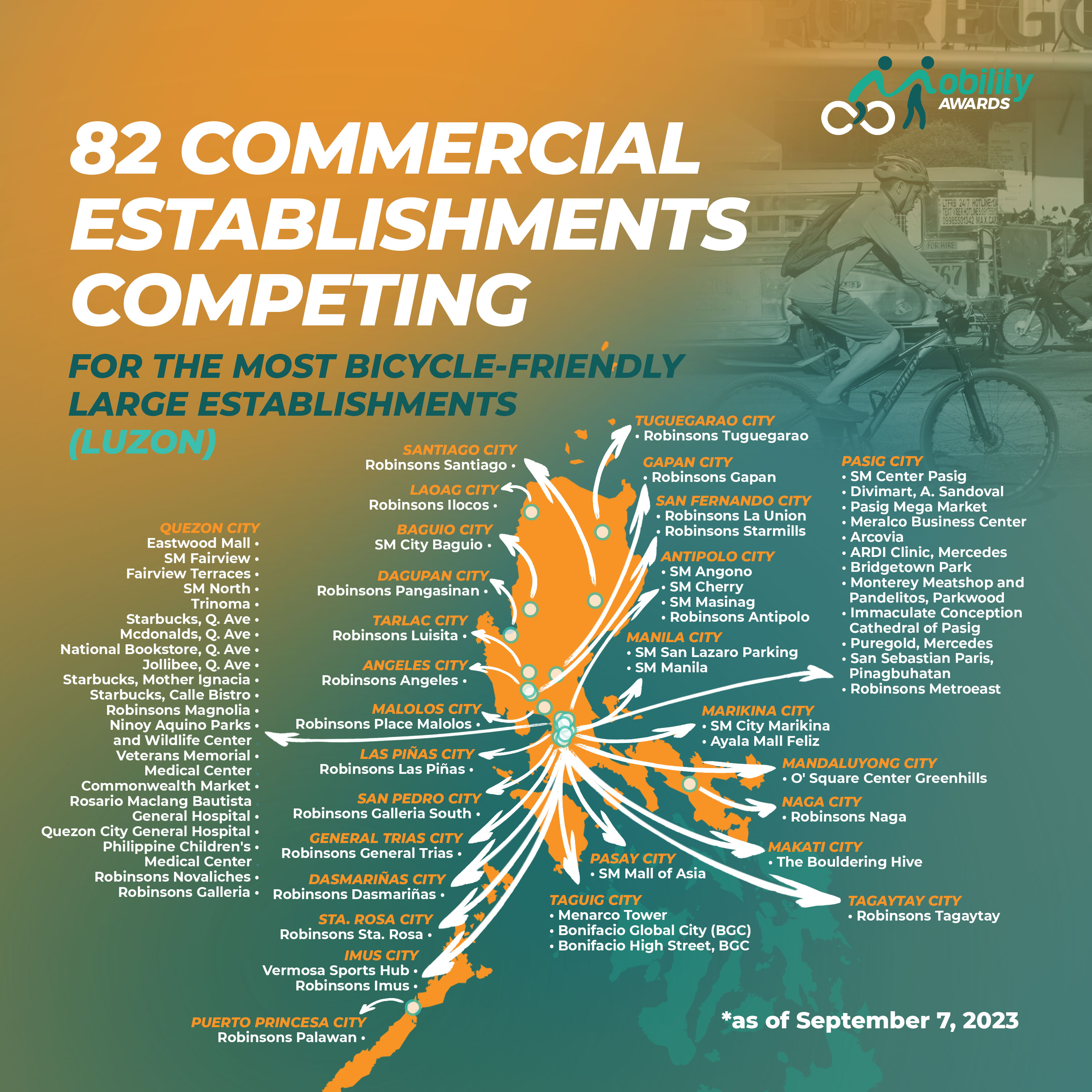
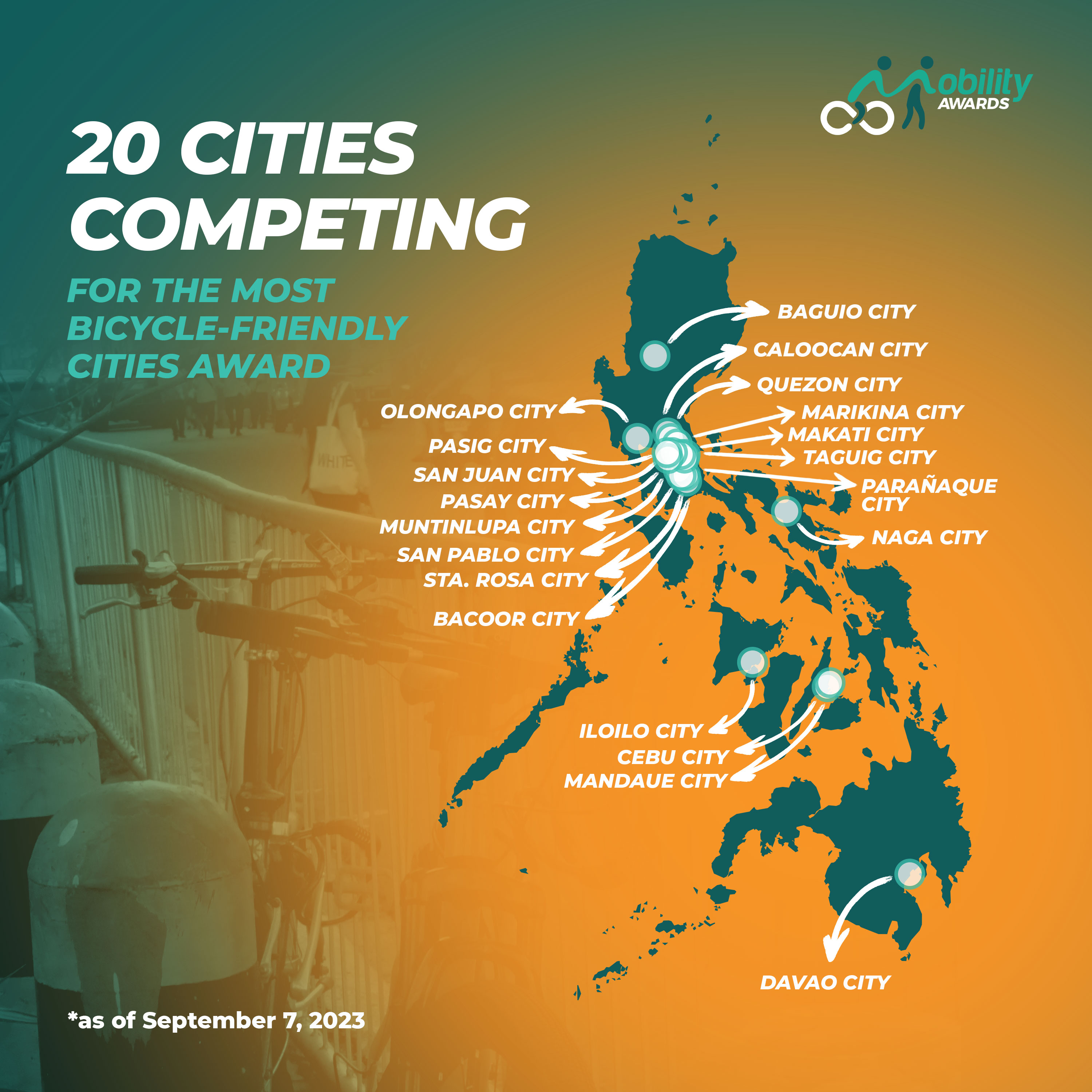
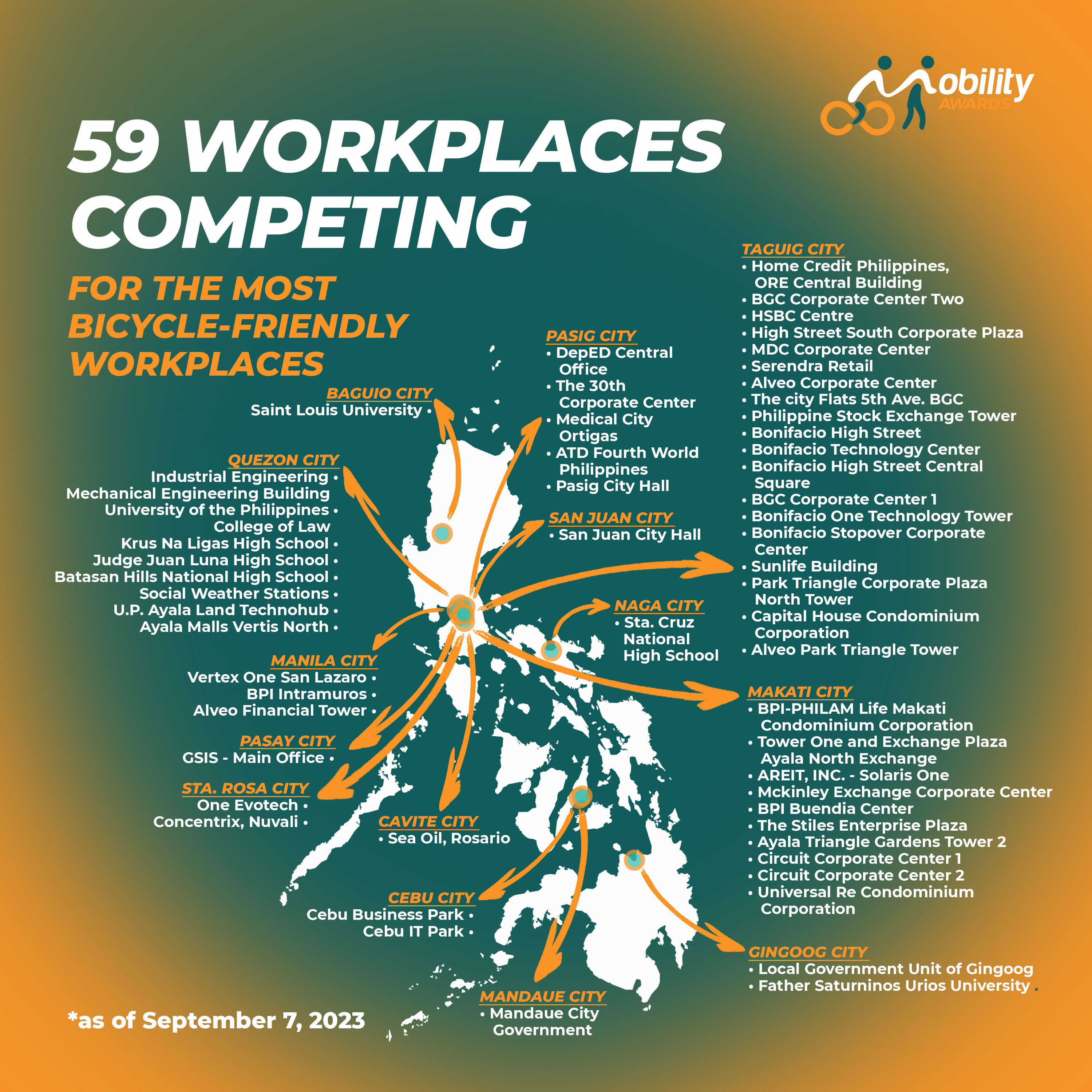
The Mobility Awards have received a total of 20 nominations for cities, 17 for stand-alone establishments, 82 for large establishments, and 59 for workplaces this year. Evaluations of the nominees are ongoing. Winners will be announced in November this year.
MNL Moves founder Aldrin Pelicano, meanwhile, emphasized that cities that have previously stood out for their commitment to people-centric mobility, during the first and second year of the Mobility Awards, have an unparalleled opportunity to inspire and lead.
“The post-pandemic return to normalcy has unmasked a truth that we cannot ignore: cycling is not the culprit behind traffic congestion; it is predominantly caused by our overdependence on driving motorized vehicles. As we envision a future where cities thrive with cleaner air, inclusive mobility, and enhanced livability, it is imperative that we prioritize reliable, clean, sustainable, and inclusive modes of transport,” he said.

The Mobility Awards also organized “Bilang Siklista,” a citizen-led national bicycle count held in 17 cities nationwide to provide evidence-based justification for investing in better bicycle and pedestrian infrastructure. Results from this year’s count will be published on Oct. 9.