






 Philippines
National
Adherence to int'l law key to free, stable Indo-Pacific region, PH tells UN
Philippines
National
Adherence to int'l law key to free, stable Indo-Pacific region, PH tells UN
Adherence to int'l law key to free, stable Indo-Pacific region, PH tells UN
By Raymund Antonio and Raymund Antonio


The rule of law must “reign” and adherence to international law will keep the Indo-Pacific region, which includes the contested South China Sea, open and stable, the Philippines told the United Nations (UN) on Sunday, Sept. 24 (Manila time).
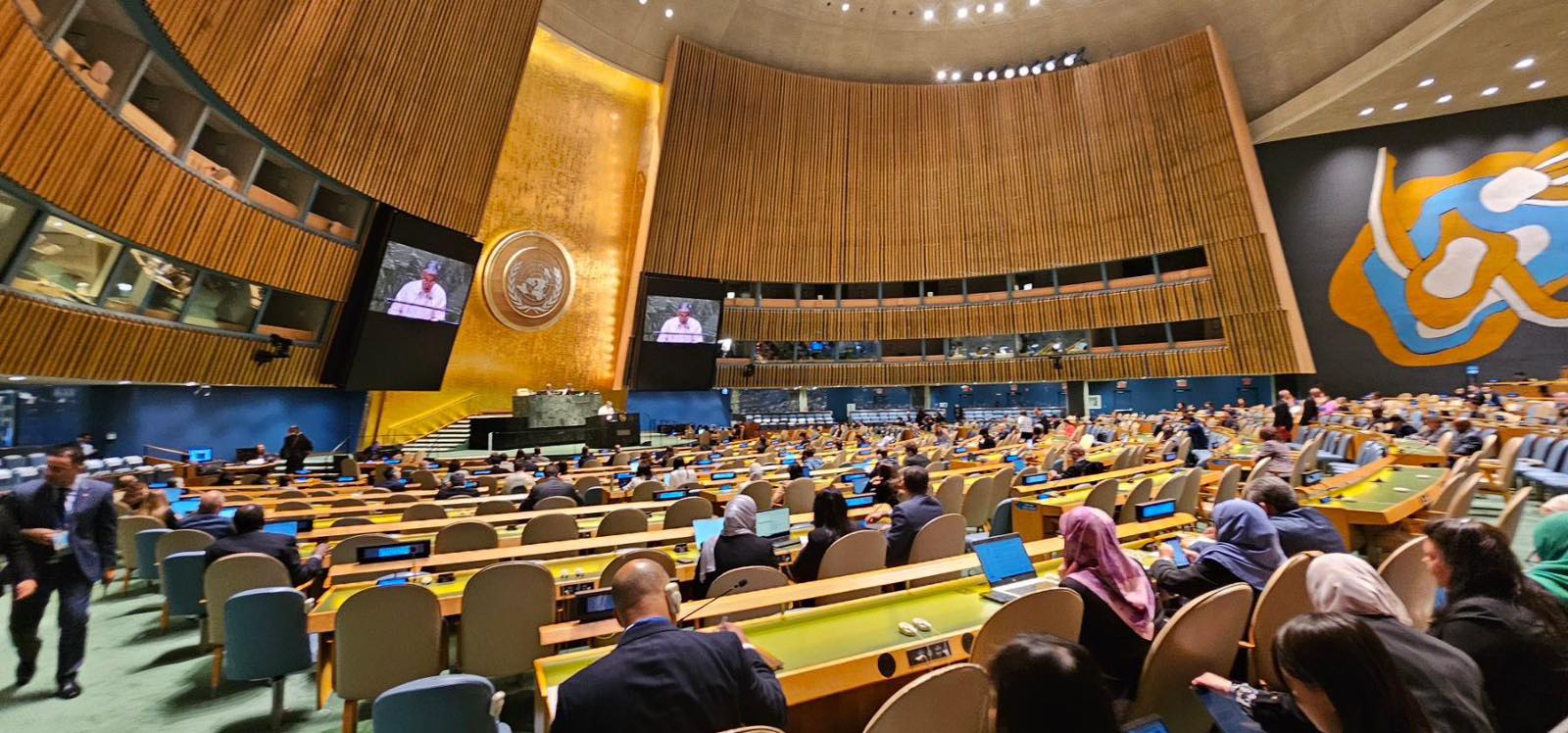 Foreign Affairs Secretary Enrique Manalo speaks at the 78th session of the United Nations General Assembly (UNGA) in New York City on Sunday, Sept. 24, 2023 (Manila time). (Photo from Sec. Manalo/Twitter)
Foreign Affairs Secretary Enrique Manalo delivered a statement on behalf of President Marcos during the 78th session of the UN General Assembly in New York City, where he called for “the peaceful settlement of disputes”, and reiterated the Philippines’ 2016 arbitral victory, which he said is now a “part of international law.”
“This has always been our position with respect to the disputes in the West Philippine Sea, inasmuch as we are prepared to defend our sovereignty, sovereign rights and territorial integrity,” he stated.
The Foreign Affairs chief also maintained the role of a rules-based approach in keeping the region stable.
“Adherence to international law contributes to keeping the Indo-Pacific, with ASEAN (Association of Southeast Asian Nations) at the center, free and open and our region stable and peaceful,” Manalo added.
Citing Marcos’ foreign policy of being “a friend to all and enemy to none,” the official stressed that the Philippine Constitution “renounces war as an instrument of national policy, adopts the generally accepted principles of international law as part of the law of the land and adheres to a policy of peace, equality, justice, freedom, cooperation, and amity with all nations.”
As the UNGA celebrated the 125th anniversary of the Permanent Court of Arbitration (PCA), where the Philippines filed its case against China in 2013, Manalo highlighted the “primacy” of the 1982 UN Convention on the Law of The Sea (UNCLOS) when it became the basis of the 2016 Arbitral Award on the South China Sea.
The PCA in The Hague invalidated China’s nine-dash line, the basis of its sweeping claims in the South China Sea that includes the Philippines’ exclusive economic zones (EEZs), in July 2016.
“The Award definitively settled the status of historic rights and maritime entitlements in the South China Sea, declaring without legal effect claims that exceed entitlements beyond the geographic and substantive limits of UNCLOS,” Manalo said.
Despite the award, the tribunal doesn’t have enforcement powers, leaving China to ignore the ruling and proceed with its aggressive stance in the resource-rich waters amid calls from several countries for it to adhere to maritime rules and order.