







Earnest's quest: Yearning for parents who fought for country's freedom
By Sonny Coloma


ENDEAVOR
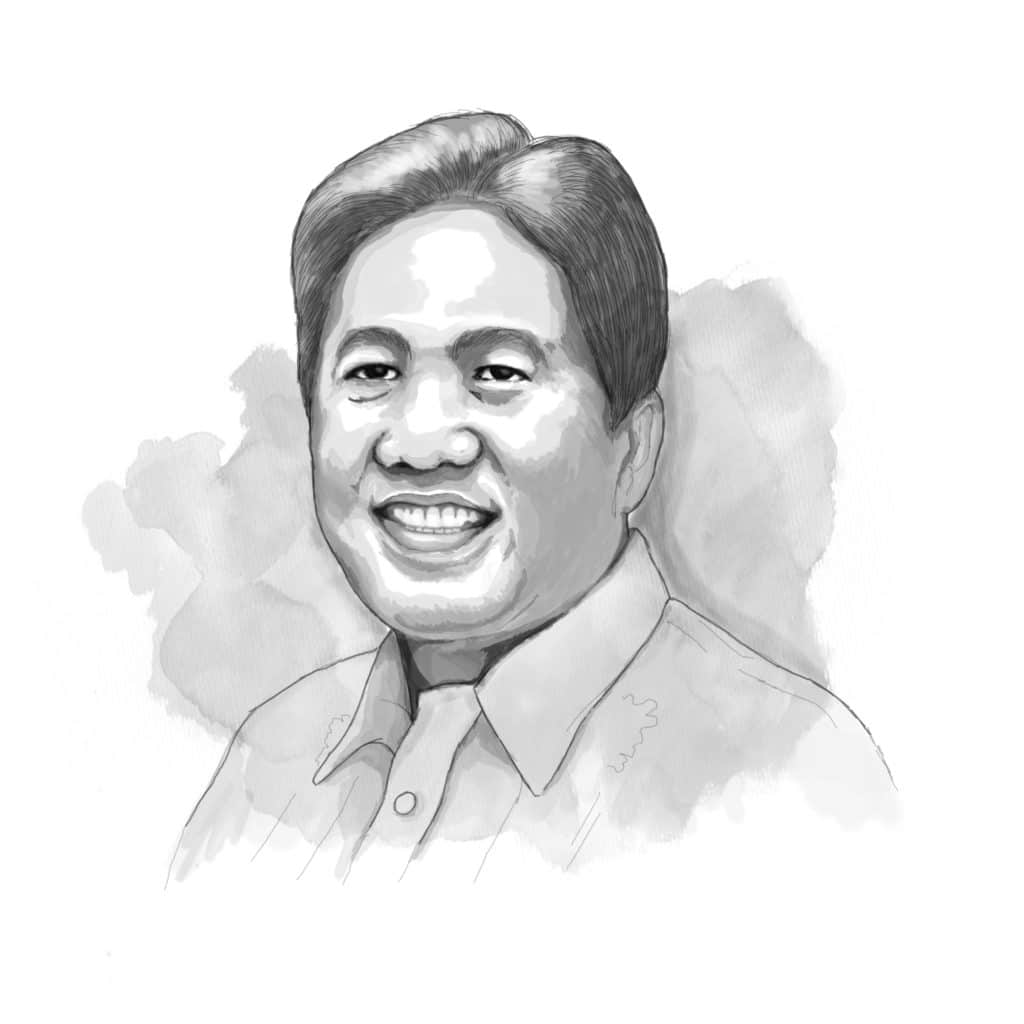
Connecting the dots, or making sense of what has been, is an exercise in hindsight which, paradoxically, provides the clearest of all vision. As the Danish philosopher Sören Kierkegaard framed it appropriately: “Life can only be understood backwards, but it must always be lived forward.”
On its 51st anniversary, I have realized that it is important to recall not just the declaration of martial law, but what precipitated it, as well as the subsequent events that are equally prominent in the history of our nation.
On the 25th anniversary of EDSA People Power in 2011, the picture of Ninoy Aquino was placed side by side with that of his widow Cory. Indeed, it was Ninoy’s assassination that eventually led to the return of democracy through an unprecedented demonstration of People Power. Noynoy Aquino’s campaign for the presidency was launched after the death of his mother whose funeral procession, like her husband’s 26 years earlier, took many hours to complete, as it was participated in by tens of thousands of mourners.
Where was I at the inception of martial law?
I was arrested at our home in Makati around 1 a.m. on Saturday, Sept. 23, 1972, brought to the Camp Crame gymnasium, and detained there for the next 47 days, along with around 200 others, many of whom were delegates to the Constitutional Convention, journalists, broadcasters, and fellow student activists.
For about two years after my release on Nov. 9, 1972, I reported weekly to the Office of Civil Relations in Camp Crame, signing on a logbook to signify that I was a law-abiding citizen in the New Society. A few months after graduating in October 1973, I was hired as editor of a bank’s employee publication. My superior, a lawyer-AFP reservist, secured my exemption from the requirement to report weekly at Camp Crame.
Meantime, I became aware of the harrowing experience that befell many of my fellow activists. They were tortured, abused, and endured longer periods of detention. A fortnight ago, 19 co-authors, including myself, launched SERVE, a book that chronicles how “Martial Law profoundly changed the course of (our) young lives.”
Among my co-authors is Ederlinda ‘Derly’ Magcalen Fernandez who was, prior to her retirement in 2015, vice president for planning, administration and finance, and Professor VI, at the Western Mindanao State University (WMSU). She wrote the chapter, “Evelyn, Earnest, and Me: Herstories.” “She’s the one I know the least; it’s her piece that touched me most,” I confided to our book editor, Jo-Ann Maglipon, who told me in turn, “Yes, hers is the most personal and emotional. I cried several times through my edits.”
Derly wrote about Evelyn Pacheco, her editor-in-chief at Philippine Normal College’s The Torch; Earnest, Evelyn’s daughter, who was named after Ernesto ‘Che’ Guevara, who played a major role in Fidel Castro’s Cuban Revolution; and about her own experiences as a student activist at PNC. Derly cites two significant personal experiences: the Jan. 26, 1970 rally in front of Congress after then President Ferdinand Marcos’ State of the Nation Address; and a street march on MacArthur bridge in December 1970.
Sometime in 1973, Evelyn visited her in Project 7, and Derly recalls: “She intimated she was hungry and wolfed down the cold rice and soup I gave her. I knew then she was part of the 'UG' — our shorthand for the underground anti-dictatorship movement — and that she must be on the run…On that warm afternoon, I came very close to joining Evelyn…I thought to myself: I will have to give up my secure teaching job, move place to place again, go hungry again, have scabs all over the body again.”
Then she concluded, “Lamely, I said to Evelyn, ‘Sige, later na lang.’”
She would meet Earnest, who was entrusted by her parents Evelyn Pacheco and Rolando Mangulabnan, to the care of grandparents and aunts. Earnest was born in 1972, the year martial law was declared. At age five, she was told that her parents were dead, probably at the hands of soldiers in either Nueva Ecija or Isabela, but the circumstances surrounding their death remain sketchy and confusing to her. Their bodies were never found. By 2023, Evelyn and Ric have been missing for 46 years.
Earnest laments: “I continue to feel the lack. Tatay and Nanay are absent from my life. I do not have their faces or their voices in my head. I cannot hear their words of affection or admonition…I do not have my parents in hard times. I do not have them in good.”
In 2014, with the help of Boni Ilagan, an artist and former political prisoner, Earnest went to the Human Rights Violations Claims Board that was established by law to compensate the victims and heirs of those who suffered during the martial law regime. Her work decisions “stemmed from wanting to forge a unity with (my) parents.” From her first job at Haribon Foundation, she joined a women’s organization that championed child labor and other related issues such as the enactment of the Reproductive Health Law.
Earnest shares her fond longing for her parents: “I will tell them both that I stand in awe of their personal sacrifice, that I am grateful they had me. I will tell them we will continue the fight for freedom, we will win back the soul of the country, and I love them very much.”