






 Opinion
Public waits for travel-friendly revised guidelines on departure formalities
Opinion
Public waits for travel-friendly revised guidelines on departure formalities
Public waits for travel-friendly revised guidelines on departure formalities


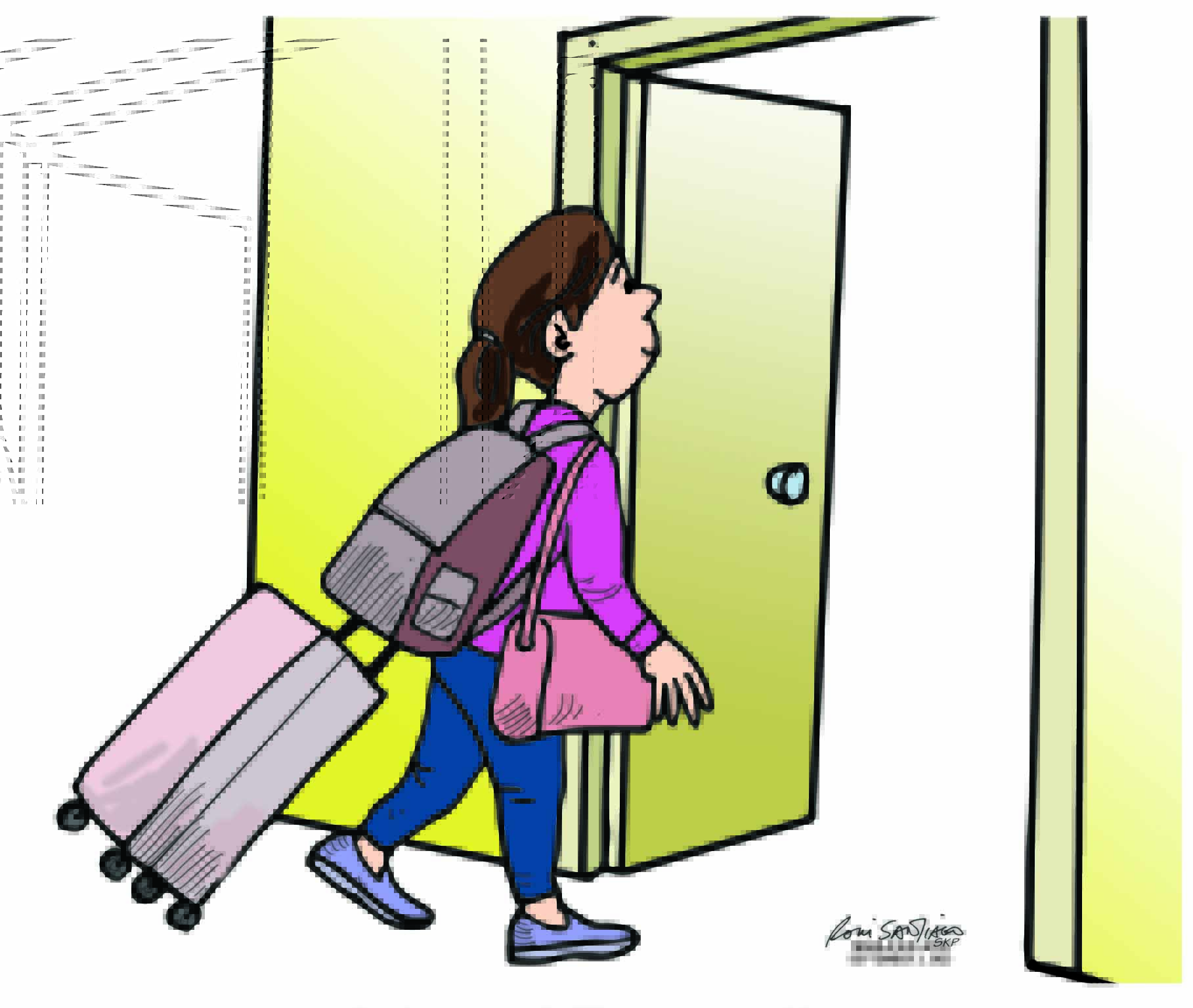
Traveling abroad for work or leisure, or both, is often accompanied by stressful conditions. But travelers are prepared to hurdle these because at the destination, there is delight. There would be days of pleasant relaxation, or for those who went to seek employment, there is a job that would offer a salary to feed and shelter a family.
The announcement of the 2023 revised guidelines on departure formalities of Filipinos at the immigration desks, whose implementation should have taken effect Sept. 3, was met with public furor because it is viewed as adding another level of stressful condition to a traveler, especially a first-timer.
The Senate unanimously approved a resolution calling for the suspension and review of the stricter travel guidelines for Filipino travelers.
That is why the announcement of its “temporary suspension of the implementation” made by the Inter-Agency Council Against Trafficking (IACAT) on Aug. 31 was met with sighs of relief. But since this is only a “temporary suspension,” this would-be added layer of stressful conditions can still resurface to make a Filipino feel like the right to travel is just a slogan.
To an average traveler, some of the conditions in the list make the brief stop at the immigration counter on the way to the pre-departure area a time for anxious reflection. The 14-page “2023 revised Inter-Agency Council Against Trafficking (IACAT) guidelines on departure formalities for international-bound Filipino passengers” defines the types of travel and the required documents for each.
“In addition to the inspection of basic travel documents, the IO (immigration officer) may propound relevant clarificatory questions and require the passenger to show additional supporting documents.”
Among the documents that may be asked from tourists on self-funded travel are “proof of hotel booking or accommodation, financial capacity or source of income consistent with the passenger’s declared purpose of travel, and proof of employment, and other equivalent documents.”
For those who are on sponsored travel, the first item on the list is: “If the sponsor abroad is a relative within the first civil degree of the passenger – original Philippine Statistics Authority (PSA)-issued birth certificate/report of birth or marriage certificate/report of marriage as proof of first civil degree relationship.” Other required documents are “copies of the following documents of sponsor, such as: valid passport; valid work visa/permit, residence permit or any equivalent document.”
We agree that all these guidelines have been made with good intentions – to protect Filipinos from human trafficking. There are stories of hapless Filipino workers who have been abused or exploited by employers.
However, Senate Majority Leader Joel Villanueva pointed out that last year’s data from the BI showed that out of the 32,404 Filipinos whose departure was deferred, only 472 or 1.46 percent were found to be victims of human trafficking. Villanueva had filed a resolution seeking a review of the new travel rules.
In a privilege speech, Senate President Miguel Zubiri urged the IACAT to look for better alternatives and more efficient immigration strategies to protect Filipinos without ruining their constitutional right to travel. He pointed out that Filipinos “don’t become victims once they arrive abroad. They become victims as soon as these recruiters prey on them right here on our shores.”
Meanwhile, BI Commissioner Norman G. Tansingco, said: “We respect the resolution of the Senate to suspend the implementation of the guidelines, and we are working with other members of the inter-agency to be able to address any concern or clarification that the public might have.”
The public now waits for the final revised guidelines after deliberation and further study.