






 Philippines
National
EU envoy eats 'bibingka', 'puto bumbong' as PH marks start of 'Ber' months
Philippines
National
EU envoy eats 'bibingka', 'puto bumbong' as PH marks start of 'Ber' months
EU envoy eats 'bibingka', 'puto bumbong' as PH marks start of 'Ber' months
By Raymund Antonio and Raymund Antonio


It’s September again in the Philippines, which can only mean one thing—Christmas is coming.
The Christmas season of Filipinos isn’t complete without their rice cake staple of bibingka and puto bumbong with grated coconut on top.
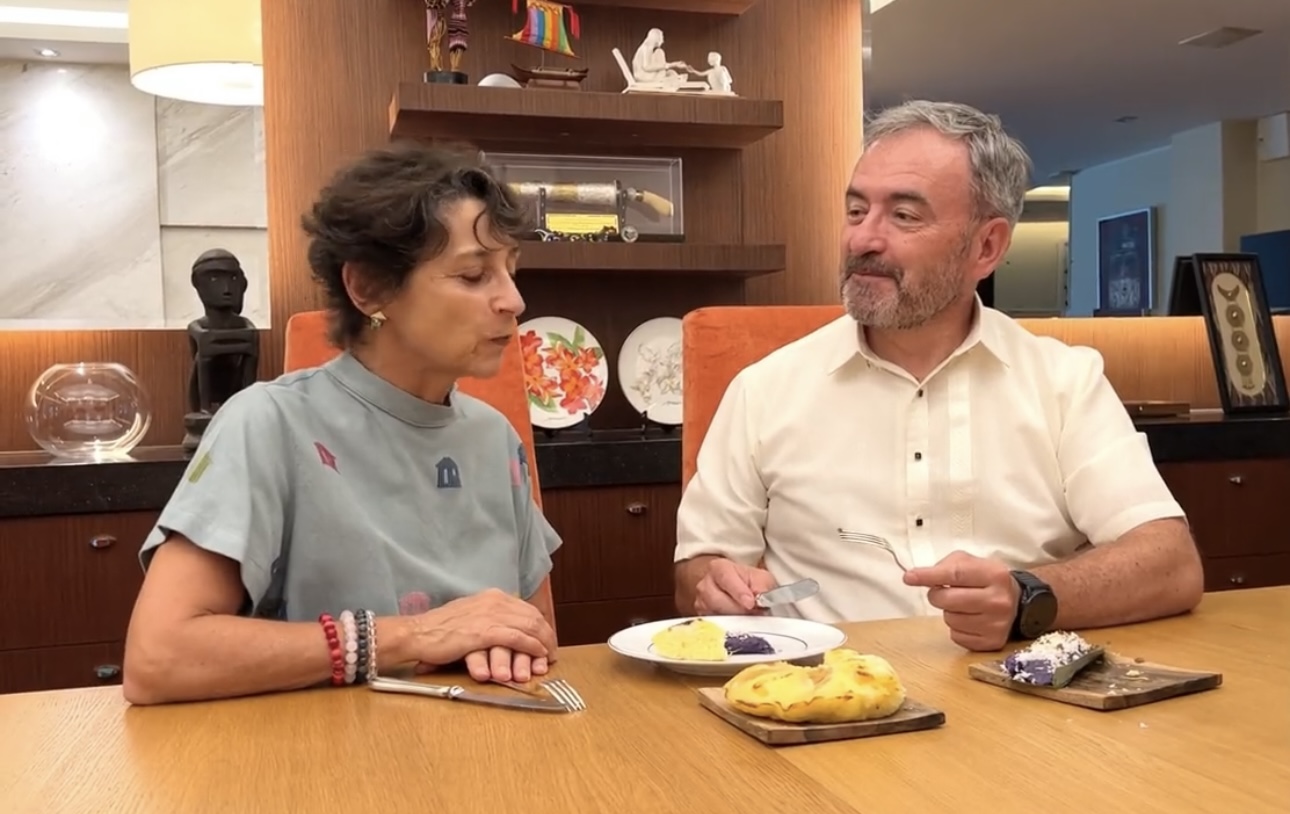 (From right) European Union Ambassador to the Philippines Luc Veron and his wife eat Filipino rice cakes--bibingka and puto bumbong on Sept. 1, 2023. (Screenshot from Amb. Veron's X post)
In a post on X (formerly Twitter), European Union Ambassador to the Philippines Luc Veron joined the country’s merry countdown to Christmas by trying the humble bibingka and puto bumbong, both of which are Filipinos’ most traditional holiday treats.
“Bilhan mo na siya ng Bibingka (Buy her a bibingka),” Veron wrote as caption for his video featuring him and his wife eating the two rice cakes.
Bibingka is a yellow rice cake traditionally made from rice flour, eggs, coconut milk, sugar, and yeast. It is brushed with butter, topped with either salted egg or cheese, and served with grated coconut.
Local vendors still continue to prepare the Filipino rice cake through the traditional way of using a clay pot.
“What better way to start Christmas this September 1st in the (Philippines) than with buying Nicole some Bibingka, Puto Bumbong, and listening to some @BenAndBenMusic!” Veron added.
Nicole was heard saying “delicious” in the video when the ambassador fed her with puto bumbong.
Puto bumbong is a Filipino purple rice cake steamed in bamboo tubes. Like bibingka, it is also traditionally being sold during the Christmas season.
Veron continues his #MeriendaNiLuc series by trying the traditional snacks and sweets in the Philippines.
Among these native Filipino delicacies that the ambassador had tried in recent weeks were the pichi-pichi, Choc Nut, Choco Mallows, Cream-O, Minasa, and taho, or silky tofu with syrup.