






 Philippines
Metro Manila
Over 7,000 dogs, cats vaccinated against rabies in Antipolo
Philippines
Metro Manila
Over 7,000 dogs, cats vaccinated against rabies in Antipolo
Over 7,000 dogs, cats vaccinated against rabies in Antipolo


The Antipolo City local government on Wednesday, Sept. 20, announced that it had already vaccinated over 7,000 dogs and cats against rabies for the month of August as the local government unit (LGU) continues to ramp up its efforts in protecting not just the animals but also their owners and the community.
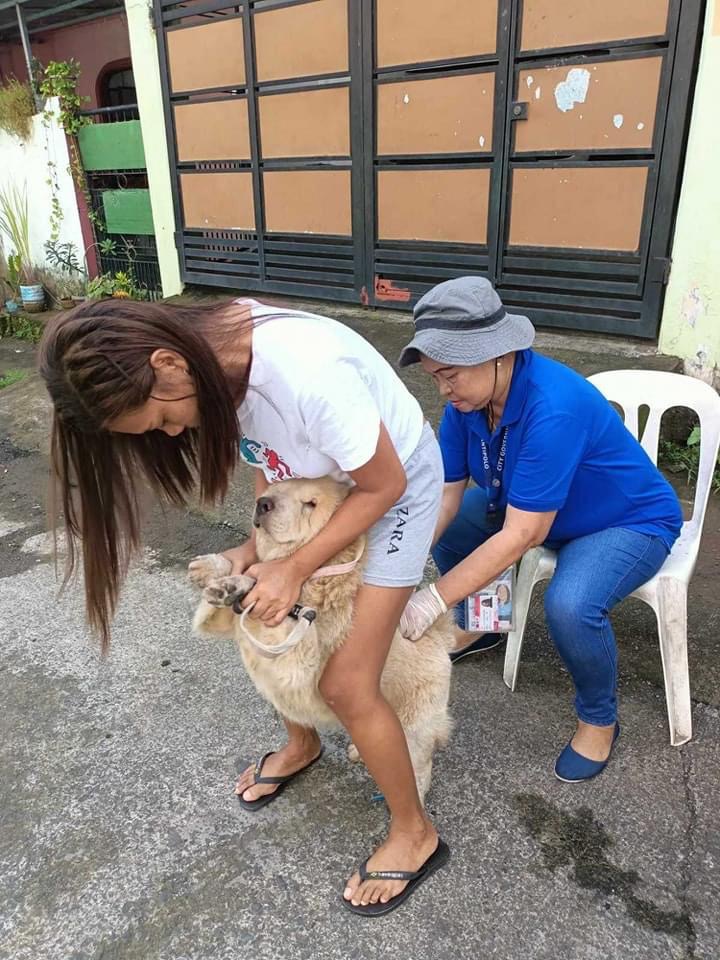
(Photo from Antipolo LGU)
Antipolo City Mayor Jun Ynares lauded the city's veterinary office for the accomplishment and Antipolenyos for their cooperation in the city's anti-rabies efforts.
Ynares added the city government will continue to hold barangay anti-rabies vaccinations throughout the year.
In January, Ynares announced that the city is using a new system for the detection of rabies cases in Antipolo.
A seminar was conducted by the City Veterinary Office and City Health regarding the use of the Rabies Rapid Response with Rabies Data Share System (RaDSS) developed by the Japan International Cooperation Agency (JICA) and the Department of Agriculture - Bureau of Animal Industry (DA-BAI) for its project dubbed as "Establishment of the One Health Prevention and Treatment Network Model for the Elimination of Rabies in the Philippines" also known as the "Japan and Philippines One Health Rabies" (JAPOHR) Project.
Aside from the development of RaDSS, the agencies also introduced Immunochromatographic Test Kit (ICT Kit) for rabies which supports easy, fast, and accurate diagnosis of the disease.
According to JICA, rabies diagnosis takes about 2-3 hours with the use of a microscope and an incubator in normal circumstances. With the new ICT kits, diagnosis is radically sped up to 20-30 minutes, thus accelerating detection and the start of treatment.
Ynares said the RaDSS features real-time data sharing, rabies contact tracing, streamlined response case investigation, and containment procedures which further streamline the rabies detection and treatment capabilities of the city.
The Anti-Rabies Law of 2007 established the National Rabies Prevention and Control Program (NRPCP) to control, prevent the spread of, and eventually eradicate human and animal rabies, and to promote responsible pet ownership.
Department of Health (DOH) records show that rabies infections in the country, mostly due to unvaccinated dogs, have a case fatality rate of 100 percent.
The World Health Organization (WHO) also considers rabies an extremely deadly disease, saying that “once clinical symptoms appear in humans, rabies is virtually 100 percent fatal.”