ADVERTISEMENT

Farmers not included in condonation law to benefit from new EO—DAR czar

Published Sep 18, 2023 10:32 am
Safeguard duty on rice, corn sought
(MB FILE PHOTO)

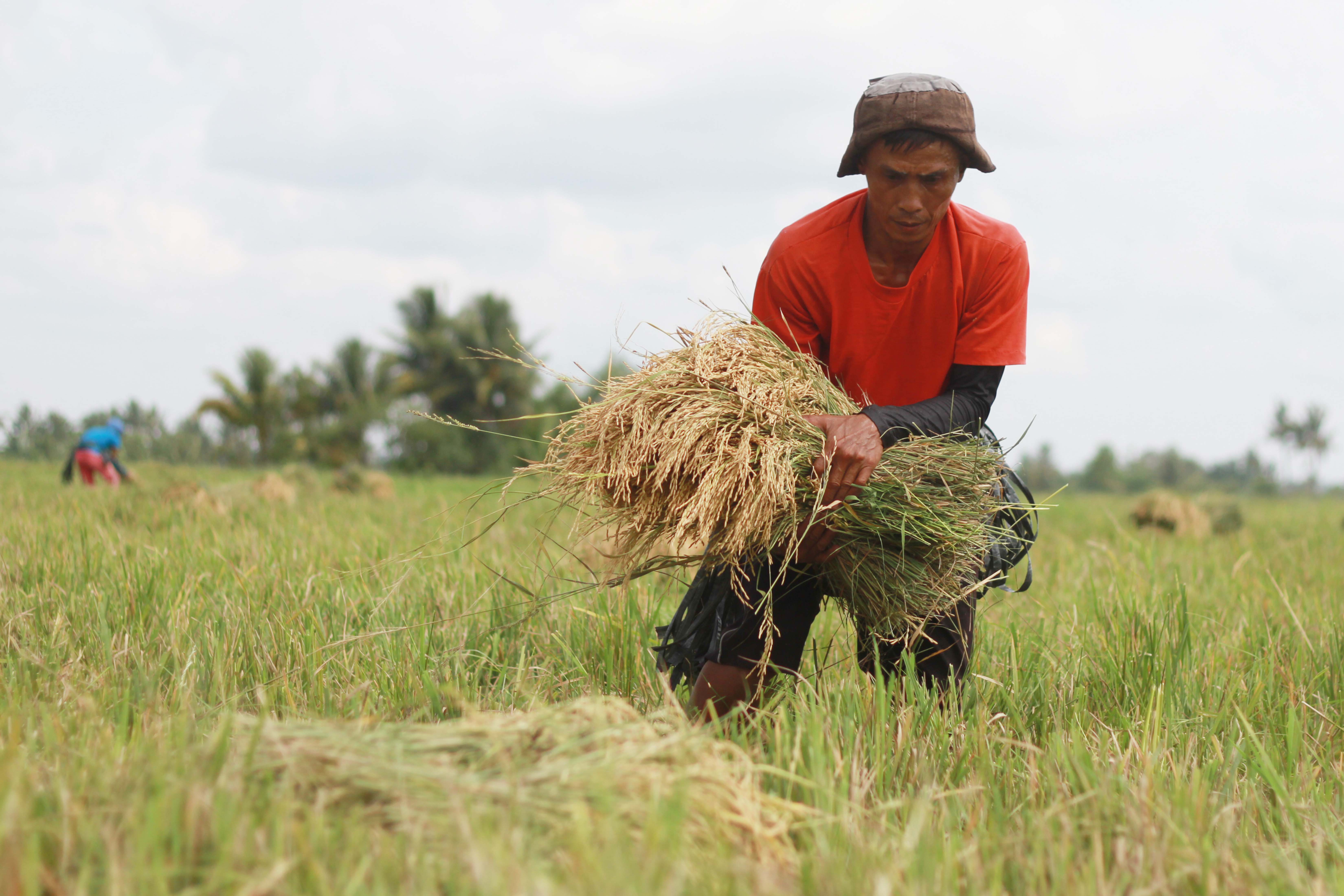
Agrarian reform beneficiaries, who were not covered by the new agrarian emancipation law, will benefit from the latest executive order signed by President Marcos to extend the agrarian debt moratorium for two more years.

Department of Agrarian Reform (DAR) Sec. Conrado Estrella III explained that Executive Order No. 40 was signed by Marcos to include beneficiaries who were not covered by the new law.

Estrella noted that the President came up with EO No. 40 to help agrarian reform beneficiaries, who were not covered by the law, by giving them a two-year moratorium for their amortization fees and penalties.

An EO with the same purpose was also signed by Marcos last year to extend the payment of amortization fees for one year.

"Ngayon, isang taon lang iyon, lumabas ang batas pero nakalagay sa batas may mga cut-off period. Kasi upon effectivity iyong mga titulo na matatanggap  ng ating mga agrarian reform beneficiaries on or before July 24, kasi iyon ang effectivity ng law papasok iyan doon sa condonation, ngunit iyong beyond that period hindi  na papasok (Now, that was only for a year, the law came out but it has a cut-off. Upon effectivity, the titles received by the agrarian reform beneficiaries on or before July 24 will be included in the condonation but those beyond that will not)," Estrella explained during a televised public briefing aired at state-run PTV-4.

"So, para fair naman hindi naman sila kawawa dahil hindi sila sakop doon sa condonation law, ang ginawa ng ating Pangulo in-extend niya iyong moratorium kaya papasok pa rin sila hindi rin sila kawawa ito ang tinatawag na (So, to make it fair, because they were not part of the condonation law, the President extended the moratorium under the) EO 40 extending the moratorium of payment of amortization fees and other penalties for the agrarian reform beneficiaries," the DAR chief added.

The new order extends the moratorium on the payment of the principal obligation and interest of the amortization due and payable by agrarian reform beneficiaries for the lands awarded to them under the Comprehensive Agrarian Reform Program of the government.

It will take effect until Sept. 13, 2025 and will benefit some 129,059 beneficiaries tilling 158, 209, 94 hectares of land whose land awards did not reach the cut-off period of July 24, 2023.

According to Estrella, these farmers were not included in the new law as both the Congress and Senate intended to observe first the "flow" of the law.

He said it is a "learning period" to check what must be included in the condonation law part 2.

He also confirmed that they are proposing a new law to cover the farmers not included in the new law.

"Yes, we are proposing and that is the plan of the congressmen and the senators also. They would like to observe first the process that they came up with now the condonation law and then learn from whatever lessons we can learn from its implementation. In the meantime, in two years time, we can observe there and we are able to help people, agrarian reform beneficiaries," he said.

The implementing rules and regulations of the New Agrarian Emancipation Act was recently completed by the agrarian reform department and was presented to the President on Sept. 12.

ADVERTISEMENT
.most-popular .layout-ratio{ padding-bottom: 79.13%; } @media (min-width: 768px) and (max-width: 1024px) { .widget-title { font-size: 15px !important; } }

{{ articles_filter_1561_widget.title }}

.most-popular .layout-ratio{ padding-bottom: 79.13%; } @media (min-width: 768px) and (max-width: 1024px) { .widget-title { font-size: 15px !important; } }

{{ articles_filter_1562_widget.title }}

.most-popular .layout-ratio{ padding-bottom: 79.13%; } @media (min-width: 768px) and (max-width: 1024px) { .widget-title { font-size: 15px !important; } }

{{ articles_filter_1563_widget.title }}

{{ articles_filter_1564_widget.title }}

.mb-article-details { position: relative; } .mb-article-details .article-body-preview, .mb-article-details .article-body-summary{ font-size: 17px; line-height: 30px; font-family: "Libre Caslon Text", serif; color: #000; } .mb-article-details .article-body-preview iframe , .mb-article-details .article-body-summary iframe{ width: 100%; margin: auto; } .read-more-background { background: linear-gradient(180deg, color(display-p3 1.000 1.000 1.000 / 0) 13.75%, color(display-p3 1.000 1.000 1.000 / 0.8) 30.79%, color(display-p3 1.000 1.000 1.000) 72.5%); position: absolute; height: 200px; width: 100%; bottom: 0; display: flex; justify-content: center; align-items: center; padding: 0; } .read-more-background a{ color: #000; } .read-more-btn { padding: 17px 45px; font-family: Inter; font-weight: 700; font-size: 18px; line-height: 16px; text-align: center; vertical-align: middle; border: 1px solid black; background-color: white; } .hidden { display: none; }
function initializeAllSwipers() { // Get all hidden inputs with cms_article_id document.querySelectorAll('[id^="cms_article_id_"]').forEach(function (input) { const cmsArticleId = input.value; const articleSelector = '#article-' + cmsArticleId + ' .body_images'; const swiperElement = document.querySelector(articleSelector); if (swiperElement && !swiperElement.classList.contains('swiper-initialized')) { new Swiper(articleSelector, { loop: true, pagination: false, navigation: { nextEl: '#article-' + cmsArticleId + ' .swiper-button-next', prevEl: '#article-' + cmsArticleId + ' .swiper-button-prev', }, }); } }); } setTimeout(initializeAllSwipers, 3000); const intersectionObserver = new IntersectionObserver( (entries) => { entries.forEach((entry) => { if (entry.isIntersecting) { const newUrl = entry.target.getAttribute("data-url"); if (newUrl) { history.pushState(null, null, newUrl); let article = entry.target; // Extract metadata const author = article.querySelector('.author-section').textContent.replace('By', '').trim(); const section = article.querySelector('.section-info ').textContent.replace(' ', ' '); const title = article.querySelector('.article-title h1').textContent; // Parse URL for Chartbeat path format const parsedUrl = new URL(newUrl, window.location.origin); const cleanUrl = parsedUrl.host + parsedUrl.pathname; // Update Chartbeat configuration if (typeof window._sf_async_config !== 'undefined') { window._sf_async_config.path = cleanUrl; window._sf_async_config.sections = section; window._sf_async_config.authors = author; } // Track virtual page view with Chartbeat if (typeof pSUPERFLY !== 'undefined' && typeof pSUPERFLY.virtualPage === 'function') { try { pSUPERFLY.virtualPage({ path: cleanUrl, title: title, sections: section, authors: author }); } catch (error) { console.error('ping error', error); } } // Optional: Update document title if (title && title !== document.title) { document.title = title; } } } }); }, { threshold: 0.1 } ); function showArticleBody(button) { const article = button.closest("article"); const summary = article.querySelector(".article-body-summary"); const body = article.querySelector(".article-body-preview"); const readMoreSection = article.querySelector(".read-more-background"); // Hide summary and read-more section summary.style.display = "none"; readMoreSection.style.display = "none"; // Show the full article body body.classList.remove("hidden"); } document.addEventListener("DOMContentLoaded", () => { let loadCount = 0; // Track how many times articles are loaded const offset = [1, 2, 3, 4, 5, 6, 7, 8, 9, 10]; // Offset values const currentUrl = window.location.pathname.substring(1); let isLoading = false; // Prevent multiple calls if (!currentUrl) { console.log("Current URL is invalid."); return; } const sentinel = document.getElementById("load-more-sentinel"); if (!sentinel) { console.log("Sentinel element not found."); return; } function isSentinelVisible() { const rect = sentinel.getBoundingClientRect(); return ( rect.top < window.innerHeight && rect.bottom >= 0 ); } function onScroll() { if (isLoading) return; if (isSentinelVisible()) { if (loadCount >= offset.length) { console.log("Maximum load attempts reached."); window.removeEventListener("scroll", onScroll); return; } isLoading = true; const currentOffset = offset[loadCount]; window.loadMoreItems().then(() => { let article = document.querySelector('#widget_1690 > div:nth-last-of-type(2) article'); intersectionObserver.observe(article) loadCount++; }).catch(error => { console.error("Error loading more items:", error); }).finally(() => { isLoading = false; }); } } window.addEventListener("scroll", onScroll); });

Sign up by email to receive news.