ADVERTISEMENT

Princess Diana's 'Black Sheep' sweater sells at auction for $1.1 mn

Published Sep 15, 2023 12:21 am
33V82CN-Preview.jpg
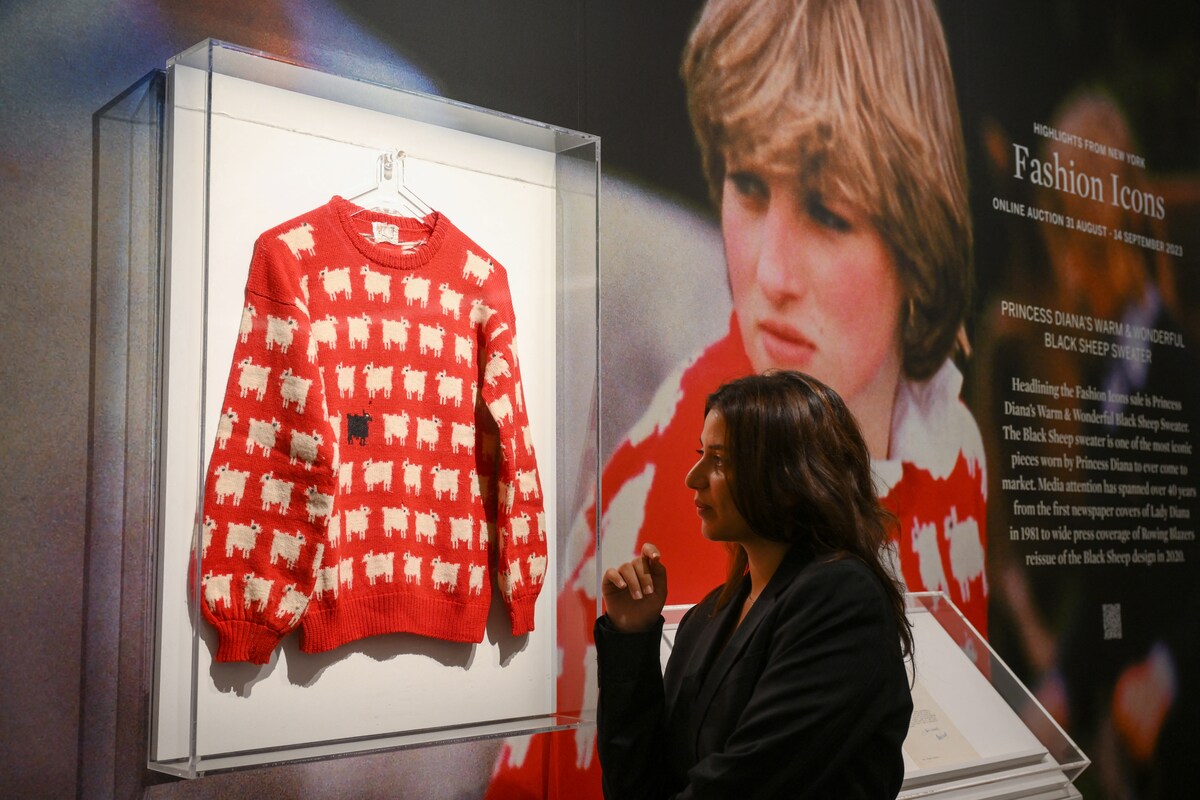
A staff member poses with the "Black Sheep Jumper" designed by Sally Muir and Joanna Osborne and worn on several occasions by Britain's late Princess Diana, during a press view at Sotheby's auction house in London on July 17, 2023. (Photo by Daniel LEAL / AFP) 

NEW YORK , United States -- An iconic red sweater worn by Princess Diana shortly after her engagement to then-Prince Charles, featuring rows of fluffy little sheep, sold at auction for $1.1 million following a frenetic bout of final bidding, Sotheby's announced Thursday.

The 19-year-old sported the knit garment -- which includes one black sheep amid dozens of otherwise white wooly creatures -- at a June 1981 polo match during her whirlwind days as a shy royal-in-the-making.

The playfully patterned "Black Sheep" sweater became one of the most emblematic articles of clothing worn by Diana, which in hindsight seems to foretell her troubled journey as a member of the British royal family.

The garment nabbed $1.1 million -- which includes fees and commission -- after a fierce battle by internet bidders.

The total was over ten times more than Sotheby's initial estimate of between $50,000 to $80,000.

Due to an avalanche of bids, the auction house extended the sale by several minutes, with the price leaping astronomically from $190,000 to $1.1 million in the final 15 minutes.

According to Sotheby's, it is the highest price ever paid at auction for a garment belonging to Princess Diana -- eclipsing her Infanta-style ball gown sold in January for $604,800 -- as well as the most valuable sweater ever sold at auction.

The sweater was created by then-little-known designers Sally Muir and Joanna Osborne and their knitting company Warm and Wonderful, which was subsequently catapulted to fame.

Weeks after Diana was photographed in the top, the designers received a letter explaining that one of the sweater's sleeves had suffered damage, and asking if it could be repaired or replaced.

The designers sent her a new one and had assumed the original was repaired and sent to a customer, but in March 2023 Osborne found the sweater in a small box in her attic.

In addition to the sweater, the auction included the letter requesting repair, as well as a thank you note from Diana's private secretary, Oliver Everett.

Diana was seen wearing the replacement at a June 1983 polo match.

Some 40 years later "Black Sheep" was re-released for sale in 2020 in a collaboration between the fashion brand Rowing Blazers and its original designers, Muir and Osborne.

The sweater was so iconic that it even appeared (via replica) in the fourth season of Netflix drama "The Crown," chronicling the House of Windsor's recent history.


Related Tags

world news
ADVERTISEMENT
.most-popular .layout-ratio{ padding-bottom: 79.13%; } @media (min-width: 768px) and (max-width: 1024px) { .widget-title { font-size: 15px !important; } }

{{ articles_filter_1561_widget.title }}

.most-popular .layout-ratio{ padding-bottom: 79.13%; } @media (min-width: 768px) and (max-width: 1024px) { .widget-title { font-size: 15px !important; } }

{{ articles_filter_1562_widget.title }}

.most-popular .layout-ratio{ padding-bottom: 79.13%; } @media (min-width: 768px) and (max-width: 1024px) { .widget-title { font-size: 15px !important; } }

{{ articles_filter_1563_widget.title }}

{{ articles_filter_1564_widget.title }}

.mb-article-details { position: relative; } .mb-article-details .article-body-preview, .mb-article-details .article-body-summary{ font-size: 17px; line-height: 30px; font-family: "Libre Caslon Text", serif; color: #000; } .mb-article-details .article-body-preview iframe , .mb-article-details .article-body-summary iframe{ width: 100%; margin: auto; } .read-more-background { background: linear-gradient(180deg, color(display-p3 1.000 1.000 1.000 / 0) 13.75%, color(display-p3 1.000 1.000 1.000 / 0.8) 30.79%, color(display-p3 1.000 1.000 1.000) 72.5%); position: absolute; height: 200px; width: 100%; bottom: 0; display: flex; justify-content: center; align-items: center; padding: 0; } .read-more-background a{ color: #000; } .read-more-btn { padding: 17px 45px; font-family: Inter; font-weight: 700; font-size: 18px; line-height: 16px; text-align: center; vertical-align: middle; border: 1px solid black; background-color: white; } .hidden { display: none; }
function initializeAllSwipers() { // Get all hidden inputs with cms_article_id document.querySelectorAll('[id^="cms_article_id_"]').forEach(function (input) { const cmsArticleId = input.value; const articleSelector = '#article-' + cmsArticleId + ' .body_images'; const swiperElement = document.querySelector(articleSelector); if (swiperElement && !swiperElement.classList.contains('swiper-initialized')) { new Swiper(articleSelector, { loop: true, pagination: false, navigation: { nextEl: '#article-' + cmsArticleId + ' .swiper-button-next', prevEl: '#article-' + cmsArticleId + ' .swiper-button-prev', }, }); } }); } setTimeout(initializeAllSwipers, 3000); const intersectionObserver = new IntersectionObserver( (entries) => { entries.forEach((entry) => { if (entry.isIntersecting) { const newUrl = entry.target.getAttribute("data-url"); if (newUrl) { history.pushState(null, null, newUrl); let article = entry.target; // Extract metadata const author = article.querySelector('.author-section').textContent.replace('By', '').trim(); const section = article.querySelector('.section-info ').textContent.replace(' ', ' '); const title = article.querySelector('.article-title h1').textContent; // Parse URL for Chartbeat path format const parsedUrl = new URL(newUrl, window.location.origin); const cleanUrl = parsedUrl.host + parsedUrl.pathname; // Update Chartbeat configuration if (typeof window._sf_async_config !== 'undefined') { window._sf_async_config.path = cleanUrl; window._sf_async_config.sections = section; window._sf_async_config.authors = author; } // Track virtual page view with Chartbeat if (typeof pSUPERFLY !== 'undefined' && typeof pSUPERFLY.virtualPage === 'function') { try { pSUPERFLY.virtualPage({ path: cleanUrl, title: title, sections: section, authors: author }); } catch (error) { console.error('ping error', error); } } // Optional: Update document title if (title && title !== document.title) { document.title = title; } } } }); }, { threshold: 0.1 } ); function showArticleBody(button) { const article = button.closest("article"); const summary = article.querySelector(".article-body-summary"); const body = article.querySelector(".article-body-preview"); const readMoreSection = article.querySelector(".read-more-background"); // Hide summary and read-more section summary.style.display = "none"; readMoreSection.style.display = "none"; // Show the full article body body.classList.remove("hidden"); } document.addEventListener("DOMContentLoaded", () => { let loadCount = 0; // Track how many times articles are loaded const offset = [1, 2, 3, 4, 5, 6, 7, 8, 9, 10]; // Offset values const currentUrl = window.location.pathname.substring(1); let isLoading = false; // Prevent multiple calls if (!currentUrl) { console.log("Current URL is invalid."); return; } const sentinel = document.getElementById("load-more-sentinel"); if (!sentinel) { console.log("Sentinel element not found."); return; } function isSentinelVisible() { const rect = sentinel.getBoundingClientRect(); return ( rect.top < window.innerHeight && rect.bottom >= 0 ); } function onScroll() { if (isLoading) return; if (isSentinelVisible()) { if (loadCount >= offset.length) { console.log("Maximum load attempts reached."); window.removeEventListener("scroll", onScroll); return; } isLoading = true; const currentOffset = offset[loadCount]; window.loadMoreItems().then(() => { let article = document.querySelector('#widget_1690 > div:nth-last-of-type(2) article'); intersectionObserver.observe(article) loadCount++; }).catch(error => { console.error("Error loading more items:", error); }).finally(() => { isLoading = false; }); } } window.addEventListener("scroll", onScroll); });

Sign up by email to receive news.