






 Philippines
National
Early lung cancer detection among at-risk Filipinos could save PH more than US$22M — health economist
Philippines
National
Early lung cancer detection among at-risk Filipinos could save PH more than US$22M — health economist
Early lung cancer detection among at-risk Filipinos could save PH more than US$22M — health economist


SINGAPORE—A health economist said on Tuesday, Sept. 12, that early lung cancer screening of the current generation's at-risk populations will enable the Philippines to save about US$22 million.
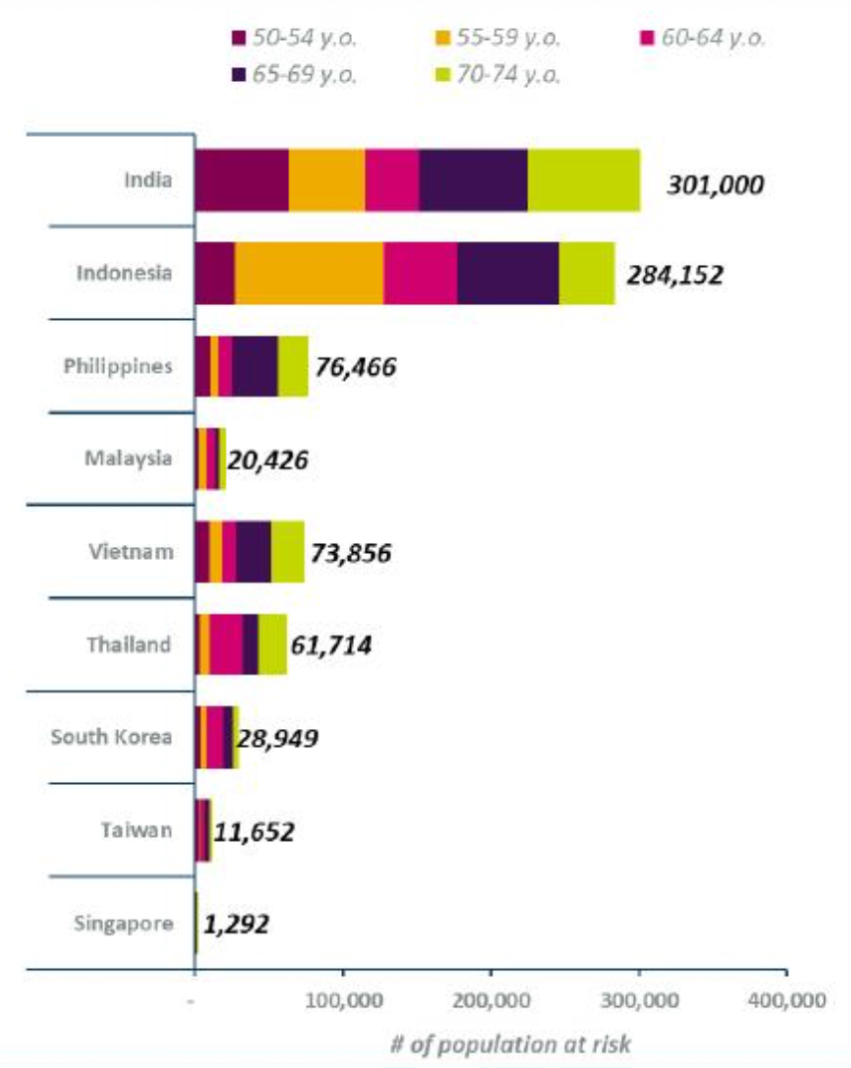
In a media briefing on the sidelines of the 2023 World Conference on Lung Cancer, Singapore-based health economist Chris L. Hardesty estimated that 76,466 Filipinos need screening because they are at high-risk of developing lung cancer.
He said these risks are determined by age, smoking history, and genetic predisposition, with risk profiles tailored to each economy's demographics and disease conditions.
“Lung cancer will continue to be a challenge, which offers an untapped economic potential,” Hardesty said, noting that establishing a national lung cancer screening unit in the Philippines could result in a net gain of more than US$22 million after all investments.
“That already should foster a good dialogue, I think, with the [Philippine] government,” he added.
Hardesty pointed out that funding a national lung cancer screening program (LCS) is a public health measure intended to detect lung cancer early in high-risk groups.
This can lead to lower mortality rates, cost-effectiveness, and long-term monitoring and data collection, he added.
As part of the LCS, Hardesty noted that the use of low-dose computed technology (LDCT) can help reduce mortality rates by 23 percent in individuals 60 and older.
Similarly, combining LCS, such as LDCT, with ongoing initiatives like smoking cessation increases cost-effectiveness by 20 to 45 percent, and longitudinal data, including research, improves individual and population-level treatment optimization.
“The affordability of intervening early and saving someone’s life, returning back to productive citizens, and contributing to the wider economy has a total net gain as incurred to just leaving the problem and later discovering having people die too soon,” Hardesty said, adding that he hopes "this is a wake-up call to governments that this is a return on investment."
He also emphasized that effective delivery of screening services and technologies requires multi-stakeholder participation, government policies, regulations, and healthcare provider training.
“Intervention is possible, but that this is multi-faceted and you need a lot of different multi-stakeholders to step up and for governments to have policies and regulations, and for healthcare providers to be trained as we actually deliver screening services and technologies,” he said.