






 Philippines
National
House leader pushes for 'contract growing' scheme to alleviate rice price situation
Philippines
National
House leader pushes for 'contract growing' scheme to alleviate rice price situation
House leader pushes for 'contract growing' scheme to alleviate rice price situation


At A Glance
- With the country's rice price situation still tenuous at best, Ako Bicol Party-list Rep. Zaldy Co pitched on Sunday, Sept. 10 a "contract growing" scheme between the government and local farmers.
- Co chairs the House Committee on Appropriations.
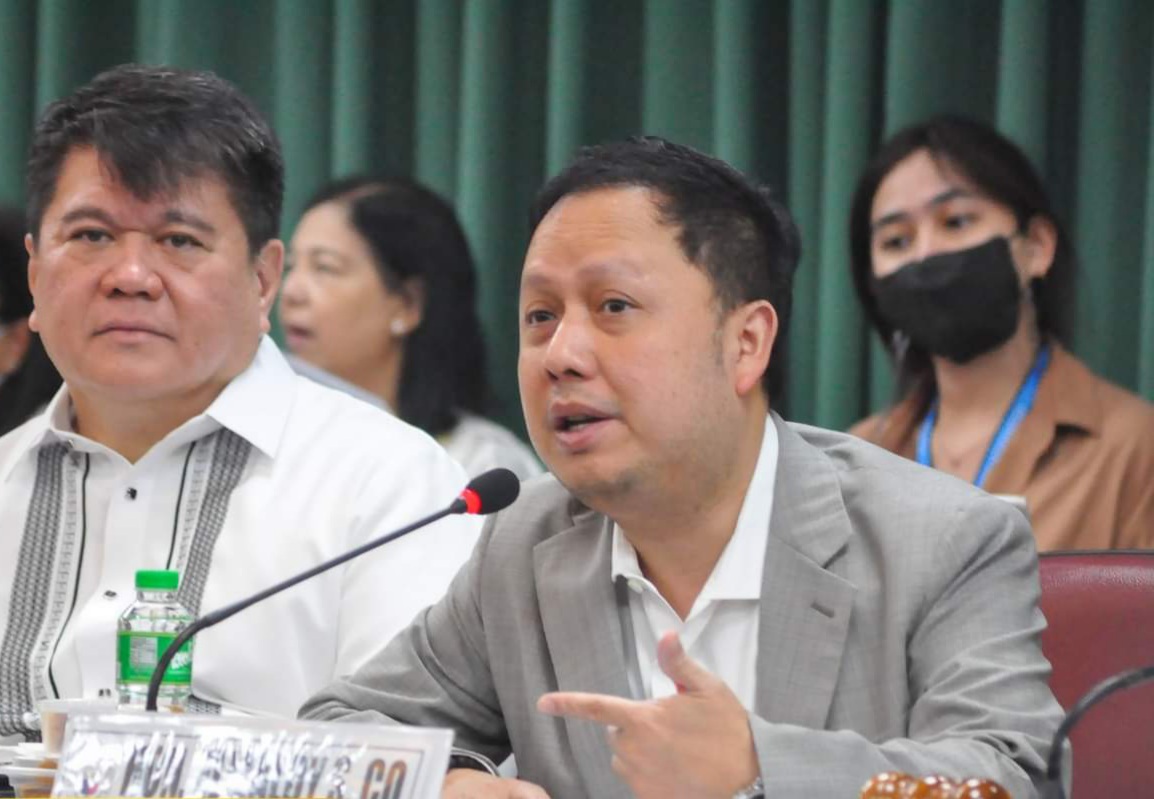 Ako Bicol Party-list Rep. Zaldy Co (Facebook)
With the country’s rice price situation still tenuous at best, Ako Bicol Party-list Rep. Zaldy Co pitched on Sunday, Sept. 10 a "contract growing" scheme between the government and local farmers.
Co, chairman of the House Committee on Appropriations, said this scheme would help stabilize prices of rice.
He said contract growing will benefit both the consumers and farmers because while it would result in steady rice prices, such an approach would also ensure profitability for the latter.
“Mas maganda ‘yung contract grow-farming na corporation, ‘yung malalaki, ‘yung 4,000 hectares, 5,000 hectares kasi mas madaling i-control ‘yan (It's better to have a corporation on contract grow-farming, large ones, between 4,000 and 5,000 hectares, because they're easier to control)," Co said in a recent radio interview.
Contract growing should involve large agricultural corporations managing vast tracts of farmlands, he said.
He also proposed that a portion of the farmers’ yield--about 50 percent--would be contracted at a pre-agreed price while the remaining yield would be sold at market rates to allow farmers to still capitalize on market price surges.
The contracted portion of the total yield provides sure profit for local farmers while the remaining yield outside the contract may also result in losses. But Co still views it as a win-win situation.
"So another win-win situation na sige 50 percent contracted and 50 percent may upside ka, so pwede ka rin malugi dun sa 50 percent [upside] mo (So it's another win-win situation, 50 percent of yield is contracted while 50 percent has an upside, but the upside may or may not be there),” the lawmaker explained.
Co emphasized that farmers would not be shortchanged under the contract growing arrangement.
"Hindi naman mababarat kasi makukwenta naman natin kung magkano ang puhunan na per kilo ng palay. Alam naman natin ang palay is P9 maximum or P7 to P9 per kilo lang (The farmers won't lose money because we can calculate their capital for every kilo of unhusked rice. We know that unhusked rice has a maximum price of P9 or P7 to P9 per kilo)," he explained.
Co noted that some local farmerss have sometimes adjusted their prices to match the rates of imported rice.
Apart from the contract growing approach, the Bicol solon also proposed controlling the cost of important farming inputs like fertilizers. He said farm inputs have also been subject to price manipulation which may contribute to unstable prices of rice.
Even before the recent surge in prices of rice that prompted Malacañang to implement price caps via Executive Order (EO) No. 39, Co had been advocating for the contract growing model as a proactive solution to stabilize the market and support local farmers.
While EO No. 39 may provide immediate relief for consumers, concerns have been raised against the directive such as the potential devaluation of local farmers’ produce.
Co said contract growing would provide a balanced, long-term solution to the nation's rice economy.
EO No. 39 ,which placed a price cap on regular milled rice at P41 per kilo and well-milled rice at P45 per kilo, took effect on Sept. 5.