ADVERTISEMENT

48 killed in east DR Congo anti-UN rally crackdown

Published Sep 1, 2023 12:14 am
AFP drcongo  -  unrest
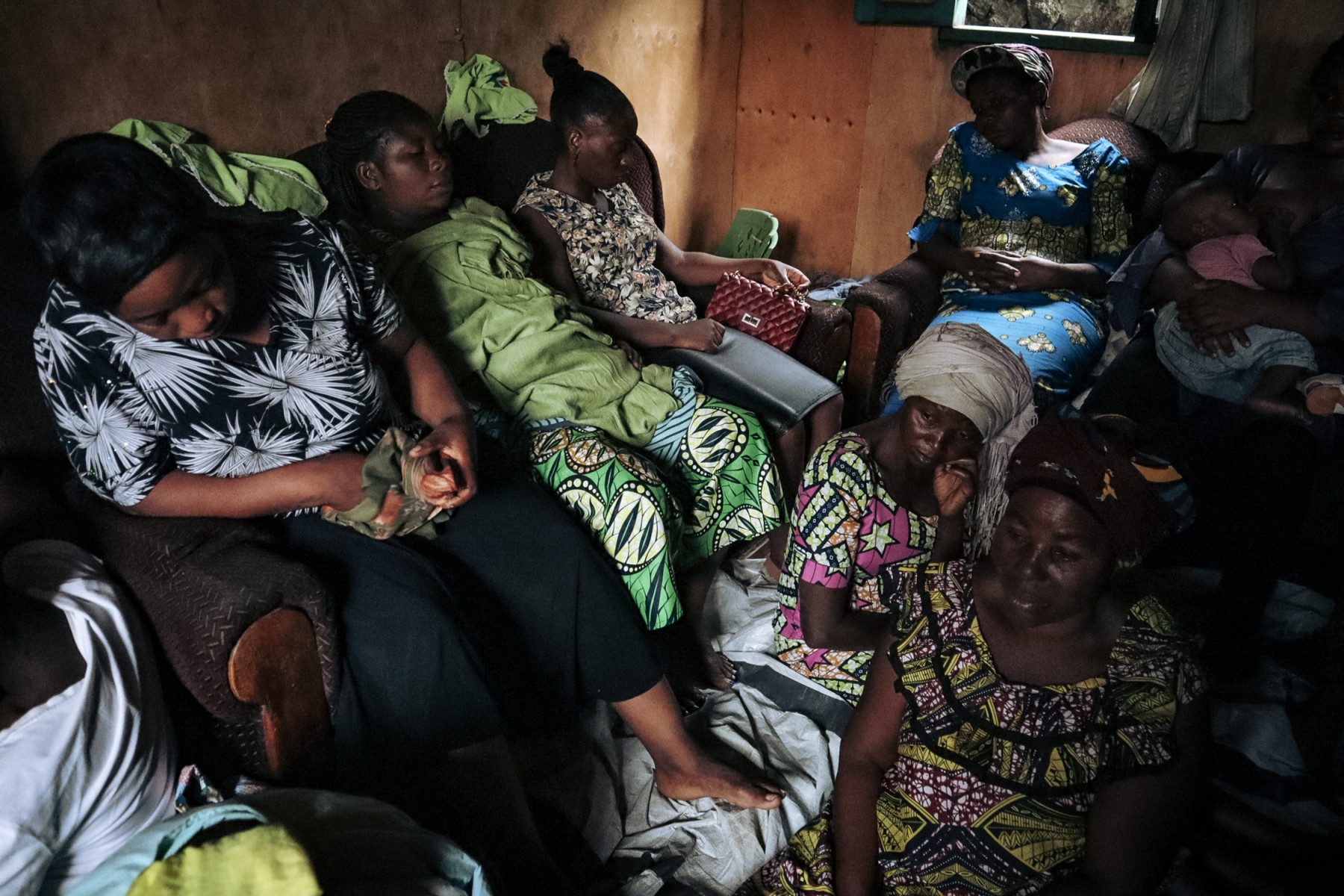
Family members of Claude Amani, 32, allegedly killed by the army as he planned to demonstrate against the UN presence, mourn his death on the day after a military operation in Goma, eastern Democratic Republic of Congo on August 31, 2023. At least 48 people have been killed and 168 arrested in a crackdown on an anti-UN protest in eastern DR Congo, according to sources and official documentation. On August 30, 2023, Congolese soldiers stopped a religious sect from holding a demonstration against United Nations peacekeepers in the city of Goma. (Photo by AFP)

GOMA, DR Congo -- At least 48 people have been killed in a crackdown on an anti-UN protest in eastern DR Congo, according to sources and official documentation reviewed by AFP on Thursday, raising a previously reported death toll.

On Wednesday, Congolese soldiers stopped a religious sect from holding a demonstration against United Nations peacekeepers in the city of Goma.

Some 10 people were initially reported killed after the troops entered a radio station and a place of worship, according to local sources. A policeman was also lynched in the violence.

But an internal army document consulted by AFP on Thursday, and verified by security officials, gave a toll of 48 people killed in the incident -- in addition to the slain policeman -- and 75 people wounded.

The document also said soldiers seized a number of bladed weapons and arrested 168 people, including the leader of the Christian-animist sect, which is named "Natural Judaic and Messianic Faith towards the Nations".

Congolese pro-democracy activist group LUCHA also stated on Thursday that the number of people killed was "close to 50".

In a statement late on Thursday, the government put the toll at "43 dead, with 56 injured and 158 people apprehended, including the sect leader".

It said it supported "the investigation opened by the military auditor... so that those responsible can be brought to justice".

Two unverified video clips circulating on social media on Thursday appeared to show Congolese soldiers throwing lifeless bodies -- some drenched in blood -- into the back of a military vehicle.

"Congolese security forces shot and killed dozens of protesters, and wounded scores more," Human Rights Watch said in a statement.

DRC forces "appear to have fired into a crowd to prevent a demonstration, an extremely callous as well as unlawful way to enforce a ban," said Thomas Fessy, senior Congo researcher at Human Rights Watch.

The organisation said "senior military officials who ordered the use of unlawful lethal force should be suspended, investigated, and held accountable in fair and public trials".

- Anti-UN sentiment -

The Democratic Republic of Congo's east has been ravaged by militia violence for three decades, a legacy of regional wars that flared in the 1990s and 2000s.

The UN peacekeeping mission in the region is one of the largest and costliest in the world, with an annual budget of about $1 billion.

But the UN comes in for sharp criticism in the central African nation, where many people perceive the peacekeepers as failing to prevent conflict.

Last year, dozens were killed in anti-UN protests across eastern Congo, including four peacekeepers.

The latest violence comes amid an ongoing debate over when the UN peacekeeping force in the DRC, known as MONUSCO, should leave the country.

- 'Perceived inaction' -

Last year, Congolese President Felix Tshisekedi told French media there was no reason for MONUSCO to remain beyond the December 2023 presidential election.

UN Secretary-General Antonio Guterres also said in August that the peacekeeping mission is in its final phase.

The departure date remains unclear, however.

"MONUSCO continues to be a focus of popular discontent and frustration over its perceived inaction," Guterres said.

Although UN officials admit to broad frustrations, they also argue that MONUSCO is subject to disinformation campaigns.

The force has a current strength of about 16,000 uniformed personnel, mainly deployed in Congo's mineral-rich east.

Militias continue to hold sway over much of the region, despite the presence of peacekeepers.

One group, the M23, has captured swathes of territory in North Kivu province since 2021, for example.

Several Western nations including the United States and France, as well as independent UN experts, have concluded that Rwanda is backing the Tutsi-led M23. Rwanda denies this, however.

Related Tags

world news
ADVERTISEMENT
.most-popular .layout-ratio{ padding-bottom: 79.13%; } @media (min-width: 768px) and (max-width: 1024px) { .widget-title { font-size: 15px !important; } }

{{ articles_filter_1561_widget.title }}

.most-popular .layout-ratio{ padding-bottom: 79.13%; } @media (min-width: 768px) and (max-width: 1024px) { .widget-title { font-size: 15px !important; } }

{{ articles_filter_1562_widget.title }}

.most-popular .layout-ratio{ padding-bottom: 79.13%; } @media (min-width: 768px) and (max-width: 1024px) { .widget-title { font-size: 15px !important; } }

{{ articles_filter_1563_widget.title }}

{{ articles_filter_1564_widget.title }}

.mb-article-details { position: relative; } .mb-article-details .article-body-preview, .mb-article-details .article-body-summary{ font-size: 17px; line-height: 30px; font-family: "Libre Caslon Text", serif; color: #000; } .mb-article-details .article-body-preview iframe , .mb-article-details .article-body-summary iframe{ width: 100%; margin: auto; } .read-more-background { background: linear-gradient(180deg, color(display-p3 1.000 1.000 1.000 / 0) 13.75%, color(display-p3 1.000 1.000 1.000 / 0.8) 30.79%, color(display-p3 1.000 1.000 1.000) 72.5%); position: absolute; height: 200px; width: 100%; bottom: 0; display: flex; justify-content: center; align-items: center; padding: 0; } .read-more-background a{ color: #000; } .read-more-btn { padding: 17px 45px; font-family: Inter; font-weight: 700; font-size: 18px; line-height: 16px; text-align: center; vertical-align: middle; border: 1px solid black; background-color: white; } .hidden { display: none; }
function initializeAllSwipers() { // Get all hidden inputs with cms_article_id document.querySelectorAll('[id^="cms_article_id_"]').forEach(function (input) { const cmsArticleId = input.value; const articleSelector = '#article-' + cmsArticleId + ' .body_images'; const swiperElement = document.querySelector(articleSelector); if (swiperElement && !swiperElement.classList.contains('swiper-initialized')) { new Swiper(articleSelector, { loop: true, pagination: false, navigation: { nextEl: '#article-' + cmsArticleId + ' .swiper-button-next', prevEl: '#article-' + cmsArticleId + ' .swiper-button-prev', }, }); } }); } setTimeout(initializeAllSwipers, 3000); const intersectionObserver = new IntersectionObserver( (entries) => { entries.forEach((entry) => { if (entry.isIntersecting) { const newUrl = entry.target.getAttribute("data-url"); if (newUrl) { history.pushState(null, null, newUrl); let article = entry.target; // Extract metadata const author = article.querySelector('.author-section').textContent.replace('By', '').trim(); const section = article.querySelector('.section-info ').textContent.replace(' ', ' '); const title = article.querySelector('.article-title h1').textContent; // Parse URL for Chartbeat path format const parsedUrl = new URL(newUrl, window.location.origin); const cleanUrl = parsedUrl.host + parsedUrl.pathname; // Update Chartbeat configuration if (typeof window._sf_async_config !== 'undefined') { window._sf_async_config.path = cleanUrl; window._sf_async_config.sections = section; window._sf_async_config.authors = author; } // Track virtual page view with Chartbeat if (typeof pSUPERFLY !== 'undefined' && typeof pSUPERFLY.virtualPage === 'function') { try { pSUPERFLY.virtualPage({ path: cleanUrl, title: title, sections: section, authors: author }); } catch (error) { console.error('ping error', error); } } // Optional: Update document title if (title && title !== document.title) { document.title = title; } } } }); }, { threshold: 0.1 } ); function showArticleBody(button) { const article = button.closest("article"); const summary = article.querySelector(".article-body-summary"); const body = article.querySelector(".article-body-preview"); const readMoreSection = article.querySelector(".read-more-background"); // Hide summary and read-more section summary.style.display = "none"; readMoreSection.style.display = "none"; // Show the full article body body.classList.remove("hidden"); } document.addEventListener("DOMContentLoaded", () => { let loadCount = 0; // Track how many times articles are loaded const offset = [1, 2, 3, 4, 5, 6, 7, 8, 9, 10]; // Offset values const currentUrl = window.location.pathname.substring(1); let isLoading = false; // Prevent multiple calls if (!currentUrl) { console.log("Current URL is invalid."); return; } const sentinel = document.getElementById("load-more-sentinel"); if (!sentinel) { console.log("Sentinel element not found."); return; } function isSentinelVisible() { const rect = sentinel.getBoundingClientRect(); return ( rect.top < window.innerHeight && rect.bottom >= 0 ); } function onScroll() { if (isLoading) return; if (isSentinelVisible()) { if (loadCount >= offset.length) { console.log("Maximum load attempts reached."); window.removeEventListener("scroll", onScroll); return; } isLoading = true; const currentOffset = offset[loadCount]; window.loadMoreItems().then(() => { let article = document.querySelector('#widget_1690 > div:nth-last-of-type(2) article'); intersectionObserver.observe(article) loadCount++; }).catch(error => { console.error("Error loading more items:", error); }).finally(() => { isLoading = false; }); } } window.addEventListener("scroll", onScroll); });

Sign up by email to receive news.