

ADVERTISEMENT

Marcos orders study of impounding system to avert Pampanga flooding

Published Aug 7, 2023 07:28 am

At A Glance

  • President Ferdinand "Bongbong" Marcos Jr. wants the proposed impounding system in Pampanga to be studied extensively. 
  • He allayed the fears of the local government units over the impacts of the construction on people's livelihood.
  • He also mentioned short term solutions to address the lingering flooding in the province. 

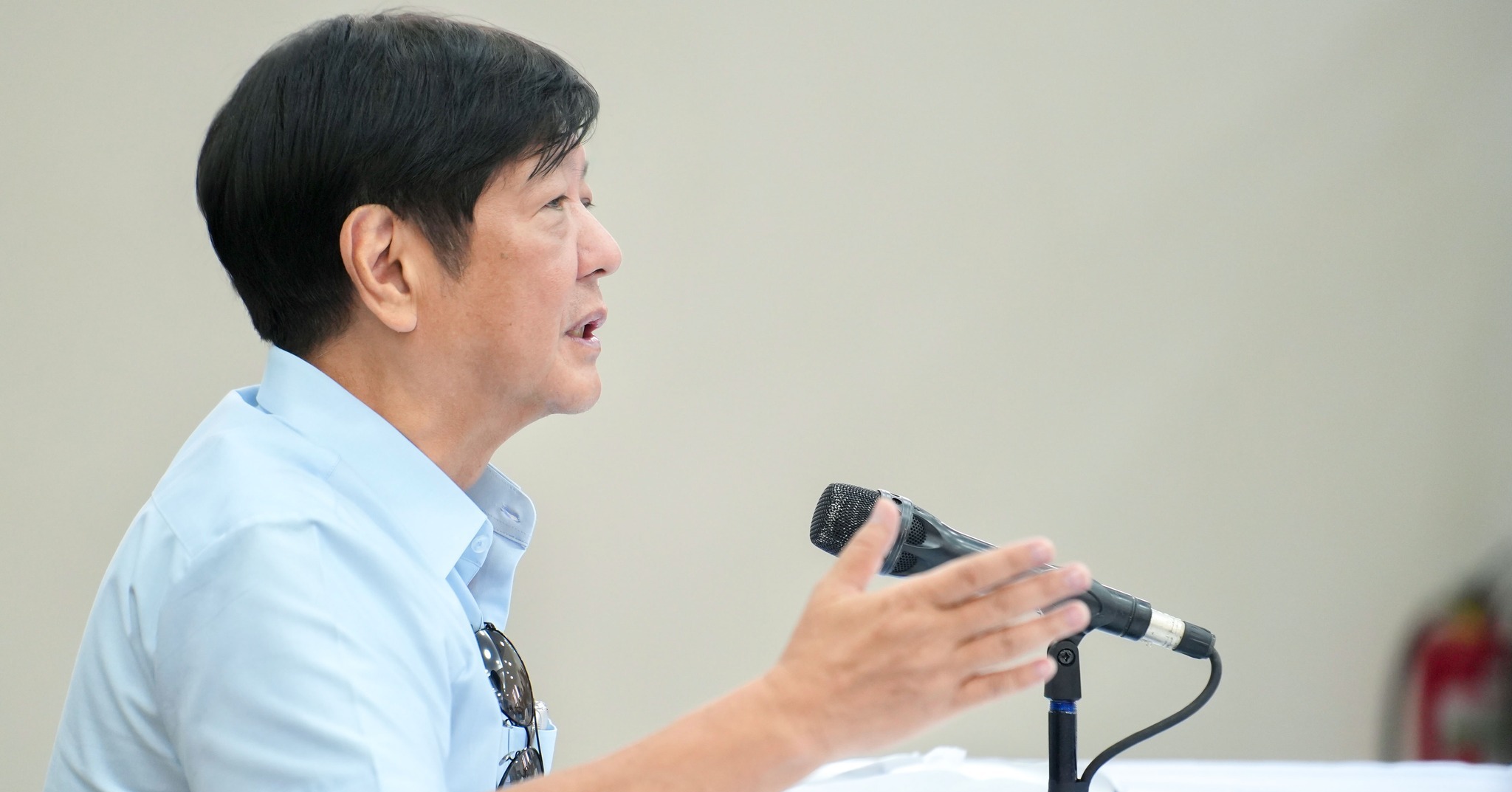
President Ferdinand "Bongbong" Marcos Jr. ordered a study on the proposed construction of an impounding system to solve the lingering flooding problem in Pampanga.
 

BBM Pampanga flooding.jpg
President Ferdinand 'Bongbong' Marcos Jr. (Photo courtesy of Malacañang)

During a meeting with Pampanga local officials on Monday, Aug. 7, Marcos stressed the need to study the proposal as a long-term solution to address massive flooding in Central Luzon.

“In the long-term…we really have to study what we are going to do in terms of [impounding]. Kailangan natin pag-aralan nang mabuti dahil kung wala tayong gagawin, paulit-ulit... kahit mag-dredge tayo (We need to study this extensively because if we do not address this, it will continue even if we keep dredging)," the President said.

"So, that, I think, is the situation as we find it in the very short term, in the medium term, in the long term," he added.

The Chief Executive ordered this as the establishment of a huge collection pool in Candaba has been proposed as a mitigation measure.

He allayed the fears of the local government units (LGUs) over the impact of the construction on people’s livelihood, particularly to palay farmers.

“Do not worry when it comes to the LGUs. Kayo naman ay hindi namin basta…sasagasaan na lang yung project. Hindi namin gagawin yun (We will not let the project affect you. We will not do that)," Marcos said during his meeting with

“Unang-una, kayo mag-a-approve nito. Hindi naman ma-approve ito kung ayaw ninyo. Kayo mag-approve nito na kukuha ng 10 percent (land) para paglagyan ng impounding (First of all, you will be the one approving this. This will not be approved if you do not want to. You will be the one approving this for the 10 percent land for the impounding),” he added.

He assured them that those who will be displaced by the proposed project will be relocated to other areas.

He also mentioned the conduct of dredging operations as a short-term solution and elevating certain structures in San Simon, Pampanga, to ease heavy traffic in the area in connection with the flooding.

He also disclosed the plan to study alternate routes for small vehicles during flooding.

The impounding system project was proposed by former Department of Public Works and Highways (DPWH) secretary Rogelio Singson in 2013 as a solution to flooding concerns in Central Luzon. Singson was present during the briefing.

Local officials said the project could affect more than 9,000 residents in Candaba, stressing that the DPWH made the proposal at that time without incorporating measures to be done for families that would be affected by the project.

Under Singson’s proposal, the government will secure or buy around 200 hectares or ten percent of the 2,000-hectare swamp land in Candaba to build a water impounding area to prevent flooding in nearby and low-lying areas.

Candaba is a major rice producer in the region.

Related Tags

Bongbong Marcos President Marcos Pampanga flooding impounding system
ADVERTISEMENT
.most-popular .layout-ratio{ padding-bottom: 79.13%; } @media (min-width: 768px) and (max-width: 1024px) { .widget-title { font-size: 15px !important; } }

{{ articles_filter_1561_widget.title }}

.most-popular .layout-ratio{ padding-bottom: 79.13%; } @media (min-width: 768px) and (max-width: 1024px) { .widget-title { font-size: 15px !important; } }

{{ articles_filter_1562_widget.title }}

.most-popular .layout-ratio{ padding-bottom: 79.13%; } @media (min-width: 768px) and (max-width: 1024px) { .widget-title { font-size: 15px !important; } }

{{ articles_filter_1563_widget.title }}

{{ articles_filter_1564_widget.title }}

.mb-article-details { position: relative; } .mb-article-details .article-body-preview, .mb-article-details .article-body-summary{ font-size: 17px; line-height: 30px; font-family: "Libre Caslon Text", serif; color: #000; } .mb-article-details .article-body-preview iframe , .mb-article-details .article-body-summary iframe{ width: 100%; margin: auto; } .read-more-background { background: linear-gradient(180deg, color(display-p3 1.000 1.000 1.000 / 0) 13.75%, color(display-p3 1.000 1.000 1.000 / 0.8) 30.79%, color(display-p3 1.000 1.000 1.000) 72.5%); position: absolute; height: 200px; width: 100%; bottom: 0; display: flex; justify-content: center; align-items: center; padding: 0; } .read-more-background a{ color: #000; } .read-more-btn { padding: 17px 45px; font-family: Inter; font-weight: 700; font-size: 18px; line-height: 16px; text-align: center; vertical-align: middle; border: 1px solid black; background-color: white; } .hidden { display: none; }
function initializeAllSwipers() { // Get all hidden inputs with cms_article_id document.querySelectorAll('[id^="cms_article_id_"]').forEach(function (input) { const cmsArticleId = input.value; const articleSelector = '#article-' + cmsArticleId + ' .body_images'; const swiperElement = document.querySelector(articleSelector); if (swiperElement && !swiperElement.classList.contains('swiper-initialized')) { new Swiper(articleSelector, { loop: true, pagination: false, navigation: { nextEl: '#article-' + cmsArticleId + ' .swiper-button-next', prevEl: '#article-' + cmsArticleId + ' .swiper-button-prev', }, }); } }); } setTimeout(initializeAllSwipers, 3000); const intersectionObserver = new IntersectionObserver( (entries) => { entries.forEach((entry) => { if (entry.isIntersecting) { const newUrl = entry.target.getAttribute("data-url"); if (newUrl) { history.pushState(null, null, newUrl); let article = entry.target; // Extract metadata const author = article.querySelector('.author-section').textContent.replace('By', '').trim(); const section = article.querySelector('.section-info ').textContent.replace(' ', ' '); const title = article.querySelector('.article-title h1').textContent; // Parse URL for Chartbeat path format const parsedUrl = new URL(newUrl, window.location.origin); const cleanUrl = parsedUrl.host + parsedUrl.pathname; // Update Chartbeat configuration if (typeof window._sf_async_config !== 'undefined') { window._sf_async_config.path = cleanUrl; window._sf_async_config.sections = section; window._sf_async_config.authors = author; } // Track virtual page view with Chartbeat if (typeof pSUPERFLY !== 'undefined' && typeof pSUPERFLY.virtualPage === 'function') { try { pSUPERFLY.virtualPage({ path: cleanUrl, title: title, sections: section, authors: author }); } catch (error) { console.error('ping error', error); } } // Optional: Update document title if (title && title !== document.title) { document.title = title; } } } }); }, { threshold: 0.1 } ); function showArticleBody(button) { const article = button.closest("article"); const summary = article.querySelector(".article-body-summary"); const body = article.querySelector(".article-body-preview"); const readMoreSection = article.querySelector(".read-more-background"); // Hide summary and read-more section summary.style.display = "none"; readMoreSection.style.display = "none"; // Show the full article body body.classList.remove("hidden"); } document.addEventListener("DOMContentLoaded", () => { let loadCount = 0; // Track how many times articles are loaded const offset = [1, 2, 3, 4, 5, 6, 7, 8, 9, 10]; // Offset values const currentUrl = window.location.pathname.substring(1); let isLoading = false; // Prevent multiple calls if (!currentUrl) { console.log("Current URL is invalid."); return; } const sentinel = document.getElementById("load-more-sentinel"); if (!sentinel) { console.log("Sentinel element not found."); return; } function isSentinelVisible() { const rect = sentinel.getBoundingClientRect(); return ( rect.top < window.innerHeight && rect.bottom >= 0 ); } function onScroll() { if (isLoading) return; if (isSentinelVisible()) { if (loadCount >= offset.length) { console.log("Maximum load attempts reached."); window.removeEventListener("scroll", onScroll); return; } isLoading = true; const currentOffset = offset[loadCount]; window.loadMoreItems().then(() => { let article = document.querySelector('#widget_1690 > div:nth-last-of-type(2) article'); intersectionObserver.observe(article) loadCount++; }).catch(error => { console.error("Error loading more items:", error); }).finally(() => { isLoading = false; }); } } window.addEventListener("scroll", onScroll); });

Sign up by email to receive news.