ADVERTISEMENT

Brick thrown at Japan embassy in China in Fukushima spat

Published Aug 29, 2023 05:38 am


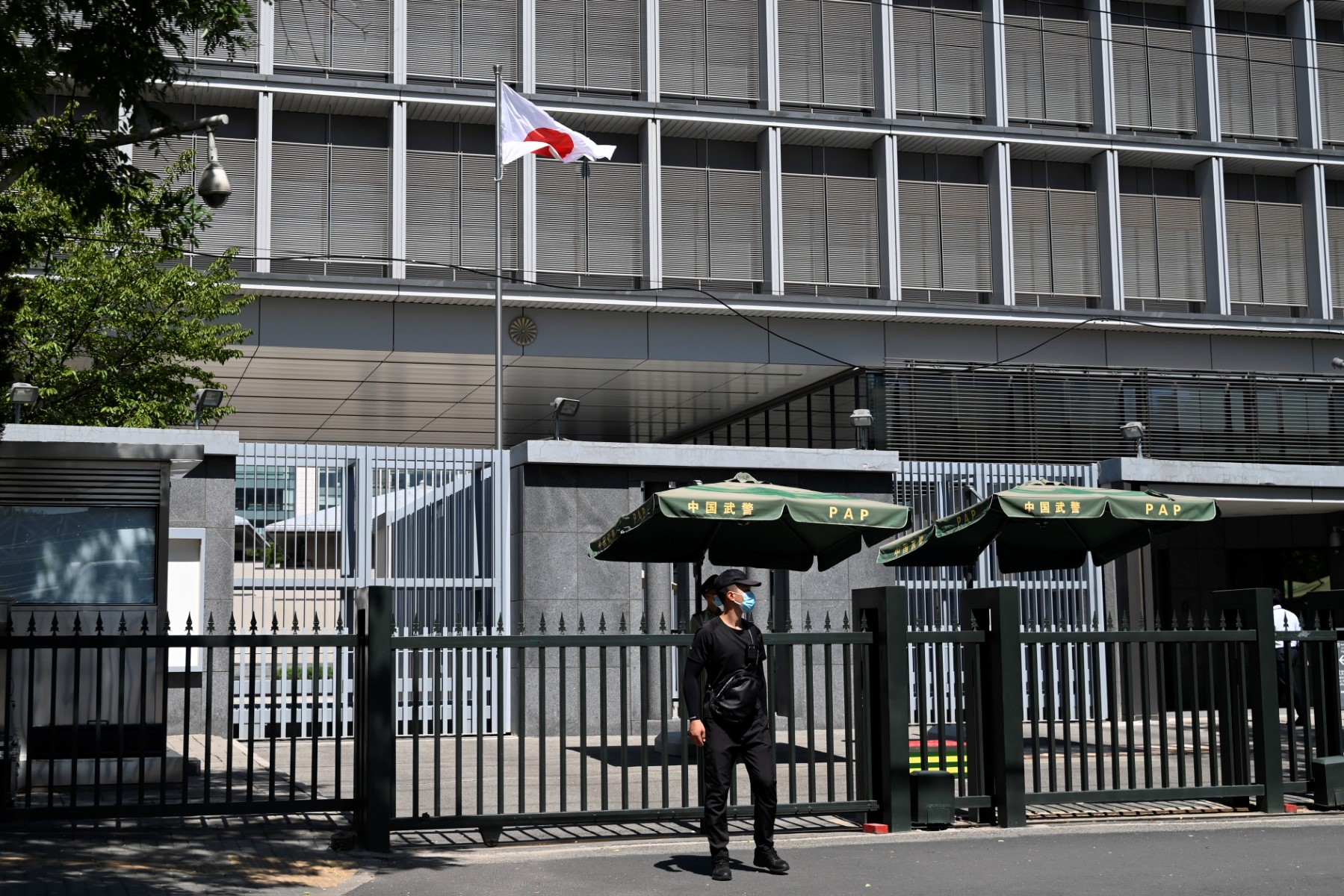
BRICK PHOTO.jpg

Police and security personnel stand outside the entrance of the Japanese embassy in Beijing on August 29, 2023. (AFP)


TOKYO, Japan -- Japan said Tuesday that harassment being faced by Japanese in China after the release of water from the Fukushima nuclear plant was "extremely regrettable", confirming that a brick was thrown at the country's embassy in Beijing.

Last week, China banned all seafood imports from its neighbor as Japan began releasing treated wastewater from the crippled plant in an operation Tokyo and the United Nation's nuclear watchdog have said is safe.

Since then, Japan has urged its citizens in China to keep a low profile and has increased security around schools and diplomatic missions.

Japan's foreign minister on Tuesday confirmed media reports that a brick was thrown at its embassy in Beijing and echoed calls from Prime Minister Fumio Kishida on Monday to China to take action to calm the situation.

"It is extremely regrettable and worrying," Yoshimasa Hayashi told reporters in Tokyo.

"We would like to urge the Chinese government again to take appropriate measures immediately, such as calling on its citizens to act calmly to prevent the situation from escalating, and to take all possible measures to ensure the safety of Japanese residents and our diplomatic missions in China," he said.

He added that China should "provide accurate information" about the Fukushima water release "rather than unnecessarily raising people's concerns by providing information without any scientific basis".

In Beijing, a spokesperson at the Japanese embassy told AFP that staff were "extremely worried".

"Some individuals have come to our (embassy) entrance," the spokesperson said.

"They took these kinds of actions then were led away by armed police."

Asked what action Beijing would take over the stone-throwing, foreign ministry spokesman Wang Wenbin said Monday that China "always protects the safety and legitimate rights and interests of foreigners in China, in accordance with law".

"We strongly urge the Japanese side to face up to the legitimate concerns of all parties, immediately stop the discharge of nuclear-contaminated water into the sea, fully consult with its neighbors and other stakeholders, and earnestly dispose of nuclear-contaminated water in a responsible manner," Wang told a regular briefing.

'Don't speak loudly' 

On Sunday, Japan's foreign ministry urged its citizens in China to be "cautious in your speech and behavior. Do not speak Japanese unnecessarily or too loudly".

A range of businesses in Japan, from bakeries to an aquarium, have reportedly been subjected to thousands of crank calls that have included abusive and racist language.

Social media users in China have posted recordings and videos of the calls, some of which have attracted tens of thousands of likes.

Japan began releasing more than 500 Olympic swimming pools' worth of diluted wastewater from Fukushima into the Pacific on Thursday, 12 years after a tsunami knocked out three reactors in one of the world's worst atomic accidents.

All radioactive elements have been filtered out except for tritium, levels of which are within safe limits and below that released by nuclear power stations in their normal operation -- including in China, plant operator TEPCO says.

Test results from seawater and fish samples near the plant since the start of the discharge -- which will take decades to complete -- have confirmed this, according to Japanese authorities.

Related Tags

Fukushima WORLDNEWS
ADVERTISEMENT
.most-popular .layout-ratio{ padding-bottom: 79.13%; } @media (min-width: 768px) and (max-width: 1024px) { .widget-title { font-size: 15px !important; } }

{{ articles_filter_1561_widget.title }}

.most-popular .layout-ratio{ padding-bottom: 79.13%; } @media (min-width: 768px) and (max-width: 1024px) { .widget-title { font-size: 15px !important; } }

{{ articles_filter_1562_widget.title }}

.most-popular .layout-ratio{ padding-bottom: 79.13%; } @media (min-width: 768px) and (max-width: 1024px) { .widget-title { font-size: 15px !important; } }

{{ articles_filter_1563_widget.title }}

{{ articles_filter_1564_widget.title }}

.mb-article-details { position: relative; } .mb-article-details .article-body-preview, .mb-article-details .article-body-summary{ font-size: 17px; line-height: 30px; font-family: "Libre Caslon Text", serif; color: #000; } .mb-article-details .article-body-preview iframe , .mb-article-details .article-body-summary iframe{ width: 100%; margin: auto; } .read-more-background { background: linear-gradient(180deg, color(display-p3 1.000 1.000 1.000 / 0) 13.75%, color(display-p3 1.000 1.000 1.000 / 0.8) 30.79%, color(display-p3 1.000 1.000 1.000) 72.5%); position: absolute; height: 200px; width: 100%; bottom: 0; display: flex; justify-content: center; align-items: center; padding: 0; } .read-more-background a{ color: #000; } .read-more-btn { padding: 17px 45px; font-family: Inter; font-weight: 700; font-size: 18px; line-height: 16px; text-align: center; vertical-align: middle; border: 1px solid black; background-color: white; } .hidden { display: none; }
function initializeAllSwipers() { // Get all hidden inputs with cms_article_id document.querySelectorAll('[id^="cms_article_id_"]').forEach(function (input) { const cmsArticleId = input.value; const articleSelector = '#article-' + cmsArticleId + ' .body_images'; const swiperElement = document.querySelector(articleSelector); if (swiperElement && !swiperElement.classList.contains('swiper-initialized')) { new Swiper(articleSelector, { loop: true, pagination: false, navigation: { nextEl: '#article-' + cmsArticleId + ' .swiper-button-next', prevEl: '#article-' + cmsArticleId + ' .swiper-button-prev', }, }); } }); } setTimeout(initializeAllSwipers, 3000); const intersectionObserver = new IntersectionObserver( (entries) => { entries.forEach((entry) => { if (entry.isIntersecting) { const newUrl = entry.target.getAttribute("data-url"); if (newUrl) { history.pushState(null, null, newUrl); let article = entry.target; // Extract metadata const author = article.querySelector('.author-section').textContent.replace('By', '').trim(); const section = article.querySelector('.section-info ').textContent.replace(' ', ' '); const title = article.querySelector('.article-title h1').textContent; // Parse URL for Chartbeat path format const parsedUrl = new URL(newUrl, window.location.origin); const cleanUrl = parsedUrl.host + parsedUrl.pathname; // Update Chartbeat configuration if (typeof window._sf_async_config !== 'undefined') { window._sf_async_config.path = cleanUrl; window._sf_async_config.sections = section; window._sf_async_config.authors = author; } // Track virtual page view with Chartbeat if (typeof pSUPERFLY !== 'undefined' && typeof pSUPERFLY.virtualPage === 'function') { try { pSUPERFLY.virtualPage({ path: cleanUrl, title: title, sections: section, authors: author }); } catch (error) { console.error('ping error', error); } } // Optional: Update document title if (title && title !== document.title) { document.title = title; } } } }); }, { threshold: 0.1 } ); function showArticleBody(button) { const article = button.closest("article"); const summary = article.querySelector(".article-body-summary"); const body = article.querySelector(".article-body-preview"); const readMoreSection = article.querySelector(".read-more-background"); // Hide summary and read-more section summary.style.display = "none"; readMoreSection.style.display = "none"; // Show the full article body body.classList.remove("hidden"); } document.addEventListener("DOMContentLoaded", () => { let loadCount = 0; // Track how many times articles are loaded const offset = [1, 2, 3, 4, 5, 6, 7, 8, 9, 10]; // Offset values const currentUrl = window.location.pathname.substring(1); let isLoading = false; // Prevent multiple calls if (!currentUrl) { console.log("Current URL is invalid."); return; } const sentinel = document.getElementById("load-more-sentinel"); if (!sentinel) { console.log("Sentinel element not found."); return; } function isSentinelVisible() { const rect = sentinel.getBoundingClientRect(); return ( rect.top < window.innerHeight && rect.bottom >= 0 ); } function onScroll() { if (isLoading) return; if (isSentinelVisible()) { if (loadCount >= offset.length) { console.log("Maximum load attempts reached."); window.removeEventListener("scroll", onScroll); return; } isLoading = true; const currentOffset = offset[loadCount]; window.loadMoreItems().then(() => { let article = document.querySelector('#widget_1690 > div:nth-last-of-type(2) article'); intersectionObserver.observe(article) loadCount++; }).catch(error => { console.error("Error loading more items:", error); }).finally(() => { isLoading = false; }); } } window.addEventListener("scroll", onScroll); });

Sign up by email to receive news.