







Where did my Filipino go?
How my decade overseas seems destined to circle back to the Philippines


At A Glance
- Every time I hear our national language being spoken, a sense of camaraderie arises.
By JAMES SAM
My Filipino has always been weak. And I don’t just mean my competency with the language. Having been born in this nation rich in tastes and colorful in culture, the path that had taken me away from the Philippines opened the door for a self-interrogation of sorts. As a child—from birth to around the age of 15—your identity is clear-cut. Clear-cut not because you’re sure but because you absorb your surroundings and assimilate with ease.
Looking back on my earlier years spent in the Philippines, I remember them in Filipino. My conversations, interactions, thoughts, and ideas were molded by our native tongue. But my first language is English. I was born in the Philippines and spent 10 formative years in what is my motherland, but this was not something I carried with me after I left.
My three years in Brazil were the first time I forsook my Filipino identity—through ignorance, not disdain. As a child, you learn just as fast as you forget. I spoke fluent Portuguese, played the national sport with a seemingly patriotic passion, and indulged in Brazilian cuisine of which some dishes I still claim among my favorites. Amid this smooth transition, my father knew what it meant to divide one’s formative years between nations, cultures, and peoples. He used to buy these cartoon digital video discs recorded in Portuguese but captioned in Filipino and make me watch them for an hour every day. As someone who’s spent many years between countries, he understood that some aspects of your identity fade away when you depart from home. From small mannerisms like holding the door open for others to your everyday spoken language, my father wanted to ground in cement what was escaping me like breath. Chalk it up to my stubborn resistance or porous memory, but that change had already taken place.
Upon returning to the Philippines, my Filipino had gone. What used to naturally pour out of me—picture a child chatterbox—was now a rough blend of basic words and their English counterparts. I didn’t realize it at the time, but my last two years living in the Philippines greatly differed from before I had initially left. I remember my classmates lightheartedly teasing me for my broken Filipino as I was unable to form a complete sentence without resorting to English. I remember overindulging myself in sinigang and tinola, which I missed so much once I realized they were no longer an option. Although unaware of it at the time, out of a feeling of nostalgia, I remember visiting former stomping grounds such as my elementary school with old friends and teachers, internet cafes at which I used to spend most of my days, and even malls in their uninspired selections yet Filipino atmosphere.
When told that I was to move to the US, I remember fighting against the decision with tears. Tears for my family, for my friends, for my surroundings, for leaving what little I know and leaving for what I completely don’t—tears for what I’ve only now come to realize as the Philippines.
Now 22 years of age, I regularly search for claims to my identity. By blood I am Singaporean and Filipino but culturally I have been American. My father raised me with Chinese values but my formative years were spent between the Philippines, Brazil, and mostly the US. More than 10 years under my belt residing in the US and I still consider myself a foreigner.
My English enhanced by the American confidence and traditions I actively practice and celebrate hailing from the US, there remains a longing. At some point during my time overseas, I began spending my summers in the Philippines. To visit family was my primary reason but, as nostalgia seeped in, I couldn’t help but reminisce. Hearing Filipinos converse three, four, five at a time was comforting. Despite my Filipino now being limited, it felt all too familiar. The bustle of family gatherings reminded me of the Philippines itself—a nation full of happy, energetic, and family-driven people.

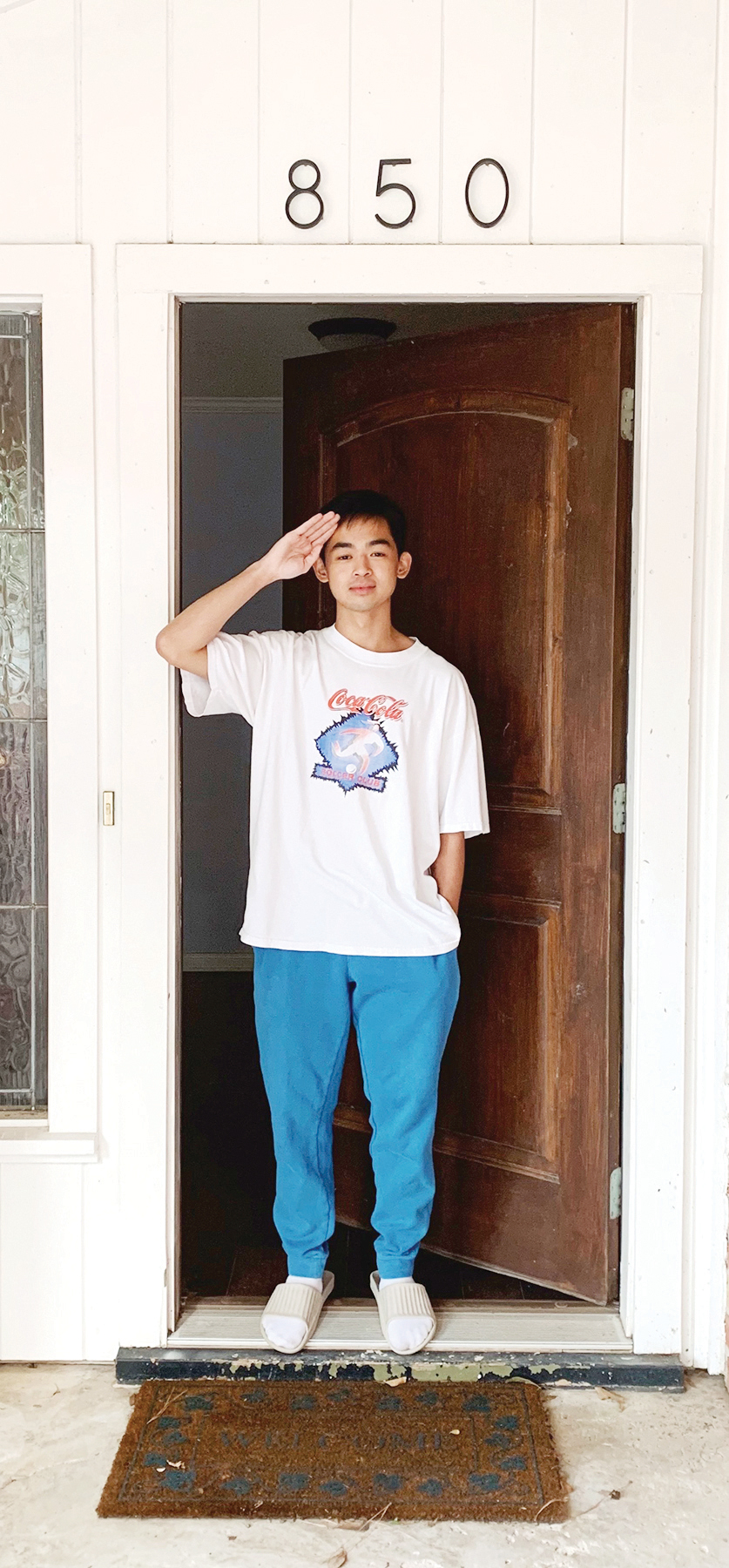
Manila Bulletin Lifestyle during his recent stay in the Philippines (Photo Alex Amansec)
Even when my lack of ability was taken into consideration, their English exuded a Filipino familiarity. Every time I hear our Filipino language being spoken, a sense of camaraderie arises. An intrinsic warmth and amiability in the Filipino language that you would be hard-pressed to find anywhere else, these qualities always pull me back to my roots. Spending my summers here made me realize I had been missing something during my time away and, what it felt like to be home.