

ADVERTISEMENT

A hero of sorts: Retired military man serves the community through farming

Published Aug 26, 2023 04:02 pm

Text and Photos by Henrylito D. Tacio

American Baptist minister and activist Martin Luther King, Jr. once said: “Everybody can be great because anybody can serve. You don’t have to have a college degree to serve. You don’t have to make your subject and verb agree to serve. You only need a heart full of grace. A soul generated by love.”

Mhar H. Baclay (1).JPG
This former military man is now a farmer.


Those words came to mind while interviewing 44-year-old Mhar H. Baclay in his home in sitio Sto. Niño of barangay New Clarin, Bansalan, Davao del Sur. He once served in the special forces of the Philippine Army but opted to retire early and is now concentrating on farming. He also serves as a treasurer of the farmers association in the community.

Speaking in Bisaya, Baclay said, “It’s not only being a member of the military that we can serve our fellow man but also in providing food for their tables. That is what we, farmers, are doing.”

Freddie Baclay and his wife, Benifreda, have five children; he is the fourth of the siblings. His father was a farmer and he often accompanied his father whenever he went farming as far as he could remember. In fact, he started farming when he was only 10 years old.
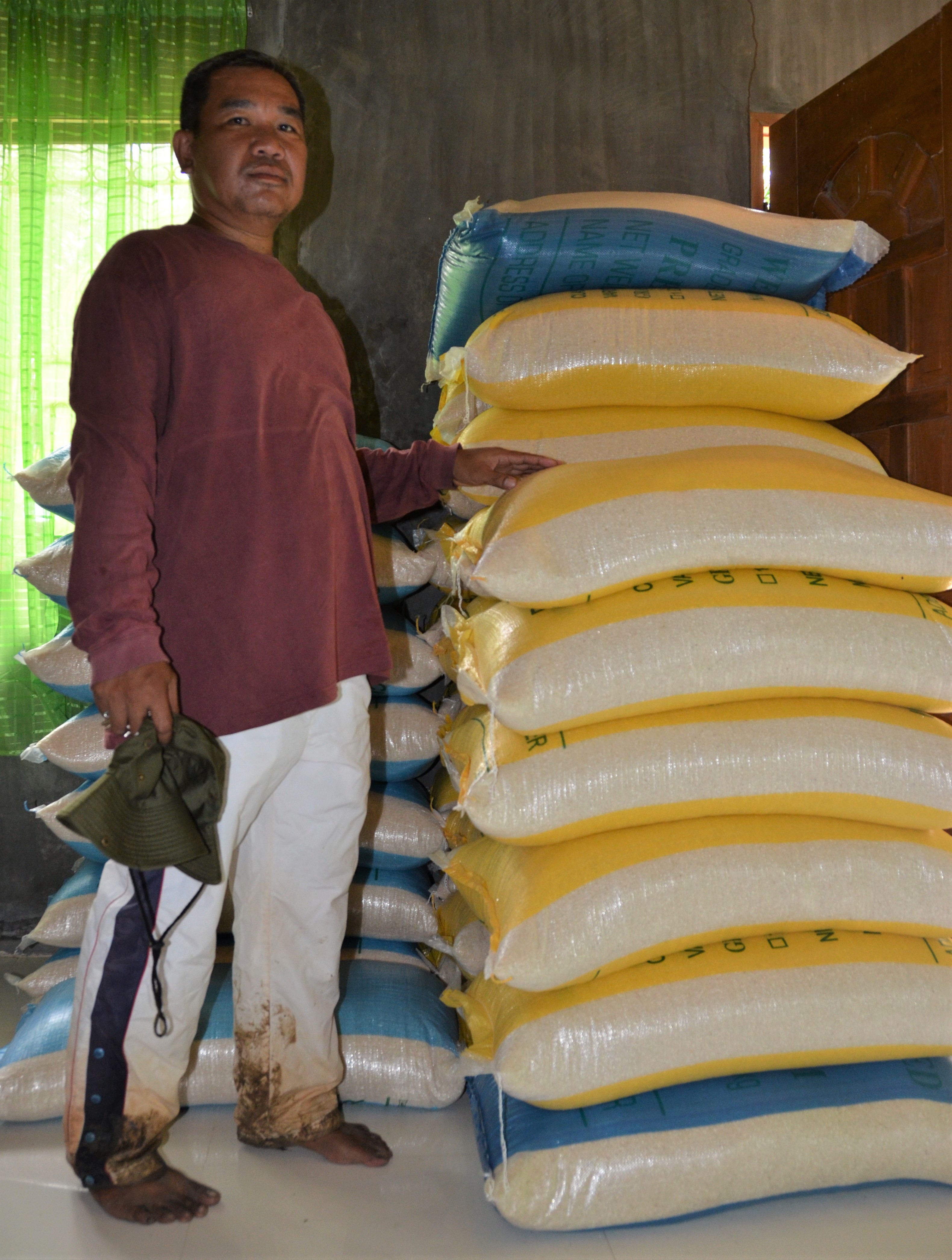
Rice (1).JPG
He brings the milled rice to his home, where neighbors could buy it. 


His farm is located about seven kilometers from the town proper. He plants rice in a 6.5- hectare land. He also has a two-hectare farm planted to coconut and another two hectares to banana. Actually, he owns only one hectare and the rest are only mortgaged to him.

The one-hectare farm, which is about 600 meters away from his house, is planted to coconuts with bananas as intercrop. He is also raising ducks and meat-type goats. He said the goats are only for consumption but he is planning to raise more later on.

Military service

Baclay was only 18 when he entered the military service. This was in 1998. “I really wanted to serve our country,” he explained. “At the same time, being a soldier is a stable job.”

In 2010, he got married to his long-time sweetheart, Zenith Solana. As a soldier, he was assigned to far-flung places and could not see his wife regularly anymore.

After 21 years of service, he retired from being a soldier, only 39 years old then. With the retirement money, the pension he received monthly and from the salary of his wife as a teacher, they were able to save money. They used that to buy their own farm.

Growing rice

He focused on growing rice since he already knew about that. Studies show that for every peso spent on food, 20 centavos go to rice.

“I plant rice because this is the crop being grown in our community,” Baclay said. “Besides, rice is our staple food. Wherever you go, there is always a market for rice.”
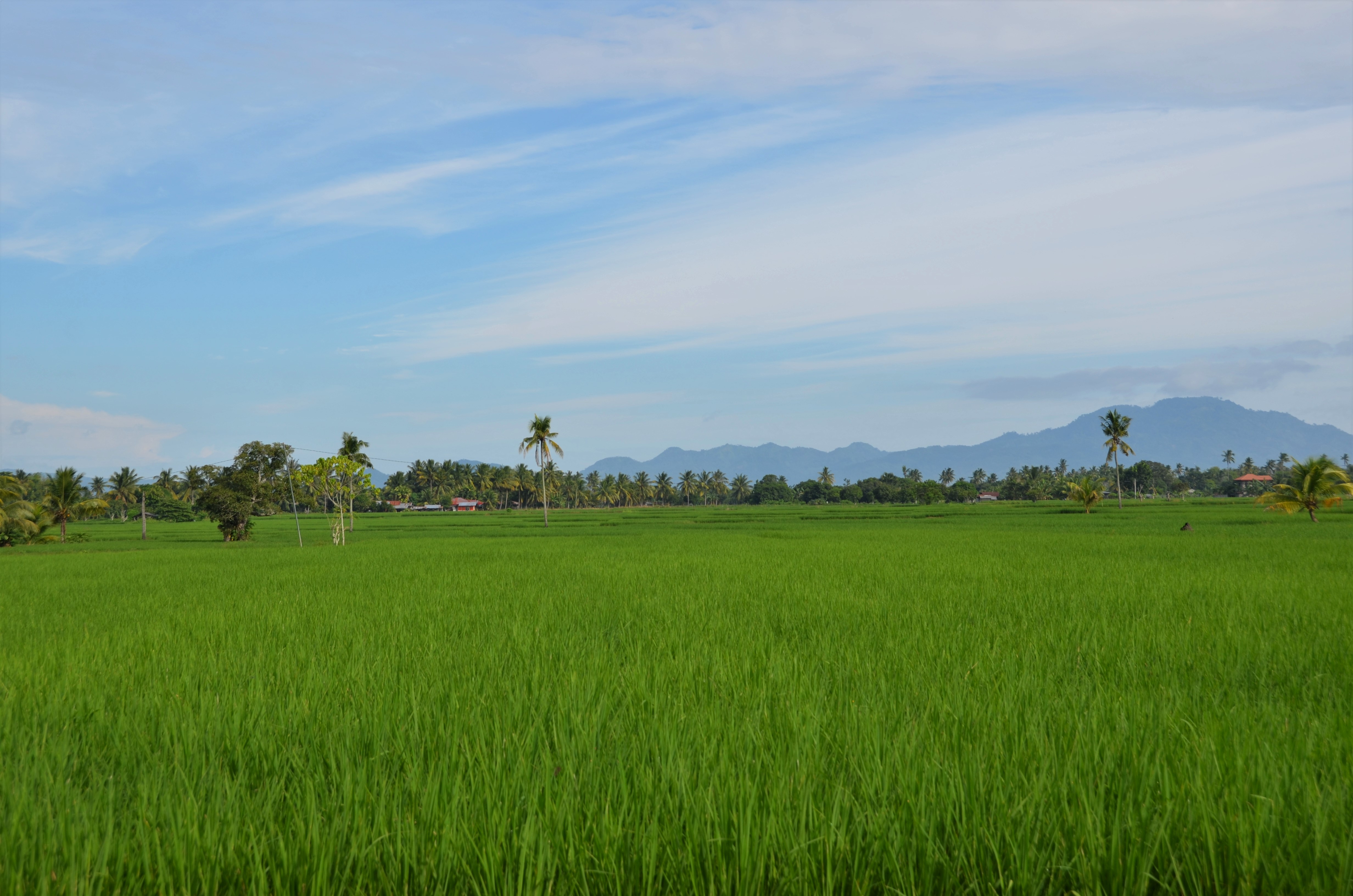
Rice farm.JPG
At least 6.5 hectare is planted to rice.


What he learned from his father, however, was the traditional method of growing rice like using carabao for plowing. To get first-hand information, he attended training and seminars conducted by the municipal agriculture office.

Thanks to machinery, growing rice these days is easier. In the past, it took about three days to prepare the land for planting. But these days, it’s just a matter of hours. “I am a member of Sto. Nino-New Clarin Communal Irrigators Association and we have some machines we can rent to do planting and harvesting,” he said.

Baclay practices two cropping seasons for rice: one during wet season and another during the dry season.


Organic farming

But he doesn’t use pesticides. “Since 2015, we have stopped spraying our crops with pesticides,” he pointed out. “We learned from seminars on rice production through Farmers Field School that if we spray them with pesticides, those helpful insects will also be exterminated.”

Most rice farmers in the area are not using pesticides anymore. They have observed that by not using pesticides, they have lessened their expenses. In addition, they are healthier compared to the time when they were using pesticides.
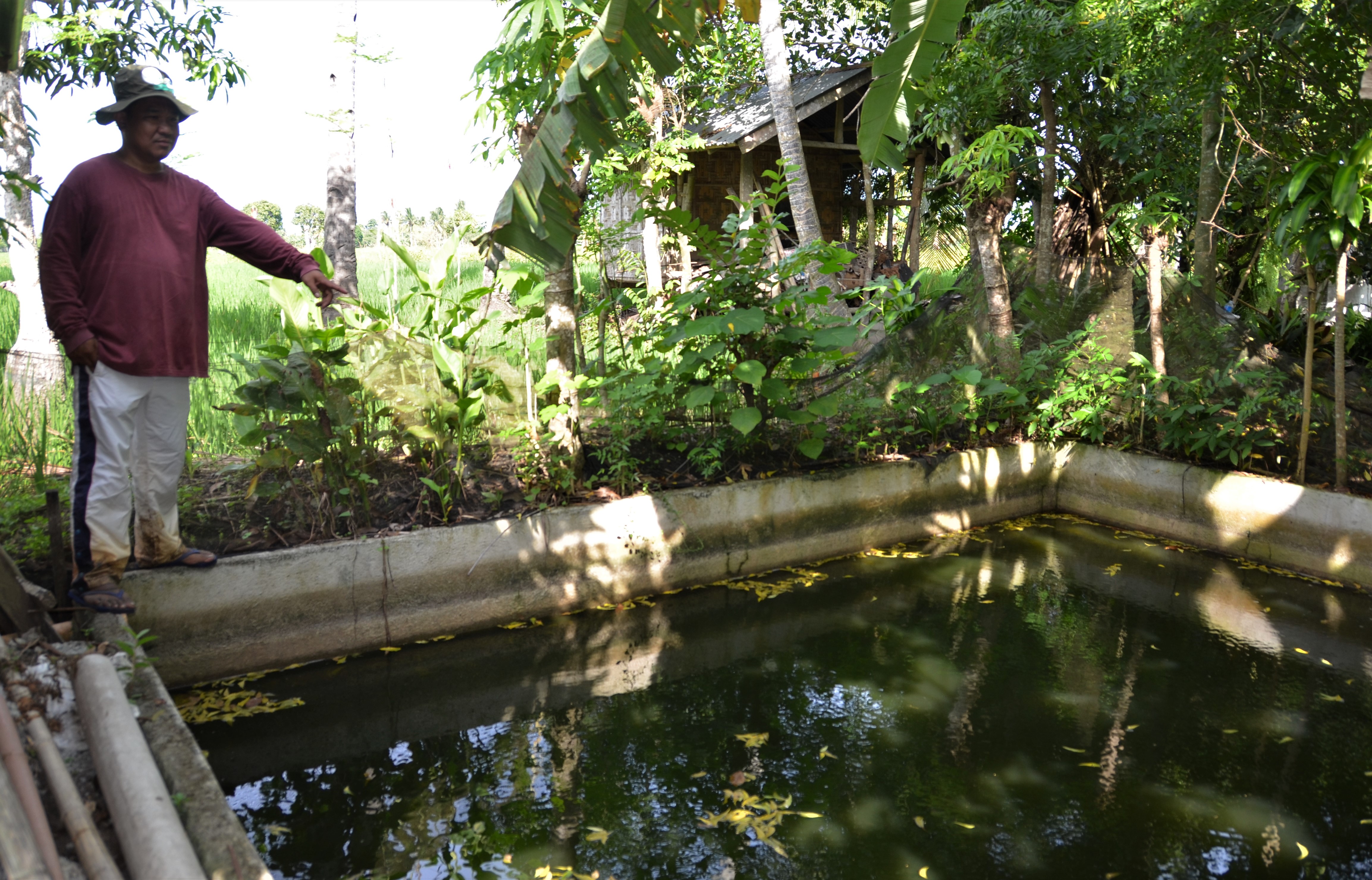
Fishpond.JPG
At least 6.5 hectare is planted to rice.


After harvesting, he brings the palay to an adjacent town – in Sinaragan, Matan-ao, Davao del Sur – where it is dried and then milled. It is about 12 kilometers from the farm.

He doesn’t sell his milled rice in the market. Neighbors come to his house and buy them at prevailing market prices in the town proper. “If the price per sack in the public market is P2,100, I sell them also at P2,100,” he said.

On why farmers should be considered heroes, Baclay explained, “If there are no farmers, we don’t have food to eat.” He added, “Farming is one of the solutions to the problem of hunger and economic crisis. It is also a way of getting a steady income.”

Related Tags

feature specials
ADVERTISEMENT
.most-popular .layout-ratio{ padding-bottom: 79.13%; } @media (min-width: 768px) and (max-width: 1024px) { .widget-title { font-size: 15px !important; } }

{{ articles_filter_1561_widget.title }}

.most-popular .layout-ratio{ padding-bottom: 79.13%; } @media (min-width: 768px) and (max-width: 1024px) { .widget-title { font-size: 15px !important; } }

{{ articles_filter_1562_widget.title }}

.most-popular .layout-ratio{ padding-bottom: 79.13%; } @media (min-width: 768px) and (max-width: 1024px) { .widget-title { font-size: 15px !important; } }

{{ articles_filter_1563_widget.title }}

{{ articles_filter_1564_widget.title }}

.mb-article-details { position: relative; } .mb-article-details .article-body-preview, .mb-article-details .article-body-summary{ font-size: 17px; line-height: 30px; font-family: "Libre Caslon Text", serif; color: #000; } .mb-article-details .article-body-preview iframe , .mb-article-details .article-body-summary iframe{ width: 100%; margin: auto; } .read-more-background { background: linear-gradient(180deg, color(display-p3 1.000 1.000 1.000 / 0) 13.75%, color(display-p3 1.000 1.000 1.000 / 0.8) 30.79%, color(display-p3 1.000 1.000 1.000) 72.5%); position: absolute; height: 200px; width: 100%; bottom: 0; display: flex; justify-content: center; align-items: center; padding: 0; } .read-more-background a{ color: #000; } .read-more-btn { padding: 17px 45px; font-family: Inter; font-weight: 700; font-size: 18px; line-height: 16px; text-align: center; vertical-align: middle; border: 1px solid black; background-color: white; } .hidden { display: none; }
function initializeAllSwipers() { // Get all hidden inputs with cms_article_id document.querySelectorAll('[id^="cms_article_id_"]').forEach(function (input) { const cmsArticleId = input.value; const articleSelector = '#article-' + cmsArticleId + ' .body_images'; const swiperElement = document.querySelector(articleSelector); if (swiperElement && !swiperElement.classList.contains('swiper-initialized')) { new Swiper(articleSelector, { loop: true, pagination: false, navigation: { nextEl: '#article-' + cmsArticleId + ' .swiper-button-next', prevEl: '#article-' + cmsArticleId + ' .swiper-button-prev', }, }); } }); } setTimeout(initializeAllSwipers, 3000); const intersectionObserver = new IntersectionObserver( (entries) => { entries.forEach((entry) => { if (entry.isIntersecting) { const newUrl = entry.target.getAttribute("data-url"); if (newUrl) { history.pushState(null, null, newUrl); let article = entry.target; // Extract metadata const author = article.querySelector('.author-section').textContent.replace('By', '').trim(); const section = article.querySelector('.section-info ').textContent.replace(' ', ' '); const title = article.querySelector('.article-title h1').textContent; // Parse URL for Chartbeat path format const parsedUrl = new URL(newUrl, window.location.origin); const cleanUrl = parsedUrl.host + parsedUrl.pathname; // Update Chartbeat configuration if (typeof window._sf_async_config !== 'undefined') { window._sf_async_config.path = cleanUrl; window._sf_async_config.sections = section; window._sf_async_config.authors = author; } // Track virtual page view with Chartbeat if (typeof pSUPERFLY !== 'undefined' && typeof pSUPERFLY.virtualPage === 'function') { try { pSUPERFLY.virtualPage({ path: cleanUrl, title: title, sections: section, authors: author }); } catch (error) { console.error('ping error', error); } } // Optional: Update document title if (title && title !== document.title) { document.title = title; } } } }); }, { threshold: 0.1 } ); function showArticleBody(button) { const article = button.closest("article"); const summary = article.querySelector(".article-body-summary"); const body = article.querySelector(".article-body-preview"); const readMoreSection = article.querySelector(".read-more-background"); // Hide summary and read-more section summary.style.display = "none"; readMoreSection.style.display = "none"; // Show the full article body body.classList.remove("hidden"); } document.addEventListener("DOMContentLoaded", () => { let loadCount = 0; // Track how many times articles are loaded const offset = [1, 2, 3, 4, 5, 6, 7, 8, 9, 10]; // Offset values const currentUrl = window.location.pathname.substring(1); let isLoading = false; // Prevent multiple calls if (!currentUrl) { console.log("Current URL is invalid."); return; } const sentinel = document.getElementById("load-more-sentinel"); if (!sentinel) { console.log("Sentinel element not found."); return; } function isSentinelVisible() { const rect = sentinel.getBoundingClientRect(); return ( rect.top < window.innerHeight && rect.bottom >= 0 ); } function onScroll() { if (isLoading) return; if (isSentinelVisible()) { if (loadCount >= offset.length) { console.log("Maximum load attempts reached."); window.removeEventListener("scroll", onScroll); return; } isLoading = true; const currentOffset = offset[loadCount]; window.loadMoreItems().then(() => { let article = document.querySelector('#widget_1690 > div:nth-last-of-type(2) article'); intersectionObserver.observe(article) loadCount++; }).catch(error => { console.error("Error loading more items:", error); }).finally(() => { isLoading = false; }); } } window.addEventListener("scroll", onScroll); });

Sign up by email to receive news.