






 Philippines
National
Tolentino eyes separate office dedicated to household helpers' concerns, amendments to Kasambahay Law
Philippines
National
Tolentino eyes separate office dedicated to household helpers' concerns, amendments to Kasambahay Law
Tolentino eyes separate office dedicated to household helpers' concerns, amendments to Kasambahay Law


Senator Francis Tolentino on Thursday, August 24 suggested the creation of a separate office within the Department of Labor and Employment (DOLE) that would focus on addressing all concerns of household helpers, including welfare and education.
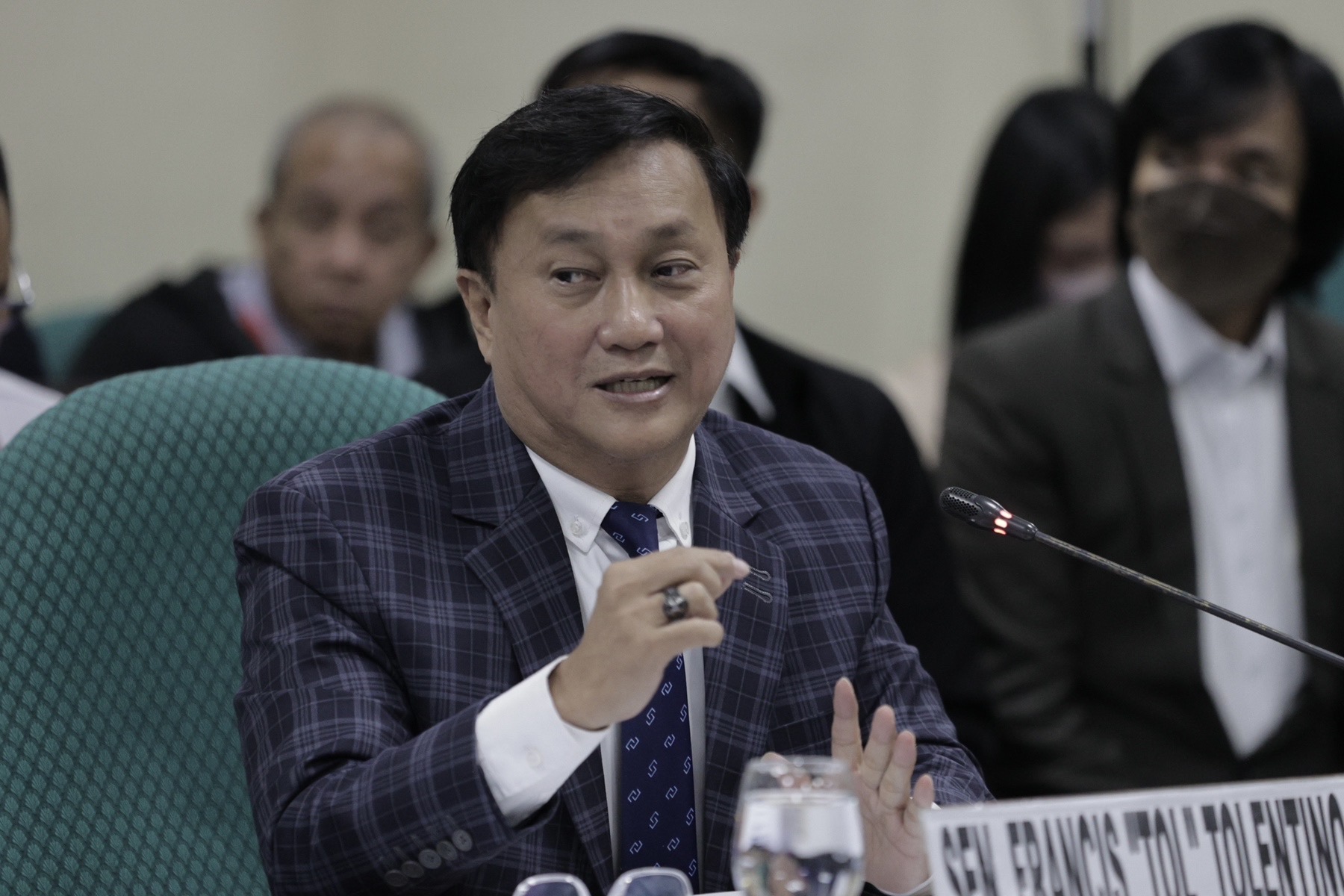
Sen. Francis Tolentino (Senate PRIB Photo)
Tolentino is head of the Senate Committee on Justice and Human Rights and is investigating the case of Elvira Vergara who was rendered blind by her abusive employers.
The senator also said that vis-à-vis Vergara’s case, Tolentino said the “Batas Kasambay” or Republic 10361 should also be amended to increase the amount of fine for violations being done by the employers.
“The Kasambahay Law is good but I think it has to be amended. Even the fine is just P10,000 for the violations being done by the employers. So I would look at strengthening the law further and making it not just a turf of the DOLE but also include the DILG (Department of Interior and Local Government (DILG),” Tolentino said in an interview on ANC’s Headstart.
“Because barangay captains should have their own databases. It should be registered within the barangay’s jurisdiction,” he said.
“Perhaps, if we really made focus on our OFWs working abroad, domestic helpers, there should be a local bureau or agency in charge of domestic helpers. Not just for the purposes of hotlines but for purposes of really educating, not only the domestic helpers themselves but also the employers on their responsibilities,” Tolentino added.
Tolentino suggested “there should be a separate office within the DOLE” to do all of these, including making sure that provisions of the law providing different rates for different regions, working hours and day-off requirements.
At the same time, the lawmaker suggested the creation of a special court to handle cases involving domestic helpers.
“The Supreme Court can perhaps in one region, (create) a regional trial court to handle cases such as this,” he stressed.
“It will draw more inspiration, perhaps awareness, greater awareness on the part of domestic helpers as well as inform the employers that indeed the law can reach them wherever they are,” he further explained.