






 Philippines
National
Bill establishing 'Disaster Food Banks' all over PH approved on 3rd reading
Philippines
National
Bill establishing 'Disaster Food Banks' all over PH approved on 3rd reading
Bill establishing 'Disaster Food Banks' all over PH approved on 3rd reading


At A Glance
- A measure providing for the establishment of disaster food banks and stockpiles throughout the country to hasten the delivery of relief goods and other supplies during calamities has gained final approval in the House of Representatives.
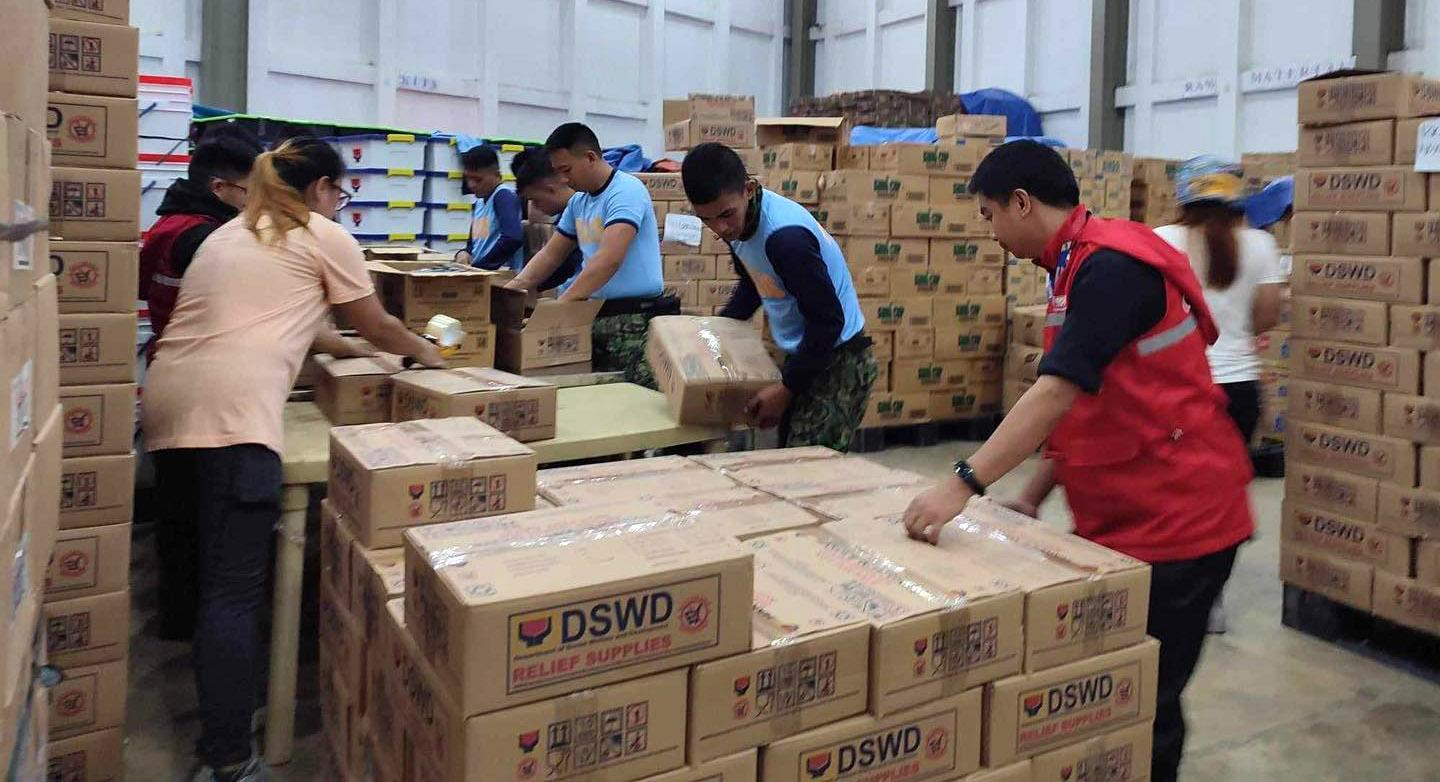
(MANILA BULLETIN)
A measure providing for the establishment of disaster food banks and stockpiles throughout the country to hasten delivery of relief goods and other supplies during calamities has gained final approval in the House of Representatives.
Overwhelmingly approved on third and final reading last Aug. 16, with 274 affirmative votes, was House Bill (HB) No. 8463.
The bill establishes the construction of a "Disaster Food Bank and Stockpile" in every province and highly urbanized city in the country, providing for their maintenance and appropriating funds for their operation.
Speaker Martin Romualdez explained the justification for the bill following its passage. He said the proposal stemmed from the fact that the country is visited by over 20 typhoons annually.
“This reality requires us to prepare for the eventuality of storms and similar calamities displacing residents of affected areas. We have to have a faster, a more efficient and a more effective system of responding to disasters and helping our people,” he said.
Romualdez said such response can be institutionalized through the establishment of strategic food banks and stockpiles all over the country.
“A single life we can save through the timely delivery of medicine, food and critical items in the event of a calamity is worth more than the effort and money that will go into setting up these food and supply reserves,” the House leader stressed.
HB 8463 was a consolidation of three related measures authored by Reps Michael Morden of API Party-list, Ivan Howard Guinto of PINUNO Party-list, and Alan Ecleo of Dinagat Islands.
Under the bill, the disaster food bank and stockpile shall serve as the central repository of food, water, medicines, vaccines, antidotes, and other critical medical products, medical kits, portable power and light source, clothing, tents, and communication devices.
The shelf life of these items should at least be two years.
The establishment of the stockpile shall be an inter-agency effort, to be led by the National Disaster Risk Reduction and Management Council (NDRRMC) and the Department of Social Welfare and Development (DSWD), and with the participation of the departments of public works and highways, trade and industry, agriculture, science and technology, and local government.
The NDRRMC shall determine the locations of the stockpiles, taking into consideration equitable distribution among regions, accessibility, safety and security from natural and human-induced disasters, and immediate release of the supply reserves in case of a calamity or an emergency. The locations shall be kept secret.
The bill mandates the Department of Public Works and Highways (DPWH) to build calamity proof warehouses where the food and supply stockpiles would be stored.