

ADVERTISEMENT

US Open to stick with night time double bill despite concerns

Published Aug 18, 2023 12:43 am

At A Glance

  • The US Open will stick with its policy of placing two night matches on the main Arthur Ashe court despite concerns from players about finishes in the early hours.
MIAMI (AFP) -- The US Open will stick with its policy of placing two night matches on the main Arthur Ashe court despite concerns from players about finishes in the early hours.

14USTA-jumbo.webp
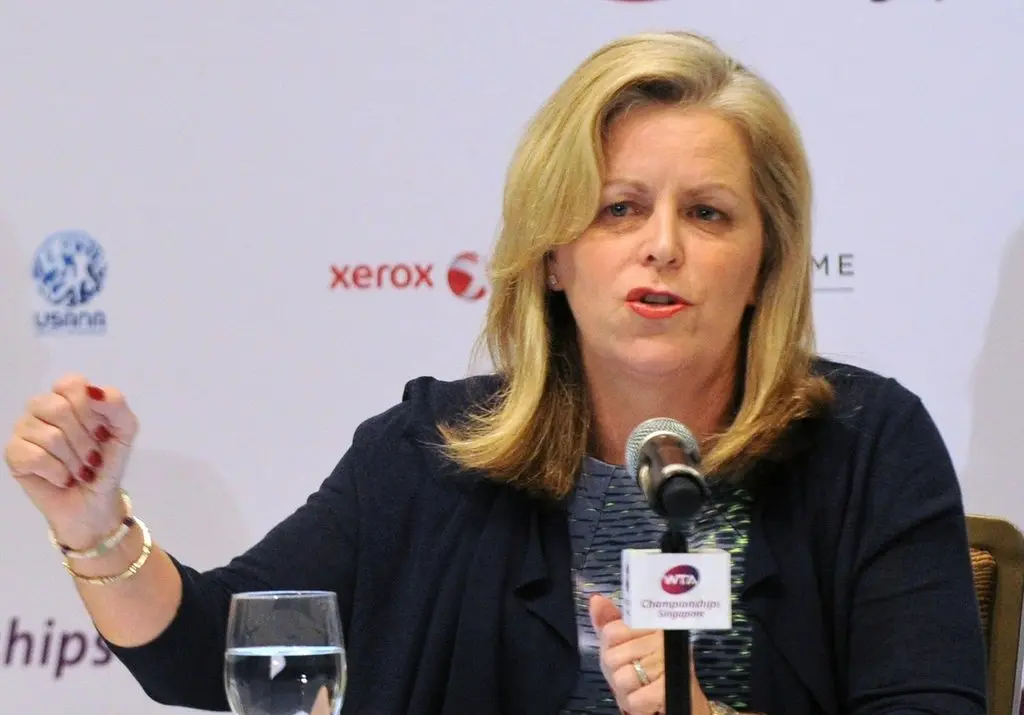
US Open Tournament Director Stacey Allaster. (AFP)

Matches at Flushing Meadows often finish in the early hours and last year's tournament saw a match between Carlos Alcaraz and Jannik Sinner finish at 2:50 am after a five-hour 15-minute contest.

Venus Williams has said she would like to see the second night match removed from the schedule calling it "brutal."

The issue of late finishes returned to the forefront last week after world number one Iga Swiatek joined Elena Rybakina in blasting the scheduling which wrecked the late rounds of the WTA Montreal Open.

But Stacey Allaster, US Open Tournament Director, told reporters on Thursday, Aug. 17, that while discussions had taken place about the night schedule, following last year's tournament, no changes were planned.

"Without question, late night matches were heavily discussed and reviewed after the 2022 US Open." said Allaster who said they had looked at starting earlier and removing the second match before deciding against the change.

"I think one of the challenges that we just have as a reality of tennis, we are not defined by a start and an end time. So that unpredictability of a match, sometimes we can have a short match, or we can have that long five-hour match. So at the moment, we're staying the course with two night matches. We'll continue to evaluate it," she said.

"I think until we were to dramatically change a feature that we offer our fans, we'll experience this late night moment here," she said.


'Memorable moments'


Allaster said that players and fans enjoyed the special atmosphere of playing under the lights on the 23,700 capacity stadium, the largest in the sport.

"One thing we do know is that in New York City, when we talk to the athletes, there's nothing like a night match in Arthur Ashe.

"They are some of the most historic and memorable moments for athletes," she said.

Lew Sherr, CEO and Executive Director of the US Tennis Association, said that the back-to-back night games were a significant element of the appeal of the event.

"It's part of the excitement. In some respects, it's something that our fans love, the city that never sleeps. But having said that, we have an obligation to make sure that the athletes, their health is put forward. But we also know that New York fans are energized by night matches," he said.

The issue is by no means limited to the US Open -- last week Rybakina’s quarterfinal in Montreal against Daria Kasatkina did not end until around 3am.

Having won that encounter, the Kazakh had nothing left for her Sunday semis which she lost in three sets to Liudmila Samsonova.

"Maybe we should focus more on what is healthy for players because we have to compete every week," Swiatek said on Monday.

"The Tour is so intense with travel .. that it would be nice in the future to focus on players - especially next year when there will be more and more mandatory tournaments and longer tournaments."

"During the clay season, in Rome and Madrid, I played four matches that finished close to or after midnight," Swiatek said.

"I understand we have to adjust to broadcasters and everything, but I also asked the WTA for some data to see if people are watching matches that start past 10 p.m.," she said.

Related Tags

US Open
ADVERTISEMENT
.most-popular .layout-ratio{ padding-bottom: 79.13%; } @media (min-width: 768px) and (max-width: 1024px) { .widget-title { font-size: 15px !important; } }

{{ articles_filter_1561_widget.title }}

.most-popular .layout-ratio{ padding-bottom: 79.13%; } @media (min-width: 768px) and (max-width: 1024px) { .widget-title { font-size: 15px !important; } }

{{ articles_filter_1562_widget.title }}

.most-popular .layout-ratio{ padding-bottom: 79.13%; } @media (min-width: 768px) and (max-width: 1024px) { .widget-title { font-size: 15px !important; } }

{{ articles_filter_1563_widget.title }}

{{ articles_filter_1564_widget.title }}

.mb-article-details { position: relative; } .mb-article-details .article-body-preview, .mb-article-details .article-body-summary{ font-size: 17px; line-height: 30px; font-family: "Libre Caslon Text", serif; color: #000; } .mb-article-details .article-body-preview iframe , .mb-article-details .article-body-summary iframe{ width: 100%; margin: auto; } .read-more-background { background: linear-gradient(180deg, color(display-p3 1.000 1.000 1.000 / 0) 13.75%, color(display-p3 1.000 1.000 1.000 / 0.8) 30.79%, color(display-p3 1.000 1.000 1.000) 72.5%); position: absolute; height: 200px; width: 100%; bottom: 0; display: flex; justify-content: center; align-items: center; padding: 0; } .read-more-background a{ color: #000; } .read-more-btn { padding: 17px 45px; font-family: Inter; font-weight: 700; font-size: 18px; line-height: 16px; text-align: center; vertical-align: middle; border: 1px solid black; background-color: white; } .hidden { display: none; }
function initializeAllSwipers() { // Get all hidden inputs with cms_article_id document.querySelectorAll('[id^="cms_article_id_"]').forEach(function (input) { const cmsArticleId = input.value; const articleSelector = '#article-' + cmsArticleId + ' .body_images'; const swiperElement = document.querySelector(articleSelector); if (swiperElement && !swiperElement.classList.contains('swiper-initialized')) { new Swiper(articleSelector, { loop: true, pagination: false, navigation: { nextEl: '#article-' + cmsArticleId + ' .swiper-button-next', prevEl: '#article-' + cmsArticleId + ' .swiper-button-prev', }, }); } }); } setTimeout(initializeAllSwipers, 3000); const intersectionObserver = new IntersectionObserver( (entries) => { entries.forEach((entry) => { if (entry.isIntersecting) { const newUrl = entry.target.getAttribute("data-url"); if (newUrl) { history.pushState(null, null, newUrl); let article = entry.target; // Extract metadata const author = article.querySelector('.author-section').textContent.replace('By', '').trim(); const section = article.querySelector('.section-info ').textContent.replace(' ', ' '); const title = article.querySelector('.article-title h1').textContent; // Parse URL for Chartbeat path format const parsedUrl = new URL(newUrl, window.location.origin); const cleanUrl = parsedUrl.host + parsedUrl.pathname; // Update Chartbeat configuration if (typeof window._sf_async_config !== 'undefined') { window._sf_async_config.path = cleanUrl; window._sf_async_config.sections = section; window._sf_async_config.authors = author; } // Track virtual page view with Chartbeat if (typeof pSUPERFLY !== 'undefined' && typeof pSUPERFLY.virtualPage === 'function') { try { pSUPERFLY.virtualPage({ path: cleanUrl, title: title, sections: section, authors: author }); } catch (error) { console.error('ping error', error); } } // Optional: Update document title if (title && title !== document.title) { document.title = title; } } } }); }, { threshold: 0.1 } ); function showArticleBody(button) { const article = button.closest("article"); const summary = article.querySelector(".article-body-summary"); const body = article.querySelector(".article-body-preview"); const readMoreSection = article.querySelector(".read-more-background"); // Hide summary and read-more section summary.style.display = "none"; readMoreSection.style.display = "none"; // Show the full article body body.classList.remove("hidden"); } document.addEventListener("DOMContentLoaded", () => { let loadCount = 0; // Track how many times articles are loaded const offset = [1, 2, 3, 4, 5, 6, 7, 8, 9, 10]; // Offset values const currentUrl = window.location.pathname.substring(1); let isLoading = false; // Prevent multiple calls if (!currentUrl) { console.log("Current URL is invalid."); return; } const sentinel = document.getElementById("load-more-sentinel"); if (!sentinel) { console.log("Sentinel element not found."); return; } function isSentinelVisible() { const rect = sentinel.getBoundingClientRect(); return ( rect.top < window.innerHeight && rect.bottom >= 0 ); } function onScroll() { if (isLoading) return; if (isSentinelVisible()) { if (loadCount >= offset.length) { console.log("Maximum load attempts reached."); window.removeEventListener("scroll", onScroll); return; } isLoading = true; const currentOffset = offset[loadCount]; window.loadMoreItems().then(() => { let article = document.querySelector('#widget_1690 > div:nth-last-of-type(2) article'); intersectionObserver.observe(article) loadCount++; }).catch(error => { console.error("Error loading more items:", error); }).finally(() => { isLoading = false; }); } } window.addEventListener("scroll", onScroll); });

Sign up by email to receive news.