

ADVERTISEMENT

Which Land Cruiser to get? LC 300 vs LC 250

Published Aug 17, 2023 06:30 am

080323ToyotaLandCruiser4.jpg

Toyota just took off the wraps of the 2024 Land Cruiser 250 series recently. The reveal showcased a boxier, more rugged model than the current LC300 we’re familiar with. Chances are, there’s reason behind the change in direction.

Since their inception, the Land Cruisers have served as Toyota’s flagship SUVs, bringing drivers to the most inhospitable locations. Unfortunately, over the generations, their abilities have been used less and less, with the current LC300 often serving as the preferred luxury transport around the city.

The arrival of the new 250 series allows their paths to now diverge, giving the buyer a choice, depending on their intended use for the vehicle.
081723ToyotaLandCruiser1.jpg

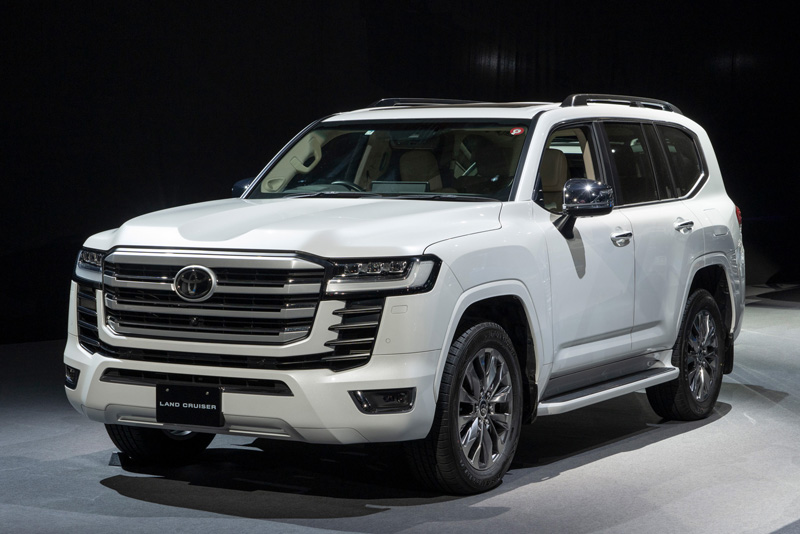
Naturally, the current LC300 will remain the flagship large SUV. It will offer the pinnacle of luxury, retain its off-road abilities, and boast of its more sophisticated design, more ideal for use in urban environments than off-road.

080323ToyotaLandCruiser9.jpg

The new 250 Series will clearly be the choice for those seeking more adventures. It’s evident in its muscular form. It may be a smaller vehicle but looks tougher than the LC300. Inside, the same rugged approach applies. The gauge cluster includes analog dials with a smaller screen inside. There’s a large 12.3-inch infotainment screen for entertainment. The interior space is large with three-row seating for seven people. 

080323ToyotaLandCruiser7.jpg

Dimensions wise, there’s very little, if at all differences between the two. Length-wise, the LC250 is only 25 mm shorter (hardly noticeable) than the LC300. The approach, departure, and break-over angles are similar to the LC300. NaturaIly, it comes with larger tires but has slightly lower ground clearance than the LC300. Still, the difference is just 14 mm, which can be easily fixed with a few aftermarket upgrades.

080323ToyotaLandCruiser2.jpg

Both LC’s are conventional body-on-frame SUVs that are kept aloft with independent double-wishbone front suspension and coil-spring five-link suspension in the rear. In addition, the LC250 comes with off-road assist aids like locking rear differentials, Crawl Control system, downhill assist, a low/high range, full-time four-wheel drive, Kinetic Dynamic Suspension System (KDSS), Multi-terrain Select, and Multi-terrain monitor.

Whichever the case, the arrival of the new Land Cruiser 250 is certainly welcome, offering bueyrs even more choice when it comes to the flagship SUV.

Related Tags

TOYOTA
ADVERTISEMENT
.most-popular .layout-ratio{ padding-bottom: 79.13%; } @media (min-width: 768px) and (max-width: 1024px) { .widget-title { font-size: 15px !important; } }

{{ articles_filter_1561_widget.title }}

.most-popular .layout-ratio{ padding-bottom: 79.13%; } @media (min-width: 768px) and (max-width: 1024px) { .widget-title { font-size: 15px !important; } }

{{ articles_filter_1562_widget.title }}

.most-popular .layout-ratio{ padding-bottom: 79.13%; } @media (min-width: 768px) and (max-width: 1024px) { .widget-title { font-size: 15px !important; } }

{{ articles_filter_1563_widget.title }}

{{ articles_filter_1564_widget.title }}

.mb-article-details { position: relative; } .mb-article-details .article-body-preview, .mb-article-details .article-body-summary{ font-size: 17px; line-height: 30px; font-family: "Libre Caslon Text", serif; color: #000; } .mb-article-details .article-body-preview iframe , .mb-article-details .article-body-summary iframe{ width: 100%; margin: auto; } .read-more-background { background: linear-gradient(180deg, color(display-p3 1.000 1.000 1.000 / 0) 13.75%, color(display-p3 1.000 1.000 1.000 / 0.8) 30.79%, color(display-p3 1.000 1.000 1.000) 72.5%); position: absolute; height: 200px; width: 100%; bottom: 0; display: flex; justify-content: center; align-items: center; padding: 0; } .read-more-background a{ color: #000; } .read-more-btn { padding: 17px 45px; font-family: Inter; font-weight: 700; font-size: 18px; line-height: 16px; text-align: center; vertical-align: middle; border: 1px solid black; background-color: white; } .hidden { display: none; }
function initializeAllSwipers() { // Get all hidden inputs with cms_article_id document.querySelectorAll('[id^="cms_article_id_"]').forEach(function (input) { const cmsArticleId = input.value; const articleSelector = '#article-' + cmsArticleId + ' .body_images'; const swiperElement = document.querySelector(articleSelector); if (swiperElement && !swiperElement.classList.contains('swiper-initialized')) { new Swiper(articleSelector, { loop: true, pagination: false, navigation: { nextEl: '#article-' + cmsArticleId + ' .swiper-button-next', prevEl: '#article-' + cmsArticleId + ' .swiper-button-prev', }, }); } }); } setTimeout(initializeAllSwipers, 3000); const intersectionObserver = new IntersectionObserver( (entries) => { entries.forEach((entry) => { if (entry.isIntersecting) { const newUrl = entry.target.getAttribute("data-url"); if (newUrl) { history.pushState(null, null, newUrl); let article = entry.target; // Extract metadata const author = article.querySelector('.author-section').textContent.replace('By', '').trim(); const section = article.querySelector('.section-info ').textContent.replace(' ', ' '); const title = article.querySelector('.article-title h1').textContent; // Parse URL for Chartbeat path format const parsedUrl = new URL(newUrl, window.location.origin); const cleanUrl = parsedUrl.host + parsedUrl.pathname; // Update Chartbeat configuration if (typeof window._sf_async_config !== 'undefined') { window._sf_async_config.path = cleanUrl; window._sf_async_config.sections = section; window._sf_async_config.authors = author; } // Track virtual page view with Chartbeat if (typeof pSUPERFLY !== 'undefined' && typeof pSUPERFLY.virtualPage === 'function') { try { pSUPERFLY.virtualPage({ path: cleanUrl, title: title, sections: section, authors: author }); } catch (error) { console.error('ping error', error); } } // Optional: Update document title if (title && title !== document.title) { document.title = title; } } } }); }, { threshold: 0.1 } ); function showArticleBody(button) { const article = button.closest("article"); const summary = article.querySelector(".article-body-summary"); const body = article.querySelector(".article-body-preview"); const readMoreSection = article.querySelector(".read-more-background"); // Hide summary and read-more section summary.style.display = "none"; readMoreSection.style.display = "none"; // Show the full article body body.classList.remove("hidden"); } document.addEventListener("DOMContentLoaded", () => { let loadCount = 0; // Track how many times articles are loaded const offset = [1, 2, 3, 4, 5, 6, 7, 8, 9, 10]; // Offset values const currentUrl = window.location.pathname.substring(1); let isLoading = false; // Prevent multiple calls if (!currentUrl) { console.log("Current URL is invalid."); return; } const sentinel = document.getElementById("load-more-sentinel"); if (!sentinel) { console.log("Sentinel element not found."); return; } function isSentinelVisible() { const rect = sentinel.getBoundingClientRect(); return ( rect.top < window.innerHeight && rect.bottom >= 0 ); } function onScroll() { if (isLoading) return; if (isSentinelVisible()) { if (loadCount >= offset.length) { console.log("Maximum load attempts reached."); window.removeEventListener("scroll", onScroll); return; } isLoading = true; const currentOffset = offset[loadCount]; window.loadMoreItems().then(() => { let article = document.querySelector('#widget_1690 > div:nth-last-of-type(2) article'); intersectionObserver.observe(article) loadCount++; }).catch(error => { console.error("Error loading more items:", error); }).finally(() => { isLoading = false; }); } } window.addEventListener("scroll", onScroll); });

Sign up by email to receive news.