







With audacity, tenacity, and ardor
Tanghalang Ateneo's 45th season opens with Ardór this August


At A Glance
- Love is revolutionary and revolution is love. This play is both a celebration and a challenge to that idea. —Guelan Luarca
By ALEX AMANSEC
If love and kindness as methods for social change are no longer working, what is an alternative option? Igniting its 45th theatrical season with a fiery bang, Tanghalang Ateneo, the longest-running theater company of the Loyola Schools of Ateneo de Manila, emerges with an answer through Ardór, a play written and directed by award-winning playwright, translator, actor, and director Guelan Luarca.
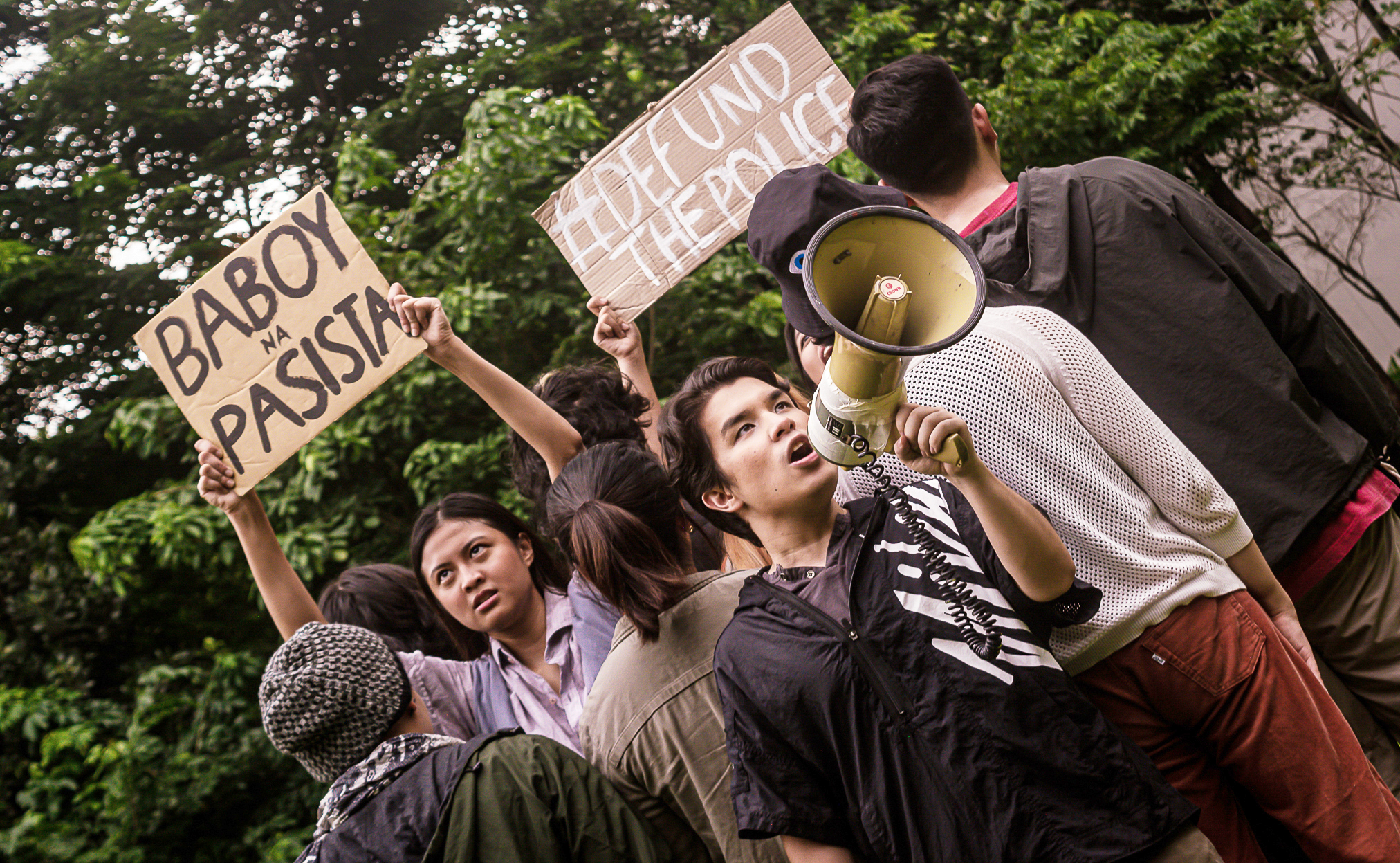
Ardór is part of an “accidental” trilogy created by Luarca imagining a not-so-distant-future of a Philippine dystopia: alongside Nekropolis, performed last April by Tanghalang Pilipino at the Cultural Center of the Philippines, and Dogsblood, delivered as a staged reading last May at Hunter College in New York City, Ardór now presents a gripping narrative with the youth at the center of the movement and fight.
The show will be performed for the very first time this August, but the roots of the story date back to over two years ago. “It was inspired by the One Big Strike Movement of the students back then,” says Luarca. In November of 2020, students from the Ateneo de Manila University initiated a nationwide academic strike to call out the government’s “criminal negligence” with regards to the catastrophe caused by the typhoons and the Covid-19 pandemic. “There were some voices who wanted to control and police the tone of the strike. And so that got me thinking about youth and activism, imagining a world where the youth had gotten so angry to the point of anarchy.”
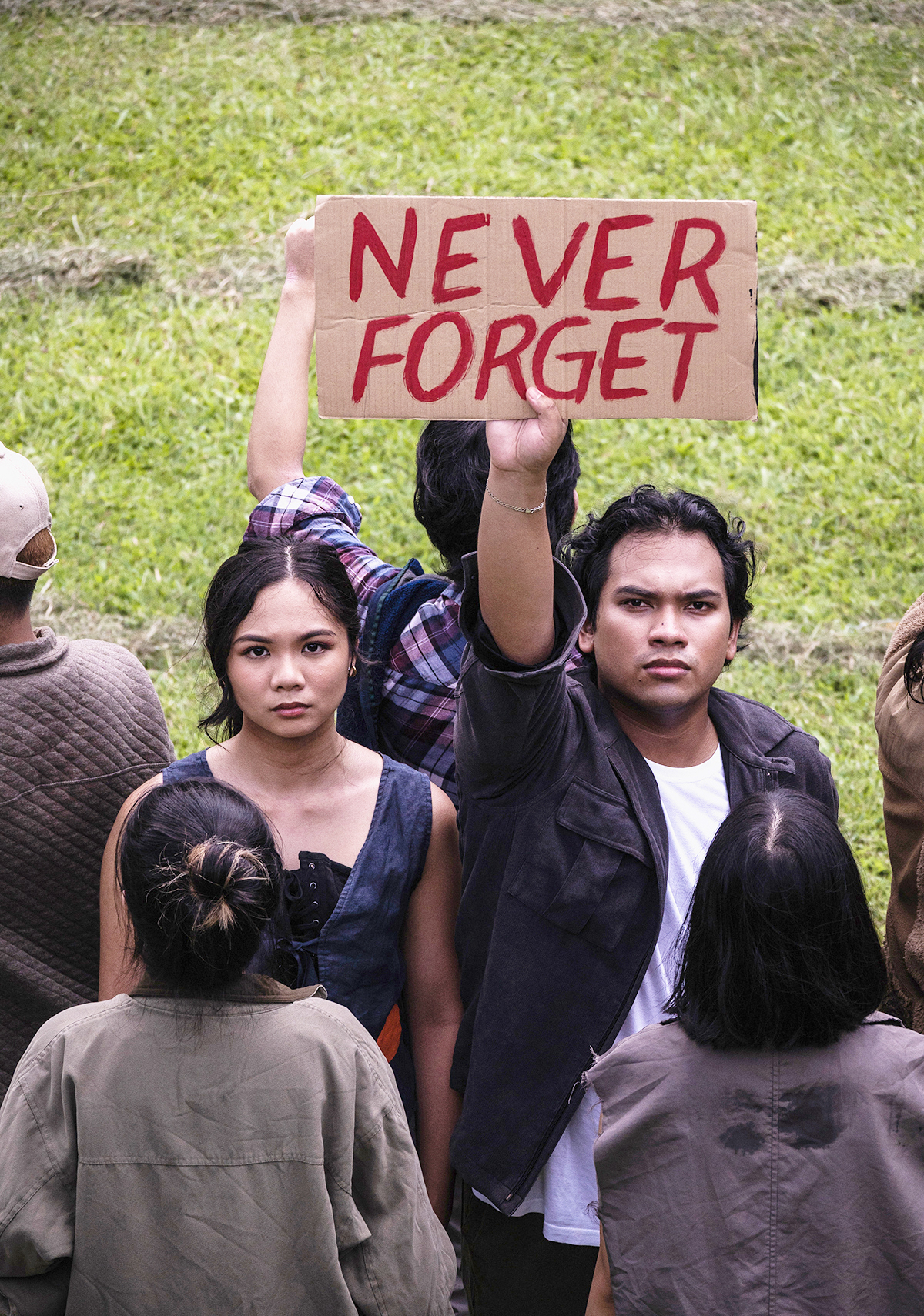
Many of those who led the strike were student-artists. Aside from revolution, Luarca pays homage to the role of artists in social contexts through the main character, Z, a university student and a painter with a flexible gender identity. “I have no illusions that artists will save the day,” he says. “But what I do know is that art makes people more humane. It’s usually artists who might be the best in terms of expressing social ill. They turn it into narratives, images, and poetry that can affect other people. That’s why I made the lead character an artist-activist.”
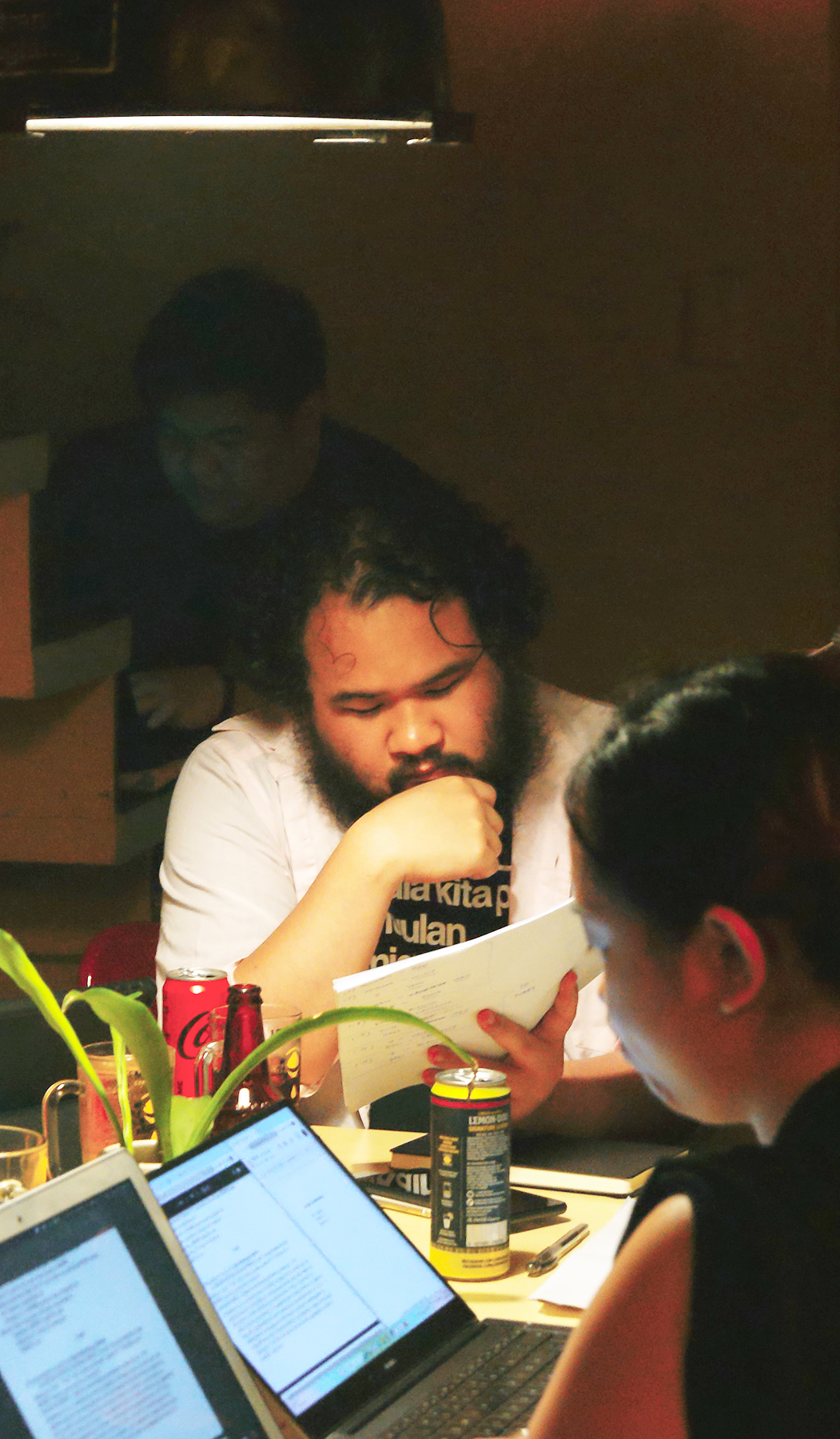
The rehearsals are well under way. The past few weeks focused on tablework, where the cast of young actors composed of both students and alumni are individually coached by Luarca, interpreting and fleshing out characters to their fullest potential. They tread the script line by line, word for word to dissect the characters’ vivid emotions and violent interactions, which will all be condensed within high stakes and intricate choreography in even the shortest scene—this reflects exactly what the title hints for the story to be.
How has it been for Luarca collaborating with a cast and crew and seeing this play finally come to life? “It’s always exciting seeing things get there,” he says. “One thing is I’m always working at the cusp or at the edge of failure… [But] to have a team be so game is, of course, fun. I love my artistic team, I’ve worked with them many times before. Some of them are past students and I’m proud to see them as independent artists in their own right. I’m proud to see them do this for the love of theater.”
Tanghalang Ateneo’s seasonal theme is Love and Revolution—two concepts that, by what has been prefaced, initially seem different in nature. But what does Ardór reveal about this? Can there still be love in revolution? “Hindi mo mabubukod o mahihiwalay ang pagmamahal tsaka ang himagsikan (You cannot separate love from a revolution). Love is revolutionary and revolution is love. This play is both a celebration and a challenge to that idea,” he says.
The two other productions of the season, Elias at Salome and Sintang Dalisay, are driven in the same spirit. Each of the shows will propose different modes of love that calls for different modes of revolution. While the objective ideas may be catalysts or tinder for the fire, Luarca emphasizes that something else entirely is what creates the first spark: “It’s emotions. It’s need and hunger. It’s love, because love is urgent,” he says. “When you feel it occurring in your system, you cannot not do it.”
When it comes to the performing arts and the vast palette of human emotion, artists tend to have a vision for what they want the viewers to feel. Luarca just wants those who will watch the play to have an experience. “It might not be a play people are used to watching, I kind of allowed myself to be a little strange here. I hope they have fun or just go on a ride. Be open-minded and open-hearted,” he says. The theatrical stage, after all, is not reserved for the mundane. Audacity and tenacity are what it takes to make a spectacle—both of which Tanghalang Ateneo is readily equipped to exhibit. “They can love it or hate it. It’s up to them.”
To be performed at the Rizal Mini Theater, Faber Hall, Ateneo de Manila University, the show dates of Ardór will be on Aug. 26, Sept, 2 and 9 for its 2 p.m. showtime. Meanwhile, it will also be shown on Aug. 18, 25, 26 and Sept. 1, 2, 8, and 9 at 7 p.m. showtime.
www.facebook.com/tanghalangateneo