






 Philippines
National
Legarda: The real impact of climate change has begun and it's terrifying
Philippines
National
Legarda: The real impact of climate change has begun and it's terrifying
Legarda: The real impact of climate change has begun and it's terrifying


Climate change is here, it is terrifying, and it is just the beginning. The era of global warming has ended; the era of global boiling has arrived.
This was a recent statement of United Nations Secretary-General Antonio Guterres quoted by Senate President Pro Tempore Loren Legarda as speaker at the Asian Conference on Climate Change and Disaster Resilience (ACCDR) at the Asian Institute of Management (AIM) on Thursday, August 10.
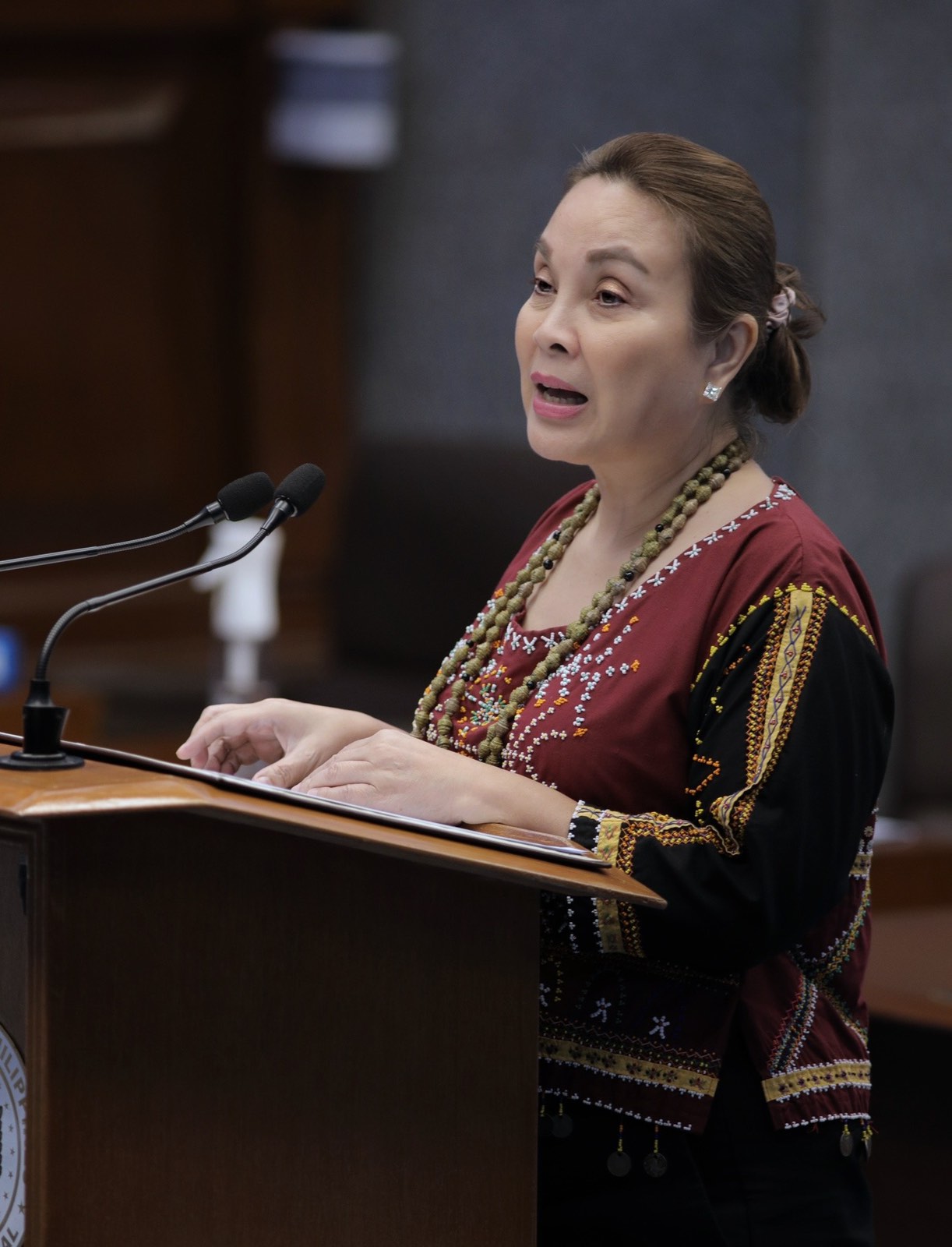
Senate President Pro Tempore Loren Legarda (Senate PRIB Photo)
"Climate change is, without a doubt, the global governance challenge of our time. It knows no borders, ideologies, and timelines, requiring us to channel our collective intellect and resolve into comprehensive action,’’ she said.
The lady lawmaker said the Climate Risk Index identified four Association of Southeast Asian Nations (ASEAN) member states among the 10 most at risk of climate and disasters – the Philippines, Myanmar, Vietnam, and Thailand.
‘’This puts nearly half of the entire ASEAN population exposed to climate change impacts – a 150 percent increase from the 220 million people affected from 2009 to 2020, according to the ASEAN State of Climate Change Report,’’ she said.
‘’Alarmingly, too, from 2009 to 2020, significant economic and human losses and damages in ASEAN amounted to 97.3 billion US dollars – a figure close to the global commitment of 100 billion US dollars for Annex I countries for the same period, 2009 to 2020, which regretfully remains to be undelivered in full,’’ she stressed.
According to the IPCC, Asia is projected to experience an “increasing surface air temperature” which will negatively impact food security, water sufficiency, and the countries’ economic and development pathways to sustainable development.
Drought conditions will worsen by about 5 to 20 percent, and water stress is expected, excluding North Asia. Terrestrial and coastal ecosystems are put at greater risk, including losses in biodiversity and animals’ habitat.
"Our economy – be it regional or national – will be affected. The World Bank reported that the prolonged absence of concerted action against climate change by 2030 will drive an additional 7.5 million people from East Asia and the Pacific into poverty as triggered by climate impacts," Legarda said.
"And so, we must accelerate the way we 'course-correct' and safeguard the 1.5°C of the Paris Agreement— our climate threshold to survive and thrive - with the greatest sense of urgency," she emphasized.
Legarda said the established blueprint on climate policies has paved the way in upscaling climate action in the country, but the urgency of our times calls for policies that are more comprehensive, enforceable, and responsive to evolving challenges.
"First, we have to adopt a transformative mindset in governance, and mainstream science, and cascade opportunities and resources to our Local Government Units (LGUs) and communities, the climate frontliners who bear the brunt of climate impacts and are expected to manage local climate risks and hazards.
Second, we have to accelerate decarbonization efforts and ensure timely implementation of our Nationally Determined Contributions, without being restricted by the unconditional share. Let us aim for higher ambition by embracing the Net Zero scenario, and its imperatives to combat further warming by utilizing more advanced technologies.
"Third, we have to create an enabling environment for the private sector to accelerate investments on climate-resilient infrastructure, and technologies, and promote the creation of green jobs. We can look at the experience of ARISE – a global network of private sector entities – leveraging their strengths as a key partner of government for disaster risk reduction.
"Fourth, for the legislators, we have to revisit our environmental laws and push for legislation that will strengthen the foundation for climate-resilient development. These are measures to promote circular economy, blue economy, ecosystems regeneration, and forest management.
Fifth, we need to strengthen regional mechanisms to respond to disasters, losses and damages, while emphasizing preventive adaptation and climate resilience approaches in their tool kits.’’
"We must take the path that leads towards resilience and low-carbon development – where our energy and transport systems run on renewable energy, where our oceans and forests sustain life above land and below water, and where our industries embrace a circular economy to influence sustainable ways of living," she added.